Transformation of Kuwait

Kuwait City

I have come here really knowing Kuwait for one reason; it was a catalyst in sparking the Persian Gulf War of 1990-1991. Iraqi troops invaded Kuwait August 2, 1990 bombing Kuwait City to smithereens. In response to this surprise attack, President George H. Bush deployed American troops to Kuwait as part of a coalition force to beat back the Iraqi Army. But the damage had already been done. Kuwait City was in ruins. Iraqi troops set oil wells on fire, eliminated all resistance, and stole $700 million worth of gold bullion was from the Kuwaiti government.

Today, Kuwait City is a completely different place. With help from the US and other countries, they have rebuilt a new country and so much of the city has been rebuilt from the sand up.

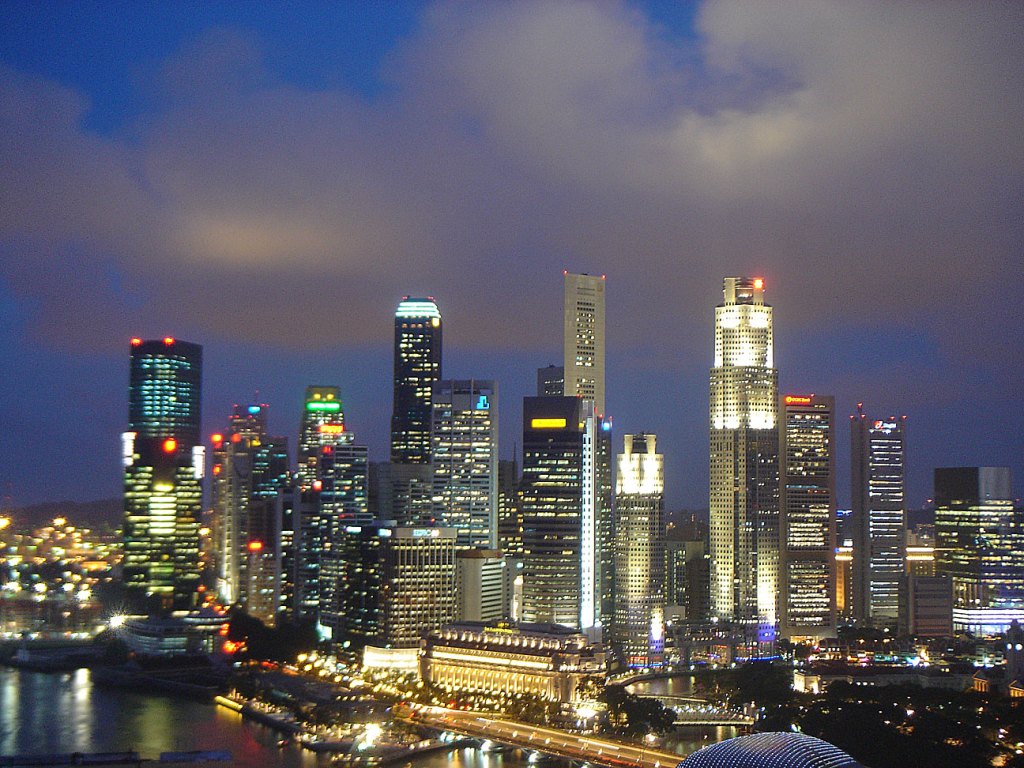
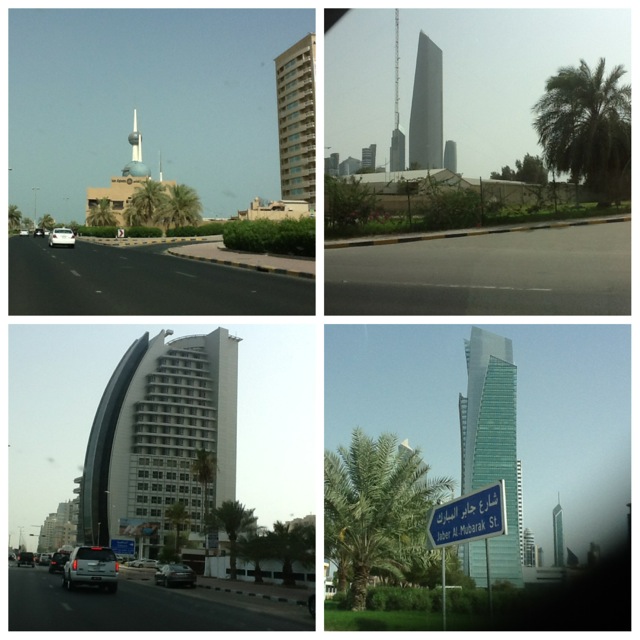
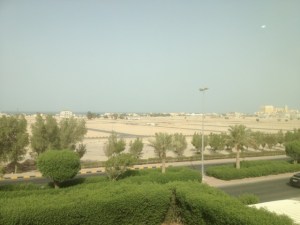
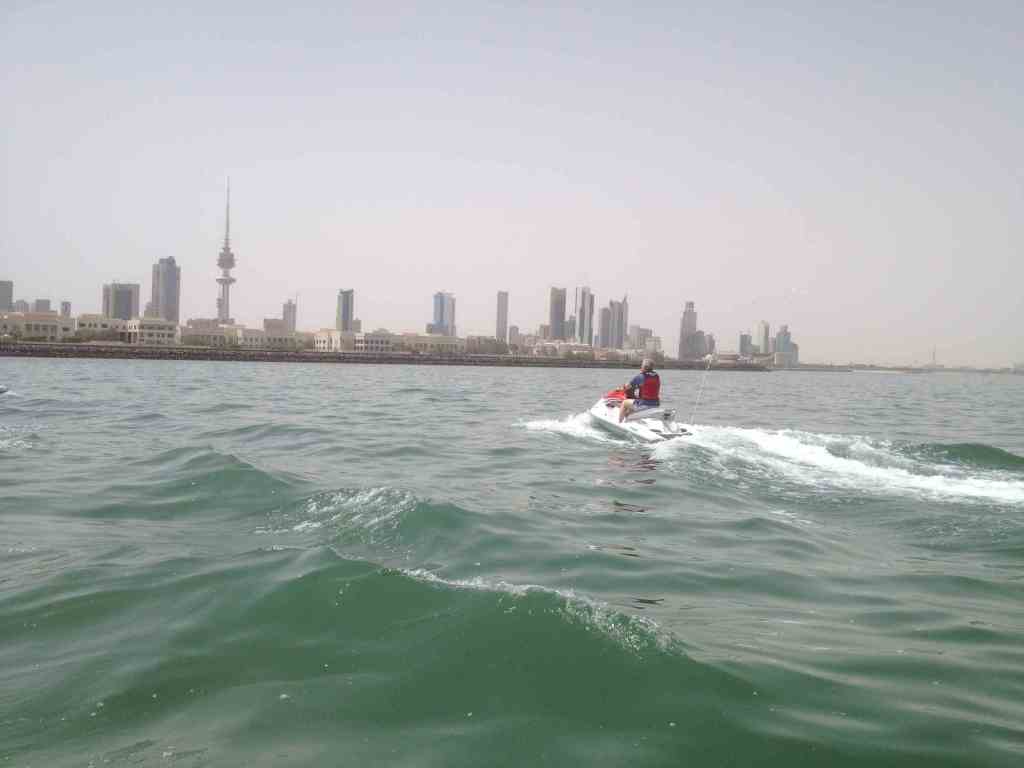
Driving in Kuwait, the modern buildings of Al Kuwayt (Kuwait City) pierce the skyline proudly show casing the wealth of the nation. The architecture is outstanding. We could also see the palm trees and plush green landscape weaving through this concrete jungle, and sparkling blue water of the Persian Gulf encompasses the northern part of the city.

It is flat.

It looks like you are in Saskatchewan at harvest time for golden sand stretches to the horizon. (Well, it does but without the grass, rolling hills and trees.) The highest point in this entire postage stamp size country is 306 meters high.

The population of Kuwait is about 2.5 million. Most of them live in Kuwait City and of these, one-half are non-nationals hired to serve the Kuwaitis.

Transformation and Change

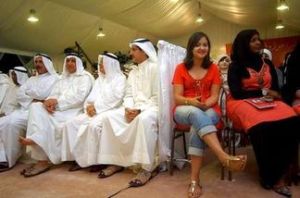
The people once lived as tribal nomads or as town dwellers but with the discovery of oil in the twentieth century, the traditional Arab culture of Kuwait advanced rapidly. Unlike most Arab countries, Kuwaiti Arabs enjoy a modern, industrialized society. However, I did witness how at times the old “Arab ways” and values conflicted with modern, urban life.

Kuwait is hot. The temperature remained in the low forties the entire time we were there. Bob and I are travelling with special clothing made for washing in hotel room sinks and drying over the shower bar. During our time in Rwanda it rained a fair bit and so drying our clothes became a three day operation. I did a wash in Kuwait, hung my clothes to dry outside and voila! Ten minutes later they were not only bone dry, but stiff also!

Islam and other faiths

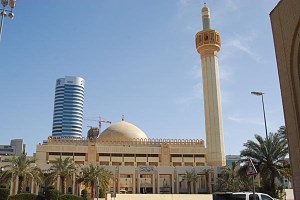
The prophet Mohammed lived in the area, and it was here that he developed Islam as a new religion. Kuwait culture is now based on Islam, and it is the main religion in Kuwait. It influences architecture, clothing, food and other ways of life.

The Grand Mosque

While Muslims demand for concessions in non-Muslim countries like my own, Canada – non-Muslims are systematically persecuted, terrorized and ethnically cleansed from most Islamic lands. But unlike other Arab countries, Kuwait allows non-nationals to practice their own faiths. Today, eighty-five percent of the people here are Muslim and the remaining thirteen percent are Christian, and two percent Hindu, and Parsi followers.

The church

So in the heart of Kuwait City there is a church – by that I mean the body of followers of Jesus – who are living and leading well. I do not want to be too specific about the nature of their ministry so as to not possibly hinder their presence there, but I had the privilege of preaching at four of their twenty-four services on the weekend we were there. That is correct, twenty-four. (I think it is now up to twenty-eight). Bob also preached a one of the services and it was a very meaningful experience for us both. This is a church that ‘gives back’ when you preach. They are engaged, responsive and people of action. You get the impression they will take what they learn from this sermon and apply it next week where they live or work.

A ministry and marriage seminar was also held on the weekend for leaders of this large congregation and I was again impressed and touched by this group of people. I loved them and their leaders.

This is a church that has grown through multiplication. At the heart of it is transformation – they celebrate transformation in people’s lives. They have a very in-depth discipleship process as a key element of their church.

As I have pondered our fantastic time in Kuwait (including an afternoon on jet skis in the Persian Gulf) I learned something I am bringing home to our church.

Transformation is the key,
and obedience is the key to transformation.
And when transformation happens, multiplication always follows.

My new word for child prostitute: “Victim”

Sanjay Macwan, Executive Director International Justice Mission in Mumbai, India

During our week in Mumbai we spent time with the team at International Justice Mission with Sanjay Macwan, the IJM Mumbai Director and Jamie McIntosh, part of the Arrow Leadership community and Executive Director of IJM in Canada.

It provided us an opportunity to meet with their team – a committed group of men and women who go out daily gathering information on brothels and human trafficking sites throughout Mumbai.  It was a real eye opener for Bob and I to hear them tell of the detail that goes into finding girls and women who have been forced into the sex trade and partnering with local officials to release them.

Effective

The topic of human trafficking has been somewhat trendy in North America among Christian organizations for the past five or more years. By that I mean that many organizations have started using the language in their brochures and newsletters – now how involved they are in effectively doing something about it is another question. IJM are effective.

Informed and knowledgeable as I was on the subject, I was not prepared for the emotions related to being in this setting with this team and then meeting some of the girls freed from slavery by the cooperative work of IJM and the law enforcement agencies of Mumbai.

Carson gets Angry

A large percentage of adult women and men in prostitution here are trafficked into “the trade” by force, fraud or coercion. Typically, the victims are young women and children from villages who are recruited by traffickers through the fraudulent promise of work in the cities. When they arrive – usually by India’s efficient trains – they are sold to brothel owners and forced into prostitution in any number of different venues, from the more traditional “cages” brothels to beer bars, dance clubs, slum brothels, and flat brothels scattered across this massive city.

There are naive and vulnerable girls lured by slick-talking people promising them work who are then often drugged, beaten while they are held hostage for sex. These are children, and the casualties of human trafficking that IJM are specifically targeting. While visiting the girls in one Aftercare home we saw a room filled with sewing machines with girls producing beautiful products. It was encouraging to see the smiles on their faces as you admired their work.

“Every one of these girls has been raped,” the Aftercare home director said quietly.

My head tilted to the side.

I felt numb.

But then anger began to well up inside me. I was ready to call the Pue boys, get them over here and help me do something about this. I will not share what I was thinking of doing – but I was so upset by how ‘not right’ this all was. My favorite Bible verse suddenly become Matthew 21:12 (I am saying that with a smile).

Extreme Poverty Ripples Out

In places of extreme poverty mothers also sell their children into prostitution for a quick but meager influx of cash. We met a young girl in an IJM Aftercare home who had been sold by her mother for only eight thousand rupees, about $150 Canadian dollars. These girls are locked up for days, starved, and beaten until they learn to service up to 25-30 clients a day.

As I stared at this sweet dear child in front of me I pictured my grandsons who are excitedly awaiting my arrival back home. I thought of Kristin and Shari, my two daughters-in-law who are amazing mothers and love their boys so much. I wondered how possibly a mother could sell their own child and just walk away. It is beyond our ability to even imagine –but extreme poverty has ripple effects that are often out of sight and out of mind.

Minor victims

Unfortunately, sex trafficking is thriving in Mumbai and this was completely visible to us. I personally saw young girls that were unquestionably minors who were now working in the red light district. While I expect that it is near impossible for anyone to get accurate statistics the country’s federal police said four years ago that 1.2 million children were involved in prostitution in India. IJM have noticed a decrease in minors in the years following but I suspect that it is because of the work they and others are doing with local law enforcement to focus specifically on seeking convictions for those who are trafficking children.

In our week there we celebrated with the team on the ruling from the courts convicting a brothel manager from an arrest they assisted with two years earlier. There are many stories of rescues that provide hope and I am so impressed by the passion, conviction and professionalism of the International Justice Mission staff. They don’t want a “Pue boy” solution like I had in my head. This team of Indian nationals wants to actually change the system, the society, so that this will stop completely.

To act justly

As a follower of Jesus of Nazareth, and a leader in the church, I am inspired by Michah 6:8 and the mandate that it shouts out for Christians:

He has showed you, O man, what is good.

And what does the LORD require of you?

To act justly and to love mercy and to walk humbly with your God.

Walking humbly with God means taking a healthy assessment of who you are – recognizing that it is only by Jesus and God’s grace that you are saved from your sinful nature. Others can as well and need to be told of this.
Loving mercy is to be compassionate for our God is a compassionate God. We are to have mercy on those impoverished around us. I believe every Christian needs to have some aspect of their life and income focused on people in poverty. Consider how you can reflect God’s heart for the poor, the disenfranchised, the marginalized, the strangers and aliens, the migrants and refugees, the hopeless and helpless, and the last, the lost and children.

To act justly is to do what is right – re-enacting God’s mercy. Our serving justice in an unjust world is our acting out the gospel. But to act justly is much more difficult for churches, for by doing so we seek to address underlying causes more than symptoms. Although difficult, it must be a part of Christian ministry. I am personally challenged to help see that justice is a part of being a fully mature disciple in our community and can hardly wait to gather our Mission and Justice team at First Baptist to discuss these things with them.

Howard Snyder summarized the challenge for those of us leading in the church: “Kingdom people seek first the Kingdom of God and its justice; church people often put church work above concerns of justice, mercy and truth. Church people think about how to get people into the church; Kingdom people think about how to get the church into the world. Church people worry that the world might change the church; Kingdom people work to see the church change the world”

 Back Home

When I am home in Vancouver, in a North American context this will take on a different ‘feel’ than it does for me right now being a fresh experience. I have a video I am bringing home and will show when speaking if appropriate. It is about a young girl that we were with at the Aftercare home. When Jamie asked how she was doing she looked at him with eyes that were hopeful but did reveal she has lived in hell for part of her childhood.

With a strong voice and a smile on her face she said, “I no longer look back at the past, I have been rescued and I am looking forward. I want to live in such a way that other girls will not have to go through what happened to me.”

This young woman was rescued and will never be the same.

After meeting her, I don’t think I will be either.

God. Come back again next year.

Indians love elephants.

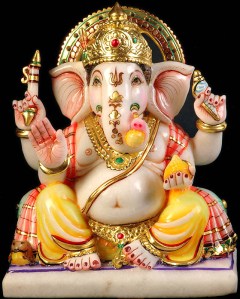
Everywhere you look, shops, police office, banks, our hotel – you see statues like this:

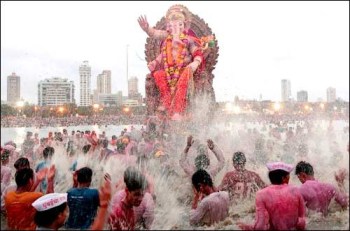
It is a representation of Ganesha. Of all the gods collectively in Hinduism – this one is definitely the favorite.

This elephant god is worshipped in a big way for ten days once every year. Ganesha is not really what I would call attractive. He has the head of an elephant on which is perched this tiara. Add to that four podgy hands joined to a sizeable belly with each hand holding a symbolic object.  My graduate degree was in Religious Studies with Dr. Irving Hexham and I am looking forward to getting back to my library to read up on what all those symbols mean.

Apparently Ganesha is god of new beginnings and commonly worshipped as the supreme god of wisdom, prosperity and good fortune. People are encouraged to worship him early in the morning, offer him some sweets and ask him to remove all obstacles in your way.

“A Hindu would not think of starting anything without first paying homage to the elephant god,” said my host. “Starting a new job, opening a business, before a big trip – anything that is new.”

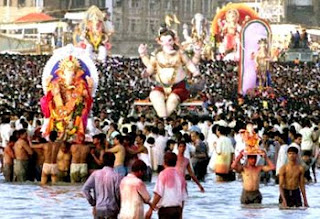
He continued, “There is a festival each year and for ten days the people have statues made and at the end of the time there is a big processional through the streets and people carry them into the sea.”

When the large processional statue is immersed in the sea it is to symbolize a farewell to the god as he is going off  to his “abode” in Kailash. As he goes he is taking away the misfortunes (sin) of his worshippers.

Come back again next year

Now, what I found interesting is that the festival ends with all the worshippers splashing water and calling out essentially, “Come back again next year.”

So for 51 weeks of the year they are basically godless. (Hmmm that seems convenient.)

When I think about my experience as a follower of Jesus of Nazareth and that of those worshipping Ganesha the contrasts are interesting. In my opinion I think the average Hindu must feel a little hopeless. They are dependent on their own works to escape from “samsara” that endless cycle of rebirths, where I as a Christian experience a life of hope and assurance of my salvation. Now. Today.

I also know one God who cares deeply for me. With the vast plurality of gods and goddesses, Hinduism offers a very impersonal ‘Brahman‘ (the ultimate reality underlying all phenomena). Add to this that Hinduism views ALL living things as manifestations of Brahman therefore humans have no individual self and no self-worth.  Christianity worships God who not only created mankind, but also gave us free will.  He cares deeply for us, and places a huge amount of worth on you and I as His creation.

There is simply too much to be added to this discussion, and I need to get back home to the Trinity Knot Library and talk to Dr. Hexham to refresh my knowledge, but let me close with this. Salvation for the Hindu is the release from the wheel of life, the cycle of rebirths, through which they must work to better themselves, and realize our oneness with Brahman which is Nirvana.  It is work and must be carried out by each individual through successive lives. Since “sin” is committed only against oneself, the penalties are accrued only against the self.  The penalty is the repeated cycle of rebirths
Salvation for the Christian is a free gift to us from God.  We only have to accept it.  We cannot earn it.  No amount of work will change it. Jesus bought our salvation by taking all our sin upon Himself on the cross, dying as a sacrifice for us, and then rising from the dead three days later.  It was a one time act. Salvation means spending eternity with our Almighty God and we can start living like that today.

If I was starting something new, I’m not going to be taking the idea to an elephant god that is only present ten days a year.

“And be sure of this: I am with you always, even to the end of the age.” – Jesus (Matthew 28.20)

Dichotomy City: Mumbai

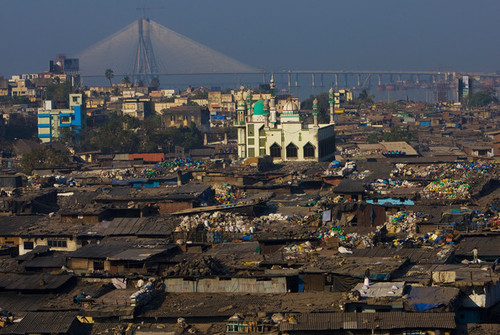
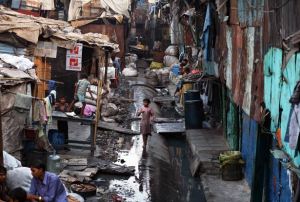
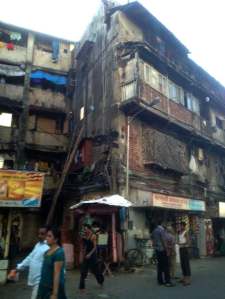
I love the cities and looked forward to our week in Mumbai, India, the city formerly known as Bombay. It is the largest city in India and one of the largest cities in the world with a population of over 21 million.

Many northern hemisphere folks were introduced to this city through the blockbuster movie: Slum Dog Millionaire and although Mumbai is home to the largest slum population it is also a booming commercial capital and predominant Asian seaport. All around us are construction cranes, and even Donald Trump is investing in buying property here – although Donald might be viewed as chump change to the other billionaires living here. Two of the richest people in the world live in Mumbai.

Add to all of this Bollywood, center of the globally successful Hindi film industry. This creates an eclectic cosmopolitan feel to the city and peppers it with movie and music stars driving down the streets. This lends a Los Angeles feel to the city and the local beaches add to that comparison – however the waters off Mumbai’s coast looked extraordinarily dirty.

People from all over India have flocked to this city in search of work, fame or anonymity. It has created a rich mosaic of cultures all within the one city. Hindu temples, mosques, churches and even some synagogues reflect some of the diversity.  English is very widely used and most people we met could communicate with us in at least broken English (except for one driver Bob had but that is his story to tell).

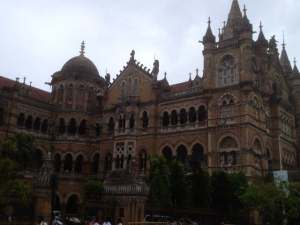
There is a strong 19th century architectural influence that the British established and these buildings are in remarkable condition for their age – in contrast to buildings erected in the last thirty years that appear to be falling apart.

Labor from our Canadian perspective is inexpensive in Mumbai however this does not factor in the purchasing power of the Rupee for the people earning them. You see many people servicing some businesses. The restaurant that Bob and I favored had a staff to guest ratio of four to one – and the service was exceptional!

Mumbai for its size and diversity felt quite safe. Having been targeted by terrorists from Pakistan on three occasions (1993,2006 and 2008) killing a total of over 700 people, security is high in most buildings. For example, we were not able to drive into our hotel without the car being searched for weapons or bombs each time. When we walked into our hotel there was a screening device as in airports you walked through.

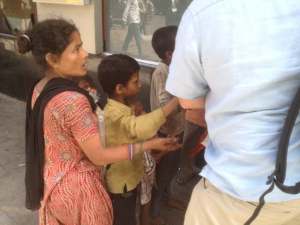
Some visitors to India may want to argue with my position that Mumbai feels safe due to how frequently you get approached by people on the street trying to sell you something. From beggars to prostitutes, you will have people pressing into you (literally) especially if you are a foreigner.

But there are lots of police around, right? Well, policing in Mumbai is a challenge. We had the privilege of meeting with the District Police Commissionaire. He is a devoted and decorated police officer who has also served the United Nations in peacekeeping and international policing situations such as Kosovo.

He told us that there are 44,000 police officers for the city of Mumbai or 1 officer for every 500 people. The ration for Vancouver is 1 for 507. However, how effective are they? While the ration seems good, there is much training needed for the officers, and the temptation of economics make bribery a common practice among some officers.

We were surprised to learn through the folks at International Justice Mission that in a courtroom, the testimony of a police officer is not considered reliable and that there must be the presence of a civilian witness in order to seek a conviction. This is because of the level of corruption in the system. (See positivelyparkinsons.com for Bob the lawyer’s discussion of this).

More on Mumbai and the work of IJM next …

Road to Abote: World Vision Sponsor Visit

Leaving Addis

We were excited about getting picked up at 7:30am to begin a drive north of Addis to an Area Development Project of World Vision in a village area called Abote.

Having been in Addis Ababa for several days we asked many people about Abote to find that no one had heard of it. They had all heard of World Vision but had no idea where we were going. This would not be the first time that World Vision was at work in a region that was off the map and when we read our itinerary and saw that we would be travelling the final portion of the trip be vehicle or horse we knew we were in for quite the experience.

With the help of World Vision Canada we had arranged for Bob to actually meet eleven year old Abesha, one of children that he and his wife Renae sponsor.

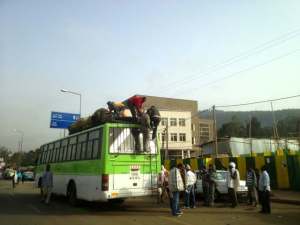
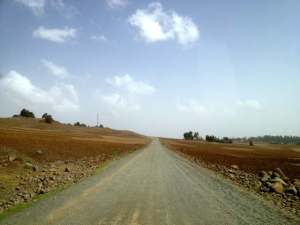
Driving out of Addis we started out on paved roads but we turned off the highway after two hours on the road to Abote.

This area development project has 5070 children registered by World Vision who have been working with the people here for twelve years. Prior to World Vision coming off-road to the people here only 2.5% had access to potable water. There were many water borne diseases.

Only 2% of the people used a pit latrine and just 25% of the children had been immunized.


Now twelve years later we found a very different situation where the community has been transformed including having some banking/credit services with 2500 clients so that they do not have to pay the 120% interest rates charged by money lenders. Eighty one percent of the people have access to potable water.


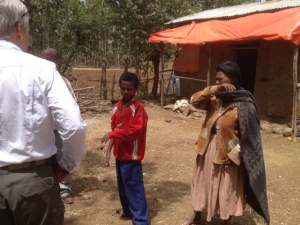
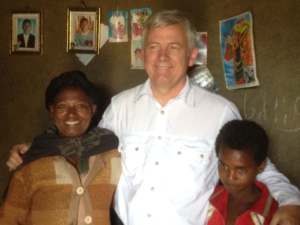
We walked the last section of the journey to Abesha’s home and found the family waiting outside for our arrival.   I wish you could have been with us to see the response of Abesha and his mother when they were introduced to Bob. She was overjoyed and filled with emotion.

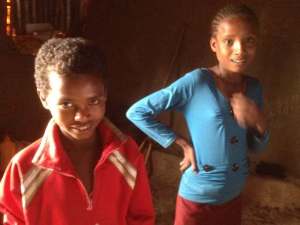
Abesha has a sister and brother living with he and his mother. His father and an older brother were not present for they are working in southern Ethiopia.


Bob presented Abesha with a soccer ball and pump and the two of them spent time kicking the ball back and forth in front of the hut. Abesha was unable to wipe the smile off his face.

His mother then invited us into their home where she proudly showed us the photo of Abesha and the record card from World Vision. Their house was one room approximately 100 square feet with the floor and walls made of cow dung. She then asked us to be seated while she went to the cook hut next door and brought us a plate of bread she had cooked and coffee served with some form of sugar already added.


I will always be deeply touched by how people with so little, can be so generous. When we had finished with the bread, she took the remainder outside and shared it with all the neighbors who had gathered to see the two white men visiting their village – only ten would visit here in a year.

When we departed we both felt somehow blessed.


We spent the night at a hotel nearby – well when I say hotel it may conjure up an image of something other than where we actually stayed.

Before we went to sleep we paused to reflect on our visit to one of the most grateful families, and homes we have been to in a long time.

Now I realize that it is simply not possible for every supporter to meet your sponsored child. However this experience showed the two of us how a small focused emphasis on monthly sponsoring a child can influence and entire community.


We are deeply touched.

Day 4 Lima Peru: No Problem

Hospitality and Excellence

Our teams at First have been hearing me emphasize two focus words for 2012 – Hospitality and Excellence.

Why? Well, we describe ourselves as a community, and that implies a relationship. To welcome people into a community requires an expression of hospitality and I think this is especially true for those living downtown. A core requirement for a community is interaction between the members and the downtown presents such diverse people groups that this can be hard. It is making me think a great deal about how we can enhance community building at First Vancouver.

Complex Communities

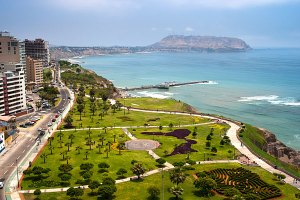
Pastor Samuel Reátegui and his daughter Susana met us to drive us to the ocean (Pacific) and to see more of the district of Miraflores. Samuel wanted us to see the beauty of the ocean (that we share) and a terrific view of the city. The view however was partially eclipsed by a heavy marine layer fog that often hangs over Lima during the winter months.

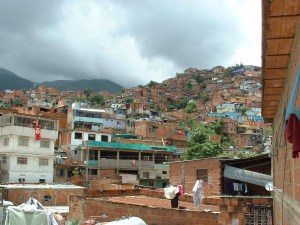
Miraflores is an upper class community of people living in multi-million dollar homes ironically bordered by barrios – housing made of metal and wood scraps strung over adobe bricks.

Interesting that they both have a million dollar view.

Real Community

Three thoughts from the day:

1. The differences between people groups that attend our church are not as readily visible as the contrast between barrios and mansions, but they still exist. How can they build community beyond their affinity groups?

2. Here in Peru, there exists a strong value on being in community. People love being together. Even among the very poor, their default is to join all of their belongings together. They may all be poor, but perhaps together something good will come of it if they face it together.

In our culture downtown, when people are going through tough times the tendency is to hide and make it through yourself. How can we make it easier for people to join into community during tough times and good times.

3. My final insight came through the example of Samuel, Margarita and their two daughters. We were strangers with the exception of a few email interactions prior to our trip to Lima. We left as family. The value of hospitality is such that they seemed to drop everything to welcome us, translate for us, transport us. Throughout the day we heard him enthusiastically express in one of his favourite English expressions, “No problem.”

Part of this instant community is being in the family of God, but beyond this there is a value where Bob and I were meant to feel as treasured guests, and they did this with excellence.

I’d love the chance to honour them with a return of hospitality in our city someday.

All to often in our busy downtown world we try to fit in guests around our already busy schedule. Is hospitality a spiritual discipline we need to practice more in our lives?

Day 2 Lima Peru: We Don’t Honk Enough

After over eleven hours in the air we were delighted to finally get to our hotel in Lima with the prospect of getting a real sleep. That was at 2:30am, so imagine my pleasure of being wakened by the sounds of hundreds of cars honking to one another.

They did awaken me, but amidst the roosters crowing and general traffic sounds, both Bob and I noticed how their honking is different from ours. We usually honk when we are angry. Here in Peru they honk just to say, “Heh, I’m here,” or “Hello”.

Peru is a country that is one tenth the size of Canada geographically however with almost the same population base. It is bordered by Ecuador and Columbia to the north, Brazil and Bolivia to the east, and Chile to the south.

Although Peru has rich natural resources and a booming economy almost 40% of the population live below the poverty line. Now, I have seen visible poverty before and what I always find difficult is in countries where there is such visible disparity between the rich and the poor. I am sure it is a complex economy here and I look forward to finding out more. Our hotel is surrounded by this very disparity – not that we are in a fancy hotel (more on that later) but the living conditions not far from here.

Yet the Latino people are friendly and helpful. Our background in French and Latin still comes in helpful in trying to communicate.

Tonight we are visiting and interviewing the pastor of Iglesia Bautista Betania a downtown church in the Lince district of Lima. Bethany Baptist Church as we would call it is connected to Christ for the City International.

The pastor called our hotel and Bob took the call. Bob commented, “He was very enthusiastic!” Much like their honking I assume.

Eric and a dollar twenty five

Sunday morning

It is Sunday morning. Brenda has been sick all weekend and if I was going to church it would be alone.

It was pouring rain outside. The dash to the car was not fast enough and the coolness of the rain rolled down between my collar and my shirt. I paused to make sure I had an umbrella in the car for the walk from the parking lot to the sanctuary. I’m ready to go.

Not many cars on the roads as I made my way downtown. My car radio is not working right now so the sound of the rain and road seemed to expand into all the openness of my vehicle. I thought I might break the fan switch as I changed it constantly blowing first on the windshield and then onto my feet. It was cold.

The Rainy Season in Vancouver

Often it seems that visitors come to Vancouver when it is not raining and I feel compelled to tell them that there is a reason why it is so green here. Fall is often really nice in Vancouver, but it is also the time when the rainy season begins. During October the average amount of rainfall shoots up, and remains high until the end of February and that is when the crocus and daffodils come up. Our wettest month on average is November.

The Bridge

There is a prime piece of real estate that we drive by on Sundays. Not prime for real estate investors, but rather for the homeless. It is located at the exit off the freeway at First Avenue. This is the corner I am speaking of and notice the trees and the bridge off the left curb. They provide needed shelter from the rain. This photo from Street-View was taken on a much nicer weather day than today.

The cars were backed up about six deep in each lane awaiting the signal to change when I saw him.

Eric

He had a very weathered face reminding me of children I have seen who are malnourished. He was shivering as he stood with his polite cardboard sign asking for any help or assistance you could provide. No one moved. Not a window rolled down and all eyes kept looking forward as he patiently walked up the line of cars. That is when I honked and motioned for him to come over to my window.

“Cold out isn’t it?” I said from the inside of my warm automobile.

“Not bad,” he replied. (I guess it is all a matter of perspective as we have had some snow the week before.)

“What is your name?”

“Eric,” he replied quizzically.

“I am Carson..here, this is for you.” I handed him some change, the equivalent of less than I might have paid to get a coffee for the drive.

Eric reached out his hand to shake mine, “Thanks Carson, I hope you have a good day.”

“You too Eric.”

Just then the light changed and cars started moving. Eric smiled and waved as I drove off. I smiled back.

I have been smiling about that interchange all day. It was the highlight of my day. Why? Because I was reminded again how important it is to realize that the people around us in our lives and in our neighborhoods all have names.

It can be so easy to depersonalize situations like the homeless around us, or perhaps even a member of your own family that you would rather not have anything to do with. Yet they all have names and we should stop more often to find out what they are.

Brenda and I purchase most of our groceries at a neighborhood store that is not really that big. We are probably there once a week and we have lived in this community for over 16 years. So I have been convicted about not even spending the time to get to know the names of the staff. I am getting to know them now and notice how they ‘light up’ when I go, “Hey Sharon, how is your day going?” or “Bethany, nice job shelving the soup cans!” said with a big smile.

There are many other regular stores, gas stations, government offices and banks in my life with people I see quite regularly. I want to get to know their names and start using them when we interact.

There was a woman…

Jesus had an encounter with a street person, a woman who we are told had been bleeding for twelve years. The biblical text (Mark 5:21-43) only refers to her as ‘a woman’ – at least until Jesus came along.

Jesus said to her, “Daughter, your faith has healed you. Go in peace and be freed from your suffering.”

She suddenly went from being the dispossessed, outcast, exiled, unknown, untouchable – to Daughter.

Today, I saw the look in Eric’s eyes as he was called by name. I am committed to do it more.

The Day the Music Died

Three thousand six hundred fifty-two days have passed since the world was rocked by the act of terrorism we now refer to simply as 9-11.

On that day I was in Atlanta for a conversation at John Maxwell’s Injoy office where we were to be discussing the flow and form of a new idea called “The Catalyst Conference.” My morning had already been unusual for just before nine o’clock in the midst of my Holiday Inn breakfast I watched the large screen television with other hotel guests as it showed the first plane slamming into 1 World Trade Center.

What unfolded in the next sixty minutes was an outpouring of grief in the restaurant causing me by invitation to stand on a chair and with arms raised over my brothers and sisters to pray for all the people in New York and for those present with me. I was the only Canadian in the restaurant, and the only pastor present. Being watched by the hotel manager I thus began my four-day stint as the unofficial chaplain at the Holiday Inn, Hartsfield Airport.

The Atlanta airport shut down that morning and we had no idea of when flights would resume. Although I had already checked out of my room the hotel staff were able to find me a new room to move into what became home for four days. Over the course of those four days the manager had me come and pray with many people to comfort them over the presumed loss of loved ones who worked in the towers, or relatives who served as brave firefighters and police officers there.

As I think back on those days the fog of the trauma clouds much of it. I do remember entering my hotel room after a rather intense time of prayer with an older couple who were still unable to reach by phone their son who worked in Tower One. I remember feeling a long way away from my wife and sons. I was longing for time alone and some semblance of peace. Lying on the bed, I turned the clock radio towards me seeking soothing music to listen to. Rotating the tuning dial from one side to the other I realized every station had preempted their regular programming to bring continuous news coverage from New York, The Pentagon and a field in rural Pennsylvania.

Tearfully, I poked out words on my keyboard for my monthly “To the Point” leadership missive I entitled “The Day the Music Died.” The Don McLean song from 1971 was recounting when Buddy Holly, Richy Valens and The Big Bopper were killed in a plane crash – a huge loss to rock and roll music. I wrote of how there was no music on the radio and how the day would forever change the world in our lifetime – and oh, hasn’t it.

Today, ten years later, as I am writing these words to you I realize we will never forget that day. But let me ask about the three thousand six hundred fifty-two days since then. How have you spent those days? Are you pleased with how you have stewarded your time?

As we remember 9-11 let us do so understanding that it is another marker telling us that life here is rather brief. It is fragile so let us steward our minutes, hours and days well as we move forward in striving to imitate Christ.

Praying This Phoenix Rises From The Ashes

Spring Break

Each year I want to remember to avoid air travel during Spring Break – but I forget. I got the reminder this morning when I was circling the parking lot like a red tailed hawk seeking a car to come out of a space like a gopher out of its hole.

The airports check in, security and boarding all confirmed – it was a school holiday. Children followed mom and dad throughout the lineups excited – wherever they were headed.

While going through security I could not find my noise cancelling headphones – my oasis of silence for flights. The instrument that I use to ensure I get lots of work done – missing. A faint memoric photo flash between synapses with an image of it sitting on my home office desk. A text message from son number three confirmed my fears “dad bose is on your office chair.”  I realized I ‘d switched cases also leaving behind my backup – ear bud headphones. This was going to be a noisy flight. I was flying to Phoenix, the city that takes its name from the ancient Greek mythical firebird that rises again from it’s ashes after death.

Andrea and Ben

Beside me sat a brother and sister, Ben and Andrea. They were flying on their own for Spring Break to be with their mother in Phoenix. Ben was fifteen, Andrea just turned thirteen.

To look at them, Ben looked about two years younger than his chronological age while Andrea was trying to look five years older. Lulu-lemon athletic-wear accented by a Coach purse – she was acquainted with quality, and somebody was buying it for her. Ben was equally decked out with more electronic gadgets than I carry and it took him only seconds to get the two of them set up to watch a couple of episodes of Glee on DVD. They even had dual headphones (he writes with his head bowed in a mourning position.)

Andrea was sweet, polite, attractive and obviously not a traveling amateur. She reminded me of another Andrea I knew from our church years ago – a wonderful girl. Ben was one of the most polite young men I’ve encountered, often looking you right in the eye and saying ‘thank you.’ You can tell these two have done this travel thing before – several times. However, throughout the flight there were several behaviors that made me go ‘hmmmm.’ They seemed very close. Andrea often placed her hand on Ben’s shoulder or arm during turbulence and Ben was extremely gentle and kind to her, stepping up to the role of being her big brother.

Glee

The Glee episode ended and they ejected the DVD from the laptop.

“Who is your favorite singer on Glee?” I asked Andrea. Suddenly with bright blue eyes and full engagement she talked nonstop about her favorite songs, actors and episodes with Ben adding color commentary occasionally. I think she was thrilled to find an adult who knew anything about the show – we were new best friends. The two of them asked to be excused to use the lavatory – as I say, they were very polite.

On returning Andrea commented to Ben that she was hot so she removed her colorful logoed hoodie and rolled up the sleeves of her t-shirt. As she got settled in her seat she inadvertently exposed the lower side of her arm. It was covered with razor blade cuts – twenty to thirty on each arm in an array of patterned chaos. I looked away at first, not wanting to embarrass her. But then minutes later while typing on my laptop I asked, “How long have you been cutting?” – my eyes still looking at my screen.

The Conversation

You could tell she was looking at me, even Ben leaned forward, but was silent.

“Since I turned twelve” she said. I just kept typing.

“Why?” I quizzed.

“Well it is better than taking drugs” she responded with a confidence beyond her years.

“I suppose, but Andrea ‘why’ did you start cutting?”

“Other girls at my school do it too” the tone getting defensive. I closed the lid on my laptop making it suddenly darker in our row. Ben had turned away like he didn’t want to hear our conversation.

“Andrea, I’m a father – even a grandfather.” I backed this up by showing her photos of my sons, daughters and grandsons amidst lots of ‘Ahs.’

“I am just wanting to understand why a sharp, gifted, intelligent young woman like yourself would turn to cutting?”

“What difference does it make?” she asked, not in a defiant manner, but honestly wondering why it should matter what she does.

“I’m a mentor. That is what I do for a living, I mentor leaders – and I actually see a lot of leadership characteristics in you. So if you will allow me to put on a mentor hat for a minute, let me ask you a few questions?”

“Okay” Andrea replied just as Ben leaned forward and started listening again.

“Do you have a boyfriend?” Ben laughed softly as I asked.

“No, I just turned thirteen you know.” replied Andrea, slightly embarrassed.

“Do you ever see yourself in a relationship with a boy – having a boyfriend?”

“Of course I do … he is going to be good looking, rich, fun to be with and knows where he is going in life.”

“Wow, you have your wish list established” She smiled at my response.

“Andrea, what type of girl do you think a young man like that would be attracted to?”

“Someone good looking and fun” she quipped knowing she had those two nailed.

“Sure those are two traits most would put on their list, but let me tell you what I have observed as a father of three boys – boys that would probably fit your criteria. They talked to me a lot more about finding a girl who was authentic, secure in herself, one who is honest and a good communicator and – get ready for the next one..” I paused while smiling. “Wait for it.. My boys were also looking for a gal who found security somewhere else – someone not totally dependent a boyfriend.”

“What? I don’t understand, what kind of security? I feel secure.”

“Do you? I’m talking about the kind of security you can get perhaps from your family, or from God.”

She looked at me, still fully engaged but obviously processing what I had just said. “My family is a disaster. (She avoided my God mention) My mom left us to live with her boyfriend because she found out about my dad’s girlfriend. Then they got divorced and my brother and I have to keep going to visit her cause she moved to Phoenix. My dad has to work extra hard now to pay her and he tries to make it up to us by buying us things.”

“Not that that is bad” Ben said cradling his new iPad.

“So is that ‘why’?” I referred Andrea back to my earlier question.

“I don’t know” she replied with a long drawn out ‘knooooow’, “but tell me about your boys.”

“Well what I am trying to share is that if I were your mentor I would be wanting you to achieve your goal of finding a nice boyfriend. I’d tell you that while cutting might give you a momentary high, it has left you all marked up. This will create temporary sympathy from some young men, but my guess is that the kind of boyfriend you would ‘like’ to have would actually be attracted to you in many ways but scared away by your cutting.”

Andrea rebutted, “Well I just won’t let him see.”

“Oh so you choose to not be authentic, to not reveal who you really are. That doesn’t win a man’s heart. Sounds like relational cheating is part of your family history, you don’t want to continue that pattern do you? Stuff like that gets passed on for generations.”

“Why do you care?” Andrea asked. She was wanting an answer, not fighting me.

Jurassic Park

“I care for you because God cares for you. You see Andrea I am a follower of Jesus, and my boys and I, we actually find out security in Him.”

Andrea and Ben stared at me like they had just looked in the rear view mirror of that SUV in the movie Jurassic Park. They didn’t say anything – just stared. I wondered if I had stepped over some invisible line. In their silence I asked, “You have heard of Jesus, right?” worried at what they might say given the look on their faces.

They didn’t answer as the wheels dropped on the aircraft and we entered the steep descent of final approach. “Well listen, there are over 2.1 billion men, women, teens and children around the world that would tell you what I want you to know. Jesus loves you and does want a relationship with you. He wants you to know that you can find your security in Him – He will not let you down.” I wrote out the name and email of Lia, an Arrow leader in Phoenix, who would be a perfect person to talk to if she wanted a break from her Mom’s situation. Lia could help Andrea with the encouragement to take next steps forward. I pray this dear phoenix can be raised up from the ashes of her life through a new relationship with Jesus.

As we stood amidst the busyness of  disembarking Ben looked back at me saying, “Hey, thanks” with a grateful smile. Andrea was quiet and looking cared for with that ‘how did this conversation ever happen?’ look. I was grateful I didn’t have my noise canceling headphones on. Bose Headphones

Resources:

My friend and Arrow leader Brett Ullman shared these resources with me after reading the blog. – CP

http://www.yourstory.info – stories of students / parents who struggle with Self-injury

http://brettullman.com – a DVD called “Your Story: the wounding embrace” which is an hour talk on this subject. Not just information but what to we do if it is us who is struggling or if it is someone we live.

Books.
Marv Penner – Hope and Healing for Kids who Cut.

Patricia McCormick – Cut

Jerusha ClarkInside a Cutters Mind