Okay, but do I really want a rabbit business?

We passed through Macedonia on our way to a village area about 30 minutes north of Kisumu in Kenya. Well okay it wasn’t ‘that’ Macedonia, but it was an inn by that name where above the registration desk hung this passage:

I will visit you after passing through Macedonia, for I intend to pass through Macedonia and perhaps I will stay with you or even stay the winter, so that you may help me on my journey, wherever I go. (1 Cor 16:5,6)

We flew into Kisumu International Airport, a beautiful new airport about the size of Abbotsford’s airport. To our observation there are no international flights landing here yet but they hope to attract these soon.

Kisumu is a different city from Nairobi. It is beautifully located on Lake Victoria and when you look out onto the water it might well have been an ocean. It is the third largest fresh water lake in the world – just after Lake Superior and Lakes Huron/Michigan in size. This gives Kisumu an ocean side feel to it in an African kind of way. In population, Kisumu at between 350 and 500 thousand is much smaller than Nairobi where they cannot really tell you how many people live there. It is somewhere between four and seven million.

In January of this year I was in Uganda and landed at the airport in Entebbe, also located right on the shores of this great lake. It too had a similar feel to it as a city.

We drove the next morning to Muhanda in a rural village area of this very pretty part of western Kenya. The drive there began to give signs of the poverty among the people and community. Petra and Ruth Anaya from Langley started a small NGO to help address needs in this specific community. It is the community where Petra grew up and it was actually his twin brother Andrew who drove us to see their work. The ministry is called HODI (Hands On Development Initiatives) and they take special effort to ensure that the community is involved with decisions about development in their area.

Everyone we met in the community were also excited about a group of students from Trinity Western University that were about to arrive the following week. So they were feeling blessed by Canadians!

HODI has a stellar example of community based ministry projects in a creative water distribution system where clean water is pumped from an underground stream source to a holding container on the highest point around. From there, gravity takes its course and water flows to schools and houses or near houses throughout an eight square kilometer area.

The water is pumped using electricity so there are some costs to this. The community formed a cooperative where members pay a monthly fee to cover costs and to help build a fund for repairs to the infrastructure.

I had a chance to look over the books and noticed two things. First, there are many people who cannot afford to pay anything, however their water is not cut off – it is simply recorded that they have an unpaid amount. Secondly, even with unpaid balances on the books the water distribution center made money each month. It is a very good example of a sustainable project HODI has undertaken.

We also visited the Mawazo Child Care Centre where HODI have 150 children attending. It is a facility that helps to prepare children for further public schooling. The commitment of the staff and the level of competency was impressive. I personally struggle with children performing for visitors but at the same time realize that it is something for them to have visitors from Canada come to their little centre. The children themselves were great and the singing beautiful.

Then came a little ‘African side trip’ when we drove twenty minutes to attend a meeting of the members of a newly forming business. It was in the village next to Muhanda in a different county or region. We found out that this was only the third time that these folks had met, but they were prepared for us. There was an awkwardness in the air as I felt we were in essence being pitched on the idea of investing in their rabbit business idea.

The chair of the cooperative read to us from the briefing they had put together describing how it was going to work. He placed special emphasis on the fact that rabbit is a white meat and that people are moving away from red meat. Their projections were enthusiastic and so were they.

It is always difficult for people in the developed world visiting in the developing world to understand how important it is not to ‘promise’ anything in meetings. The people here have so much need they cling to words from you long after you will have forgotten. So Bob and I were very careful in choosing my words. I didn’t want to say anything without my lawyer present. Heh, wait a minute! He was present J

Now back at the childcare centre. We were shown new construction taking place of a farming building that was to have a rabbit hutch built into the top of it. Hmmm rabbits coming up twice but I certainly am not able to connect the dots. The rabbit meeting had thrown me off track.

While at the Centre we heard, and saw, children who had not eaten that day. Sometimes the children go two days without anything to eat from home and the Centre is their source of nourishment. Now I didn’t hear anything from the community rabbit group about giving some of the rabbits away to help families feed their children – but maybe that is for later.

So how did it end?

Well we rolled with it and politely took their copy of a  printed rabbit business proposal.

Lion Like Leadership

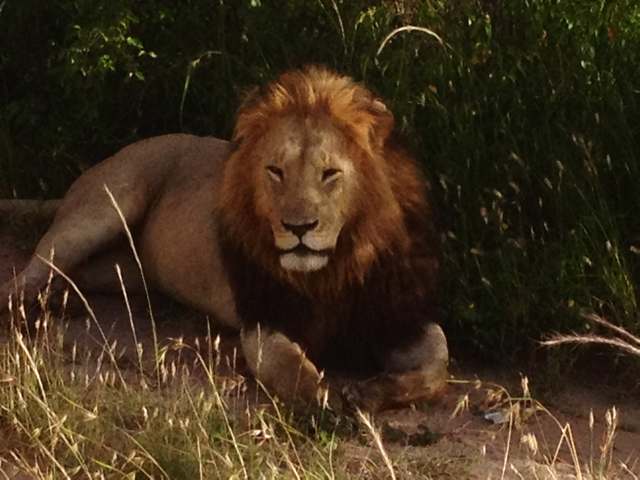
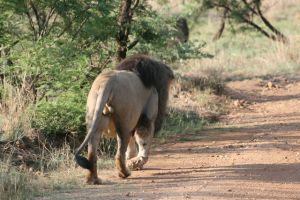
A highlight memory in my life was recently watching a pride of lions hunt in Kenya on the Serengeti plains. Here are some leadership points I took away from the experience.

Leaders are hard to find

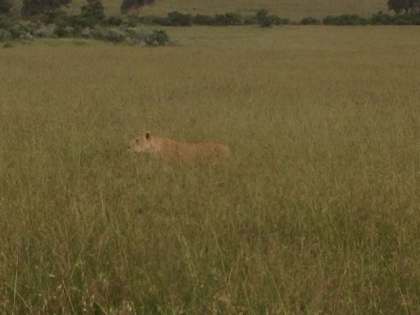
The pride was carefully concealed in the grass. Although these lions are large creatures, they usually kept their heads beneath the level of the tall grass. You had to look very carefully and get up closer to really notice what was taking place.

Lion Insight: This is true of leaders. You need to get close enough to them to really see their leadership at work.

Identify the target

One of the pride raised her head high above the grass and spotted a single Hartebeest on the horizon more than a kilometer away. Once identified, she never took her eyes off the prey and somehow signaled to the entire pride to do the same.

Lion Insight: Leaders are the ones who can look out to the horizon and determine where the entire group should be headed. They also have a way of communicating this so all eyes are on the goal.

Spread out and gain perspective

With a military like precision, the pride began to spread out across the plain, each one staring intently at the goal. By doing so they were increasing their ability to judge the direction and potential action of the prey. It also positioned them in such a way that no matter what took place, some member of the pride may be in a place to have success. This was a team effort.

Lion Insight: Leaders are always helped by getting more perspective on a situation. Allowing your team to be among your feedback group gives an even greater potential of achieving your goals.

Be patient

The pride began to move toward their goal slowly, quietly with stealth. They were not in a rush, as they knew that would be futile when they have to cover so much territory to get close to achieving their goal.

Lion Insight: Leaders need to have the discipline to patiently work towards their goals. One step at a time will get you there. If you rush, you may loose entirely.

Ignore the distractions

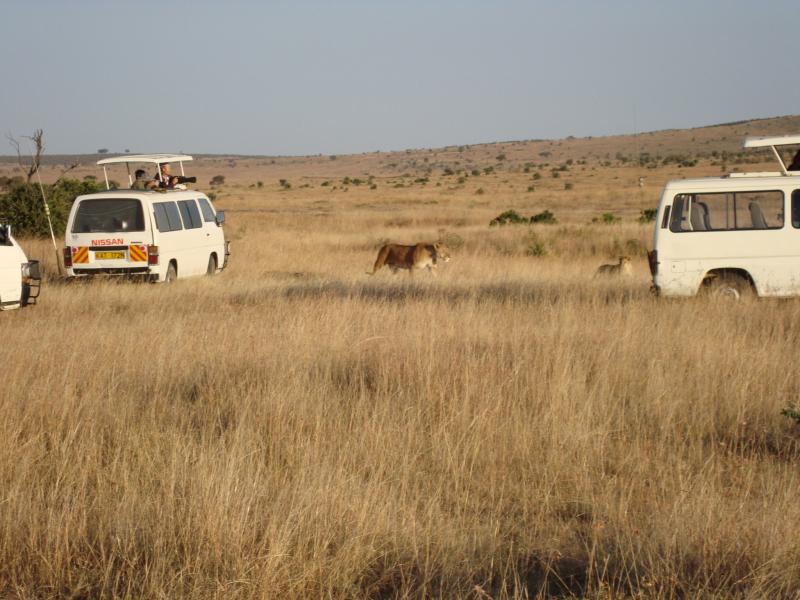
We were in a four-wheel drive right amidst the pride, in fact they walked around us while hunting without even giving an acknowledgement of our presence.

Lion Insight: There are so many things that can capture a leaders attention, but if we are going to reach the goal we must learn to ignore distractions and keep moving forward.

Outside influences can affect the plan

As the pride were moving towards the Hartebeest another Land Cruiser came across the plain towards the lions so that their customers could catch a glimpse of one of the Big Five. In doing so, he attracted the attention of the Hartebeest who then quickly took off in the opposite direction foiling the hunt.

Lion Insight: There will always be the outside influences that can impact your plans. Leaders need to realize this and get over it quickly.

Be quick to regroup

As soon as the pride realized their dinner was now far from a reality they quickly moved back together and began the task of identifying a new target

Lion Insight: Leaders should be quick to call the team together again when there is a need to regroup and set a new goal.

We have an example

There is another lion from whom we can glean leadership principles. Revelation 5:5 refers the Lion of Judah, one of the names ascribed to Jesus.

Lion Insight: Following the Lion of Judah can be a guide for life providing leadership insight and life in all its fullness.

PS – I might add one more to this list and that is that it was the women doing all the work!

Round the World: Traveling Tips after one month and 24,000 kilometers

Well we have been travelling for one-month today. Bob and I have journeyed almost halfway around the world. We are in Kenya, East Africa. How are we doing?  Well…

  • I snore and Bob wears hearing aids that he turns off at night #awesome combination
  • I waken easily so I can defend us from intruders – animal or human, and also hear the alarm
  • When Bob tries to be humorous and is misunderstood – I can interpret for him #whatfriendsdo
  • I am a bit of a techie and Bob isn’t so it is like he has his own IT department with him #technopeasant
  • Bob’s Parkinson’s is controlled by medication – nothing like having a friend to ask if you have taken your meds #nag
  • When dealing with a legal matter in Chile it is sure helpful to have your lawyer with you – (even though he cannot practice in Chile unless in the Canadian embassy, he still thinks like a lawyer) #lawyerhead
  • It is totally possible to travel around the world with a carry on suitcase. You do want to check it though as the security searches for carry on takes too much time #inconsistent
  • Quick dry travelling underwear – where have you been all my life. #amazing
  • Travel shirts and pants – again terrific. Don’t bring blue jeans or cotton of almost any description. It may feel comfortable but takes forever to dry #useahairdryer
  • Get over an desire to buy souvenirs. You don’t have room and no one needs more trinkets. #photomemories
  • Take a big bottle of acidophilus with you and take several daily. It helps give you a fighting chance with a diet that changes every few days #reducegasemmissions
  • An iPhone can serve as your movie camera, camera, microphone for interviews replacing all these gadgets. Get really comfortable using it before a trip. Oh yeah, and do not allow it to join a network and roam. That can cost as much as the trip J #threedollartextmessages
  • There is a lot of time for reading while travelling. Bring your library on an iPad or Kindle device – you will be glad you did
  • Energizer Batteries. In all the travelling I have done in my life I have tried every AA and AAA battery there is. None have performed like Energizer in fact I think of Energizer as an unofficial sponsor of this round the world tour. They are powering my flashlight, digital recorder, noise cancelling headset and none have required a change yet #keepsgoingandgoing
  • Carry US dollars as it is often the preferred currency for visas or paying reciprocal fees at airports (cash only). That said don’t bring bills larger than fifties and none printed earlier than 2000 or they may not be accepted #goodoldusa
  • Take naps. These are the ultimate cure for frequent time zone changes so plan your days around naps #melatonin
  • Lower travel expectations. There will be flight delays, cancelled flights and mix-ups. Act like the travelling professional you are and seek solutions with the staff #getoverit
  • Remember that you are entering into someone else’s culture. Don’t impose your culture on everyone around you; instead take a real interest in his or hers. Try to speak their language #notegocentric
  • Worldmate – a travellers dream app. We use it twenty times a day for weather, conversion of currency, flight info, hotel info and time zones #worldmate.com

Now here is a list of what I would do differently:

  1. Not carry books as gifts #tooheavy
  2. Bring one more pair of travel pants that can pass as dress pants in a very light color or shade #classy
  3. Print a bookmark or even just photos with contact information as gifts for people #nottooheavy
  4. Bring teaching materials with me and anticipate being asked spontaneously #beprepared
  5. Allow more time for journaling. It takes as long or longer to record the experiences #capturewhilefresh

So that is it after one month, let’s see what I would add to these lists after two months!

Genocide and Generations

Today we made the rather obligatory visit to a Rwandan genocide memorial. We wanted to go. I believe  it is absolutely necessary in order to provide context and the backdrop to realities of life in Rwanda today.

It was a Polish lawyer who first coined the word genocide in 1943 from the Greek ‘geno’ (family, tribe or race) and the Latin ‘cide’ (killing).

If you have been to Auschwitz or one of the several concentration camps in Europe you would know what to expect. What I was not prepared for was realizing how similar the pattern of genocide was between Germany and Rwanda. There is no question that in Rwanda it was not a riot gone bad but rather a highly planned an orchestrated intent to destroy a group of people by killing, causing serious bodily or mental harm, and deliberately imposing conditions where life was impossible.

In 1994, twenty percent of Rwanda’s population were murdered leaving tens of thousands of children as orphans, between 250,000 and 500,000 women raped, and many men and women maimed for life with missing limbs, eyes and fingers.

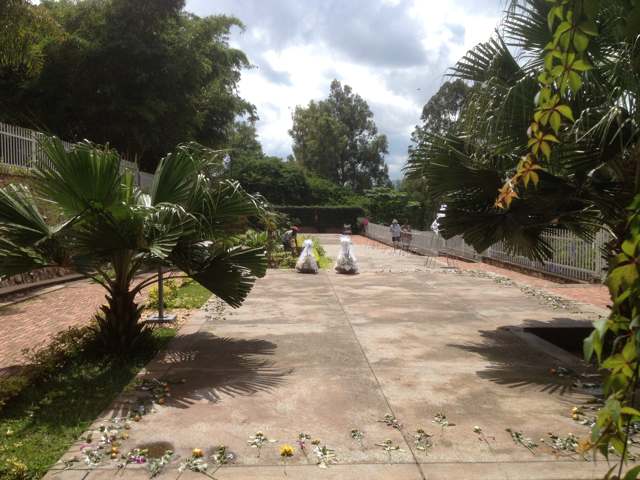
Genocide Mass Grave Kigali

As I looked over a mass grave where 259,000 Rwandan’s are buried I was caught up in my mind with the theological doctrine that derives from the Augustinian concept of original sin. Simply stated it is a doctrine that asserts we as people are by our very nature hard wired to reject the love and rule of God in our lives. It is illustrated by a glass a wine with a few drops of poison in it. Even though it could be a glass of very good wine, the few drops poison all of it. So while not all of our nature as a human is depraved; our nature is totally affected by depravity.

There were good people, neighbors, and friends who suddenly over a very short period of time became killers and it has left behind a generation of damaged people in a nation trying to rebuild itself.

The Next Generation

Just two hours after reflecting on the Memorial I was escorted to the Kigali Institute of Science and Technology to speak to a classroom of students – mostly engineering students. It is a significant university here that was started with the determination to encourage the zeal for modern technology and science among the Rwandan youth so that they would be able to compete with students from other parts of the world.

Most students in the room would have been between one and five years of age when the genocide of 1994 took place here. Some of these young adults were raised by others – their own family dead. Everyone in the room knew of family or friends who lost their lives in 1994 under the planning of the group called Akazu.

Yet what I experienced with the students was a hope for the future of Rwanda. They desire to be educated and a part of the future in this aesthetically beautiful land. They are Rwandans and no reference is made in this country now of tribal differences. Do they still exist? I suspect so, but the people are trying to focus on the future more than the past.

I am now back on the campus of the Wellspring Academy feeling convinced of their focus on improving education. They are not only developing top-notch schools and using these as models for the government, but they are also building up the caliber and capacity of teachers who are the heart and soul of an education system. Their laser like focus is a key to their success, and evidenced by the sense of God’s favor they have here in Kigali.

Bob and I are doing a day of leader development tomorrow, pouring into the team here at the campus to encourage and equip. Wellspring was birthed right in our neighbourhood back home, so I guess we are just trying to be good neighbors.

Learning from today:

  1. You and I are capable of doing unimaginable things given circumstances that nurture that. There were men and women who claimed to be Christians who participated in, or did nothing to prevent the bloodshed.
  2. I think about the children – those who were massacred and those who have had to live with the consequences of what they saw during that 100 day killing spree. It inspires me to continue giving time to the work of protecting and caring for children as a board member of World Vision Canada.
  3. There is hope, and it is just one generation away. This inspires me to continue mentoring and building into the next generation of leaders.

Rwandan Work Prayer

While in Butare we visited the National Museum of Rwandan in order to get a pre 1994 historical background view of the culture in this beautiful country. Imagine my surprise when I found this prayer in the lobby there – very appropriate for all of us as we go into our workplace. – Carson

Work Prayer

My Heavenly God,

As I enter this workplace I bring Your presence with me.

I speak Your peace, grace, mercy and perfect order into this place.

I acknowledge Your power over all that will be spoken, thought, decided and done within this place God.

I thank You for the gifts you have blessed me with.

I commit to using them responsibly in Your honor.

Give me a fresh supply of strength and knowledge to my job today.

Anoint my works, ideas and energy so that all my accomplishments may bring You glory, and my works bring faith, joy and smiles to those I come in contact with.

God, I pray that when I leave this place give me traveling mercy.

Bless my family and home.

In Jesus name, Amen

Tweeter and the Monkey Man

Elvis – The Hotel Monkey Man

Bob Dylan

All day long I have been hearing Bob Dylan’s voice from the Travelling Wilburys singing, “. .

“To an undercover cop who had a sister named jan
For reasons unexplained she loved the monkey man”

Now let me try to explain.

Breakfast with Elvis

Bob and I were having breakfast at the Protea Hotel right at the entrance gate to Kruger national park. The gate itself reminds me of Jurrasic Park – because once you pass through it, you are the minority. We are in animal territory and Bob and Carson seem more like “Kibbles and Bits” once you enter the park.

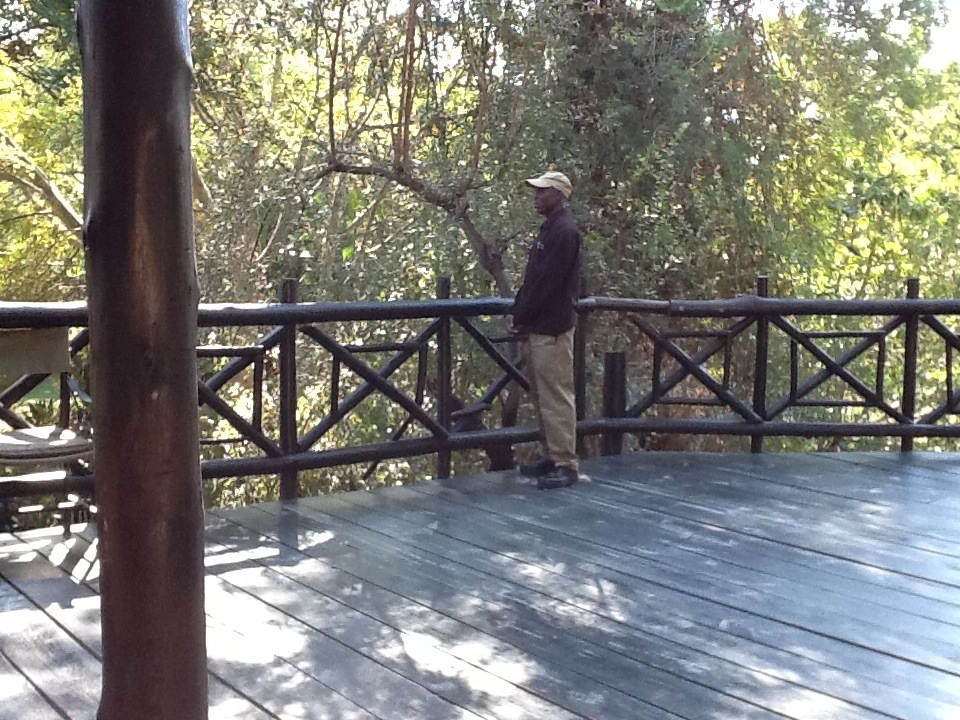
Back to breakfast. So from where I am sitting I am watching one of the staff at the hotel positioned on the outside deck standing very alert yet sublte. The entire breakfast time he did not move but was holding something in his hands.

Curiosity has taught me a lot and occasionally gotten me into trouble. So I approached him and found out his name was Elvis. I also saw that what was in his hand was a homemade sling shot with 18 inches bands of red surgical tubing coming back to the leather patch for holding the round stones he had in a pouch.

“What are you doing?” I asked politely.

Elvis replied, “Watching for monkeys.” He then showed me how he fits the stones into the sling shot.

“So you are the Monkey Man here at the hotel?”

“Yes, yes . . the Monkey Man” he laughed with his beautiful white teeth showing from ear to ear. “The Monkey Man”  he repeated with laughter.

“I haven’t seen any monkey’s this morning.”

“No,” Elvis said seriously, “it is because I am here. No monkeys today,”

Now Bob and I have seen these masked robbers on the property, but I still got the giggles as I thought about a hotel that has a monkey man on staff.

The leadership developer in me then started imagining the interview process for the job. I was now laughing out loud at just the prospect. Bob kept asking, “What are you laughing about?”

“The monkey man interview process.”

I was barely able to get that out without crying I was laughing so hard. My friend smiled with me, and my bizarre, warped sense of humour.

The Interview

Inside my head I picture the manager of the hotel coming out of his office with papers in his hand calling out, “Elvis?”

Elvis stands and walks towards the manager with his slingshot in his hand. Shakes hands with the manager and then enters his office.

Elvis has no papers with him and is dressed in a very casual manner as the manager asks him to sit down.

“So Mr. Elvis, you are here to apply for the Monkey Man position?”

“Yes sir,” he says shyly.

“Let me ask you a few questions, Do you like monkeys?”

“No sir.”

“Do you like eating Monkey glands?”

“Yes sir.”

“What do you think is the most effective way for our hotel to get rid of monkeys?”

“Sir I would go into the park and follow some lions and collect big bags of lion manure and spread it around the hotel.”

“Wouldn’t that smell and bother our guests?”

“Yes but it would get rid of the monkeys.”

“Would you be opposed to using a..” the manager gets up and closes the office door and looks into Elvis’ eyes, “. . a more lethal method?”

Elvis smiled, and holds up his slingshot.

“You any good with that?”

Elvis stares at him and with pride and repeats, “I never miss.”

“Even in a crowded dining room with dozens of guest in it?”

“I never miss” Elvis said more seriously.

The manager then stands up and walks towards Elvis, extends his hand saying, “You’re hired. You are hotel’s monkey man. Can you start tomorrow?”

Well I am going to sleep tonight still smiling about the Monkey Man. Hope to say goodbye to Elvis before we leave tomorrow.

What questions would you ask if you were interviewing someone for the monkey man position?

Buenos Aires: Trusting the GPS

Have you ever been to an area where your GPS warns you that you are in a BAD part of town?

Catherine our host, driver, and translator, was driving us to meet the leaders at a community work that started as a church and now works directly with families in the community through centers that they have developed.

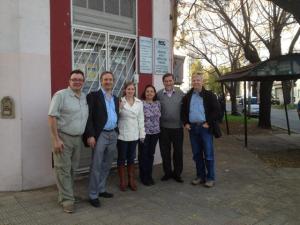
The pastor who started the work from the church was Gerardo Kopf who now serves as the General Director of Fortalecer: Recursos Para Familias Y Comunidades. Lucio Andrés from his board of directors also agreed to meet us at one of their centers. Gerardo explained that although they started as a church, they realized the people needed more. They needed more professional help – beyond what pastors are trained to do.

As Catherine drove us to the neighborhood in Buenos Aires she announced that her GPS issued a warning that we were entering into a dangerous neighborhood.

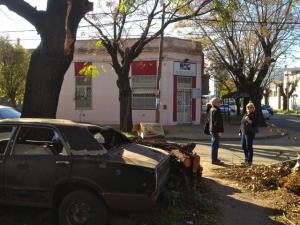
I have seen worse actually, but it did have all the traditional signs of a bad neighborhood. Graffiti, burned out cars left out on the streets, heavy bars on all the windows in sight. This is where the church has placed it’s self.

The issues for families in this community are very challenging and there is a great deal of abusive violence. The community center itself is heavily barred because the husbands of abused wives want to get back at those who help their wives.

Fortelecer’s principles are clear:

  1. All people are created in the image of God and are to be valued and respected.
  2. The gospel of Jesus offers hope.
  3. Hope that produces change is possible.

With these principles they provide resources to help families become healthy and create safety, love, equity, peace and solidarity. Wow.

I notice that whenever I ask South American leaders about ministry, they respond talking about people – fruit of their work. Most pastors here are engaged in active counter cultural activity within their community as part of their regular work week.

Volunteers power Fortalecer. I met Aldo, a psychologist, who gives one day a week to do counseling at the center. He sees eighteen people a day from 7:30am – 9:30pm. It is his volunteer service for the Lord and he is just one of forty “permanent’ volunteers. There are also over 100 additional volunteers for special programs The counselors here see 1500 people per year in this manner and in addition hold five workshops per week.

I was deeply touched by three things today. The commitment of lay people from the church to working in the community. The philosophy that if we bring people together with a common problem, they can become a community helping one another.

When we left the center, I was stuck for words. Not because of my lack of Spanish, but because of the love of their neighbors and their volunteer commitment to this calling.

Buenos Aires: A city of many cities

Buenos Aires: Now here is a complex city. It is an ocean port and the name until the 17th century was “Port of Saint Mary of the Fair Winds.” The sailor in me likes the connotation but as I hope to share in a few blogs – there are other, not so fair winds that blow here.

Soon after arriving I realize I have been pronouncing the name of this city of 13 million incorrectly – for years. My best shot at it now is “bwā-nəs-ˈa-rēz” and my tongue stumbles over the “r” while trying to emphasize the hard “e” in Aires.

We have had a wonderful host the entire week here in Catalina (Catherine) Ogden. Catherine is a Regent College alumni who we were connected with through Jim Houston – and what a delight that has been. She has served as our remis (taxi), translator, and cultural guide. When not guiding Canadian pilgrims around her city she works for the United Nations in the heart of downtown BA.

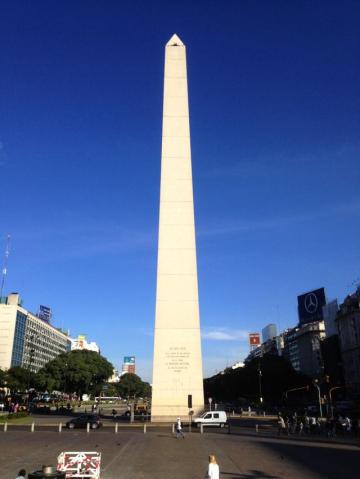
Buenos Aires is really is a city of many cities. The first Buenos Aires is a typically poor Latin American city of shabby streets fronted by strident advertisements offering cheap phone calls, ‘branded’ clothes and electronic goods. But look above and behind, and a second city appears.

Here, the electronic billboards do not quite conceal ornate European buildings constructed in the late 19th and early 20th centuries, with their graceful Doric columns, art deco door frames and angels with vacant eyes. You know that these streets have seen much over the years and just a brief read on Argentine history and one starts to get the picture here.

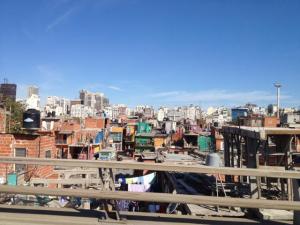
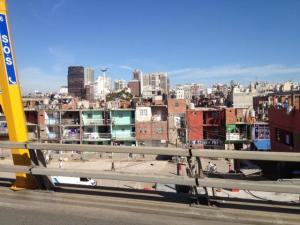
The route into the city centre follows an elevated highway. As we passed along it, I looked down on the roofs of the city’s traditional neighbourhoods. From here, Buenos Aires appears both unpopulated and infinite; it looks like one place but it is many. On every street corner there are invisible borders of class and identity. As we got closer to the city, shanty towns pushed up against the freeway and even the elevated highway cannot hide them as they also have added stories and become multi level.

Our driver asked me to put my camera down and not take photos in case we get shot at. Hmmmm, okay, new safety tip. J

Cities with large gaps between rich and poor tend to have much higher crime rates. This epidemic exists horribly in Buenos Aires. Crime and poverty are identified as Buenos Aires’ largest obstacles.

It is hard to get straight facts about poverty here. The government figures are understated – this seems obvious to the naked eye. According to a paper jointly written by the Argentine Catholic University and Catholic Charities over a third of metropolitan Buenos Aires, 34.9%, live below the poverty line. That translates to 4.4 million people, more than double the official Argentine government estimate.

Downtown

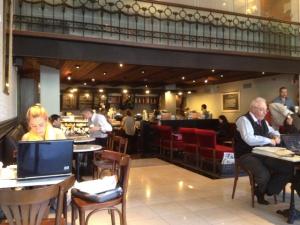
Now sitting in a Starbucks downtown one can hide from the poverty and would never know, but venturing into the communities where Christian leaders are working in and throughout this metropolis and it is a whole other story.

Bob and I stayed in a lovely and seemingly safe community but as we ventured out during our interviews we got to experience the many cities of Buenos Aires.

It is easy for us to keep things hidden away  – even from the poorer parts of our own cities. But people live there, real people with real needs.

I am particularly drawn to the needs of the children in these communities. Breaks my heart. One of the ministries we visited here, Fortalecer, is doing something about it – more on this next blog.

Around the World In Seventy Six Days

Into the Global South

ImageOn May 1, 2012 I am embarking on a journey around the world in the global south. I am travelling with my long time friend Bob Kuhn. Our friendship, together with David Bentall, is featured in the book The Company You Keep and those who have read this may not be surprised that two men in their fifties are even thinking about an itinerary like this.

Not for sightseeing

We have two objectives, well maybe three. The first is a desire to meet Christian leaders in the global south, listen to them and ask them to speak to us as leaders in the north. There is no question that followers of Jesus are experiencing a movement today in the southern hemisphere that those in the north long for. God is far from dead in the global south.

Pastors, ministry leaders and Christians serving with government or in the marketplace will be interviewed and we will tell their stories. We will find them in the center of some of the world’s largest cities and in remote villages where people struggle to live daily due to the effects of complexity of poverty. As well as writing a new book about our adventure I will be sending short video reports to MyVu that will be featured by Crossroads Communication across Canada and available online. The congregation at First Baptist Vancouver will be following me around the globe through video messages I will be sending back for each of the Sundays I am away.

Our second objective is related to Bob.  He was diagnosed with Parkinson’s disease over six years ago.serving as an ambassador for World Parkinson Congress 2013 to be held in Montréal.  This world-renowned event drawing 3 – 4000 of the best researchers, clinicians and leadership in the Parkinson’s community from around the world. We will be meeting with leaders of this specific community, inviting them to come to Canada to participate in WPC 2013. Bob is a blogger and will be sharing our journey on Positively Parkinson’s along the way.

Image

The third objective is to deepen our friendship together and have fun being surprised by the works of God through the people we meet.

Not for the faint of heart: Our itinerary

What would you ask?

If I could take you with me, what questions would you ask of leaders in the global south?

What would you like me to find out on this journalistic journey?

A Mars Venus Moment

I am exhausted. Not physically tired, but because my nice quiet Saturday morning has been disrupted by a very tedious conversation beside me.

Brenda is away on a course so I decide to have a quiet morning starting with breakfast out at our neighborhood spot. It started well until a voice stood out in the crowd. You know the type of voice that is not speaking loudly but just stands out because it is unique in tone and frequency? It was that kind of voice.

It was a young school teacher who was out with a woman that he seemed to be trying to impress, however this is where it went sideways.

They were one table away from my nice ‘quiet’ corner location. I wasn’t meaning to listen. I had reading with me I wanted to do but I just couldn’t stop myself. It was like there was no one else in the cafe.

For forty-five minutes the teacher talked, almost without a breath, detailing every action of his last week at work. Where he was, what he did, who he talked to, what he said, what they said – even I was bored! His gal just sat there, back straight with her hands in her lap expressionless. The shape of her mouth gives the impression of a slight smile constantly. I think he misreads this as her being interested.

I felt like just bursting in, sliding into the chair beside him for an impromptu mentoring moment. Here is what I would like to share with him:

1. Don’t try to dominate by talking all the time. It is probably your own insecurity that makes you do this. Do you feel you have to monopolize conversations droning on and on about topics that bore women to tears?

2. Do you really think she is interested? Just because a woman listens to you and acts interested in what you’re saying doesn’t necessarily mean she is. If you would pause long enough to notice the social cues, like her looking at her watch every five minutes, and her glancing up desperately to see if she knows anyone – anyone at all – entering the cafe – you might have given her an opportunity to say something and you could actually learn about her.

3. Stop worrying about what you’re going to say next. Instead, focus all your attention and energy on listening to what she wants to say to you. This does take a little effort but it’s not very hard to do. It is not something that you (as a man) do “naturally”. You simply have to concentrate and you can learn to do this.

Okay, I can’t take this any longer, I have to leave. She has now been listening to you for an hour (yes, I am typing this right beside them). Oh no! It just got worse, now he is talking to her about his involvement at his church. Lord help us!

My restaurant experience today is repeated day after day in ministry and organizational offices I visit. With women in leadership roles I observe similar behavior in the board room. Men dominating conversation and discussion. Women waiting for an appropriate opportunity to say something and to actually add to the deliberations. Women leaders report to me that they do not feel listened to, that when they speak in meetings their comments and suggestions are ignored or belittled—and that the same comments or suggestions from men have more.

We want women to talk like us – “Martian”. Recently my assistant, Wendy, said to me, “you want me to speak like a man” referring to my asking her to send me “bullet point” updates. It made me smile but she was right. John Gray in “Men are from Mars Women are from Venus” closes his book “remember men are from Mars and women are from Venus. Even if you don’t remember anything else from this book, remembering that we are supposed to be different will help you to be more loving.”

In another book, the Bible, it reads “So God created man in his own image, in the image of God created he him; male and female created he them” (Genesis 1:27).

In these very early verses in Genesis it is interesting to note that God called both male and female, “Adam” (meaning “man”) the day they were created. Adam and Eve were created with differences, but together they made a full “man,” – a complete picture of God Himself. The differences between men and women were not to be a source of discord or inequality, but a beautiful compliment to each other. So let’s at least learn how to have a conversation.

Brenda is home now. I can hardly wait to go listen about her day.