Most people celebrating St. Patrick’s Day today couldn’t tell you much about the man behind the shamrock. They know the colour green. They know Ireland. They might know snakes.
Here’s what they don’t know: Patrick wasn’t Irish.
He was a teenager from Roman Britain when Irish raiders kidnapped him and sold him into slavery. He spent six years alone on a hillside in Ireland, tending sheep, cold and forgotten. Then he escaped, made it home — and went back.
That decision is the whole story.
Character Before Competence
Leadership literature loves a good framework. Five steps to this. Three habits of that. What it rarely talks about is what Patrick understood instinctively: who you are when no one is watching is who you will be when everyone is.
Six years of slavery didn’t produce a bitter man. They produced a formed one.
Patrick’s years of hardship weren’t a detour from his calling — they were the preparation. The loneliness deepened his prayer life. The powerlessness cultivated humility. The suffering stripped away every motive except the one that mattered.
Most leaders want the influence without the formation. Patrick got the formation first. The influence followed.
He Went Back
This is the move that separates Patrick from nearly every leader I’ve ever studied.
He escaped Ireland. He was free. He had every reason — and every right — to never think about that island again. Instead, he had a dream in which he heard the Irish people calling him to return. And he went.
Not because it was safe. Not because it was strategic. Because it was his.
Calling-driven leadership and career-driven leadership look similar on the outside. Both produce activity, results, even impact. But when the cost goes up — when the assignment gets hard, when the opposition stiffens, when it would be entirely reasonable to walk away — only one of them stays.
Patrick stayed because he wasn’t building a career. He was answering a call.
He Didn’t Lead Alone
Patrick didn’t build an institution. He built a community.
The Celtic model of leadership that Patrick embodied was relational at its core — small bands of people moving together, sharing life, extending the mission not through hierarchy but through belonging. He formed clann.
There’s something countercultural in that today. We measure leaders by their platform, their reach, their numbers. Patrick measured his work by whether people were genuinely changed — and whether they, in turn, changed others.
The leaders I most respect aren’t the ones with the biggest stages. They’re the ones with the deepest roots — people who know and are known, who lead from inside a web of real relationship rather than above it.
The Question Patrick Leaves You With
Here’s where I want to leave you — not with a technique, but with a mirror.
Patrick went back to the place of his suffering and made it the place of his greatest contribution. That is not a coincidence. That is a pattern.
What is the hard place you’ve been avoiding? The hard conversation you keep deferring? The assignment that feels too costly, too uncomfortable, too much like going back to something you’d rather leave behind?
It may be precisely the thing you’re meant to walk toward.
That’s what I wrote about in Lead Like a Saint. Not a hagiography of a historical figure, but an honest look at what it means to lead from character, from calling, and from the kind of courage that doesn’t make headlines but does change lives.
Patrick didn’t set out to become a saint. He set out to be faithful.
That’s still the best leadership model I know.
Lead Like a Saint is available now. And if you are interested in hearing about my upcoming leadership tours in Ireland — the actual places where Patrick walked — head to this link for a chat, or email me at tours+carson@carsonpue.com. Happy St. Patrick’s Day.
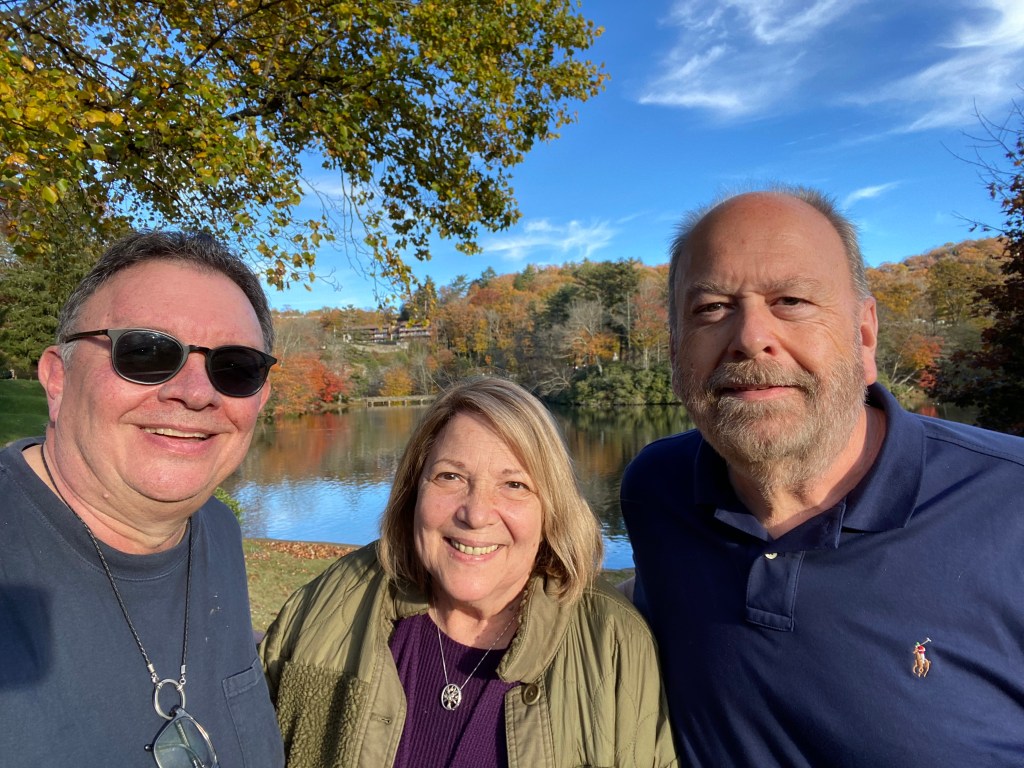
Yesterday marked two years since my dear friend Martin Sanders went to be with the Lord. I’ll be honest—sitting down to write about him on the actual anniversary was too much. Instead, I spent the day thinking of him, carried by memories and that familiar ache of missing him. In some ways, it feels like a lifetime ago; in others, I still expect to see his name pop up on my phone, ready with a question, a laugh or a sharp insight.
Grief is a strange companion, isn’t it? It changes shape, but the love that fuels it remains constant.
Martin and I shared a lot of life together. We weren’t just colleagues or casual acquaintances; we were soul friends. We were part of the Point Group, Leighton Ford’s mentoring cohort, which was a crucible for deep connection and spiritual growth. In those rooms, we learned that leadership isn’t just about strategy—it’s about the state of your soul.
One of the profound threads that bound us together was the mutual loss of a spouse. When you walk through that specific valley, you speak a language that others, thankfully, haven’t had to learn yet. We understood the silence of an empty house. We understood the ache.
I will never forget when my wife, Brenda, died. Martin didn’t send a card. He didn’t just call. He changed his plans, got on a plane, and flew to be with me. He didn’t come to fix anything—he knew he couldn’t. He didn’t come with platitudes or theological explanations. He just came to be there.
That is the mark of a true friend and a great leader. He understood the ministry of presence. Do you have people in your life who will just sit in the ashes with you? If you do, treasure them.
Later, when God brought a new chapter of joy into my life and I remarried, Martin didn’t miss a beat. He welcomed Glenda into our friendship from the very beginning with open arms and that characteristic warmth of his. He made her feel like she had always been part of the circle. Because of that, she misses him deeply, too.
Our friendship wasn’t all solemn nods and shared grief. Far from it. We laughed—loudly and often. We shared a certain irreverence that might have surprised people who only knew us from a distance. We travelled together, finding humour in the chaos of airports and the nuances of different cultures. We believed the disciples of Jesus laughed a lot and that if you can’t laugh at the absurdity of life, you probably aren’t paying close enough attention.
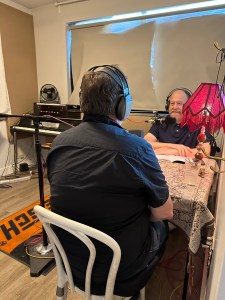
Out of our shared passion for developing leaders, we started the Mentored Podcast. We wanted to pass along wisdom, encourage other mentors, and frankly, just have the conversations we wished we’d heard when we were younger. Recording those episodes didn’t feel like work; it felt like an extension of our friendship. I re-listen to them sometimes, just to hear his voice and his wisdom.
Martin was a man who invested deeply in others. He challenged me, he encouraged me, and he loved me well. He also loved my sons and spent time with them even when they lived overseas. When they married, he embraced my daughters and loved them too.
As I reflect on these two years without him, I am reminded that the best way to honour those we’ve lost is to embody what they taught us. Martin taught me about showing up. He taught me about the power of laughter. He emphasized the importance of taking care of your own soul. He taught me that mentoring is, at its heart, about loving people into their potential.
So today, I’m thanking God for the gift of Martin Sanders. I miss him, but I am so grateful that our paths didn’t just cross—they merged for a season.
Here’s a question for you as you go about your week: Who needs you to just show up for them today? Not to fix, not to preach, but just to be?
There’s a common stereotype that men don’t need friends, that they don’t have time for friendship, or that it isn’t an important part of their lives. This is a damaging narrative that needs to be corrected. The truth is that friendships are just as important for men as they are for women, and the benefits of having strong friendships far outweigh any excuses not to make time for them.
The Benefits of Friendship
Having strong friendships can provide numerous benefits such as increased mental health, improved self-esteem, greater emotional support, and even better physical health. People with strong friendships tend to live longer than those without, and those who actively maintain their social networks tend to enjoy more fulfilling lives overall. Furthermore, having strong relationships can help men become better leaders in their professional lives. Studies have shown that people who cultivate meaningful relationships with others are more likely to be successful in business and leadership roles.
Respecting the Depth of Friendship
When it comes to building real connections with other people, there needs to be a certain level of respect and trust in order for the relationship to flourish. Respect is essential because it encourages both parties involved to open up about themselves and share personal experiences without fear of judgement or ridicule. This kind of depth helps create an environment where individuals feel comfortable enough to talk openly about their challenges and successes with each other. It also allows them to build meaningful relationships over time by growing together through shared experiences—both good and bad—and learning from each other along the way.
Activities That Bring Friends Together
Making room for friendship doesn’t necessarily mean spending hours pouring your heart out on a park bench every day; it could simply mean carving out some quality time with friends on a regular basis for activities like playing video games or sports together; going out for drinks or dinner; watching movies; exploring new places; attending events or conferences; taking classes together; trying out new recipes at home; or just catching up over coffee or tea on weekends. These activities allow people to build lasting friendships while having fun at the same time!
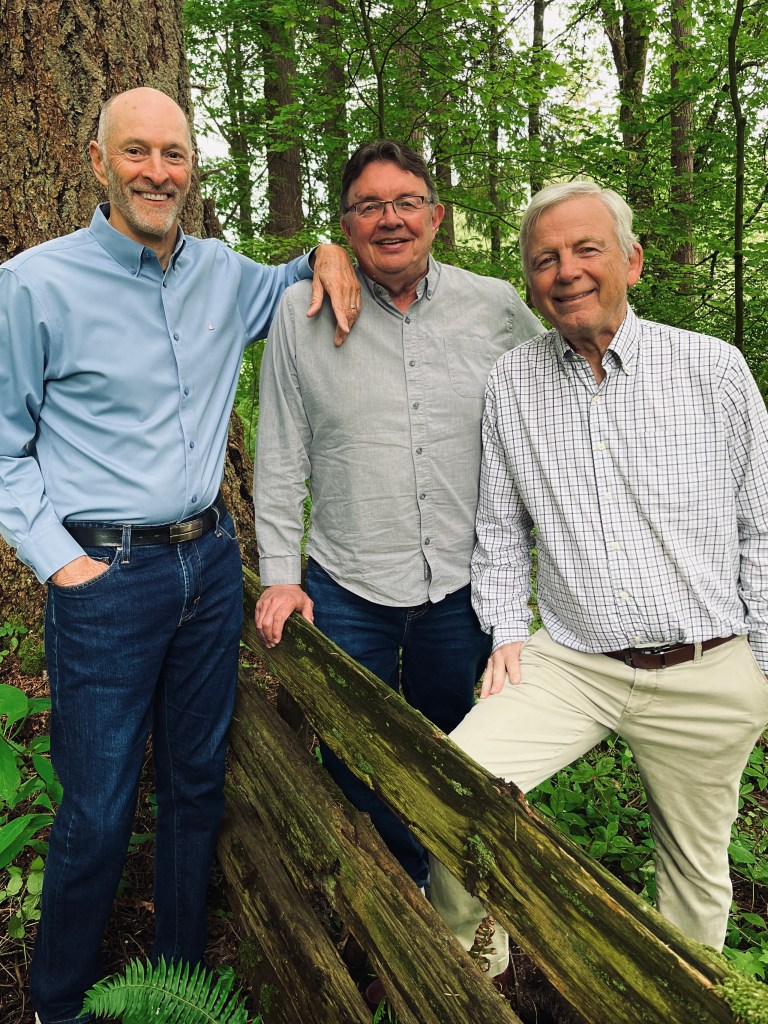
Earlier, an interview aired on the television show 100 Huntley Street about the friendship I share with Bob Kuhn and David Bentall. In it we talk about the mutual sharing of weakness as a foundation of authentic friendship. Take a look using the link below. (It starts at the 4:30 mark on the broadcast).
What is Keeping You?
Men should prioritize friendship in their lives and actively seek opportunities to engage with friends. Building meaningful connections with those around us is essential for mental, emotional, and physical health. Spending time with close friends can help us feel more connected, reduce stress, and boost our moods.
Additionally, it’s important to be mindful of our relationships with family members and show them the same attention as we do our closest friends. For the past three years, I have been calling my brothers each Sunday night just to stay in touch. I also phone my mother-in-law regularly to check in on how she is doing.
Making room in our lives for friendship is essential if we want true fulfillment. Not only do friendships offer countless benefits, but they also encourage us to grow into healthier versions of ourselves when we surround ourselves with people who genuinely care about us and vice versa. So go ahead, break out of your shell—it’s time you reap all the rewards friendship has waiting for you!
As the summer days dwindle and the crispness of autumn fills the air, pastors of churches in the Northern Hemisphere find themselves at the cusp of a new beginning. The transition from summer to fall marks not just a change in weather but also the start of what we often refer to as the new “church year.” For pastors, this period can be filled with emotions and challenges as they navigate the shifting dynamics within their congregations and guide their teams and boards through the transition. As one who has been a pastor and developed the leadership skills of hundreds of pastors, I would like to share and explore the priorities pastoral leaders should focus on during this time, discuss some new patterns for sustainable ministry, and provide practical tips to help pastors find balance amidst the changing seasons.
Emotions and Challenges:
Seasonal transition periods can bring about a mix of emotions for pastors. The anticipation of what lies ahead, coupled with the weight of responsibility, can sometimes make even the most seasoned leaders feel a sense of apprehension. Leading a team through this period of change requires a delicate balance of empathy, vision, and communication. Pastors must be attuned to the emotions of their team and board members, providing reassurance and support while also setting clear vision and expectations for the new church year.
Priorities and Approaches:
During this seasonal phase, pastors must prioritize certain aspects to ensure a smooth and successful start to the new church year. Here are a few key areas that deserve special attention:
Vision Casting: As the leader of the church community, pastors play a crucial role in setting the vision and direction for the upcoming year. This involves communicating overarching goals, themes, and strategies to the team and board members, inspiring them to embrace the vision as their own.
Team Development: Building a solid and cohesive team is essential for any pastor. During this transition, pastors should intentionally invest time in nurturing relationships, identifying individual strengths, and aligning team members with their respective roles. This fosters a sense of unity and purpose, enabling the team to work harmoniously towards shared goals.
Renewed Spiritual Focus: The start of a new church year provides an opportunity for pastors to reinvigorate their own spiritual journey and encourage their congregation to do the same. Pastors should prioritize personal spiritual practices, such as prayer and reflection, to ensure they are spiritually nourished and equipped to lead. I know many pastors who take a retreat time in October or November after getting the church up and running in September.
New Patterns for Sustainable Ministry:
Pastors must create a healthy work-life balance by developing sustainable habits. I was personally not great at this, and there is a price to be paid. Here are some practical tips for achieving this:
Time Management: Pastors can benefit from implementing effective time management techniques, such as creating schedules, prioritizing tasks, and setting boundaries. This allows them to allocate time for both ministry responsibilities and personal rejuvenation.
Delegation and Empowerment: Pastors should learn to delegate tasks and empower others within their teams. By entrusting responsibilities to capable individuals, pastors can reduce their workload and create opportunities for growth and development among team members.
Self-Care: It is crucial for pastors to prioritize self-care to avoid burnout. This can include engaging in hobbies, seeking support from mentors or peers, and practicing self-care. By taking care of themselves, pastors can better serve their communities, but as my therapist says of pastors, “We have a hard time taking off the collar.”
Encouraging Motivation and Energizing the Team:
To ensure that the transition period remains positive and energizing for their team and board, pastoral leaders can implement the following practical strategies:
Celebrating Achievements: Acknowledging and celebrating the successes of the previous year can boost morale and motivate team members to continue their hard work.
Setting Short-Term Goals: Breaking down larger objectives into smaller, achievable goals helps maintain focus and provides a sense of accomplishment along the way.
Cultivating Community: Creating spaces for fellowship, team-building activities, and open communication fosters a sense of belonging and camaraderie among the team and board members.
Those of you who know me will appreciate my sailing reference and photos here.
Being at the helm is more than just a phrase; it represents taking charge and assuming a position of leadership. When someone is at the helm, they are in control and responsible for guiding the course of action. It signifies a person’s ability to make decisions, steer the ship, and navigate through challenges.
Just like a captain stands at the helm of a ship, leaders stand at the forefront, providing direction and inspiration to their teams. They possess the vision, knowledge, and skills necessary to guide others towards success. Being at the helm requires qualities such as confidence, decisiveness, and the ability to inspire trust and unity among team members.
Leadership is an ongoing journey that involves continuous learning, adaptability, and effective communication. Whether in a professional setting, a community organization, or even in one’s personal life, being at the helm means taking ownership of one’s actions and making choices that positively impact those around them.
Remember, leadership is not only about taking control but also about empowering others, fostering collaboration, and achieving collective goals. By stepping up and embracing the responsibility of being at the helm, men and women have the opportunity to make a lasting impact and bring about positive change.
So, as summer fades and a new church year begins, pastors find themselves at the helm of change. By prioritizing vision casting, team development, and spiritual focus, pastors can navigate this transition with confidence and grace. Through new patterns for sustainable ministry, pastors can find a balance between their work and personal lives. By encouraging motivation and energizing their teams, pastors create a supportive environment for growth and renewal. Embrace this change of seasons as an opportunity to recommit to your calling and make a lasting impact on your community. May this new church year bring blessings, growth, and transformation to pastors and their congregations alike.
Now, let’s plan a time to get outside and enjoy some of the crisp morning air of Fall.
Thank you for your interest and emails concerning this series on what questions I am commonly asked by leaders in mentoring relationships. While many have heard the term mentoring, lots of you are not quite sure what takes place in a formal mentoring relationship. Here is my next cluster of topics that I commonly speak to executives about. I welcome your comments or questions so please leave a note in the comments section at the end.
The development of men and women leaders is my calling, starting with my family. My work as an Executive Mentor is to come alongside leaders and their organizations helping them to be effective, well balanced and successful.
Often, I am asked, “What do leaders want to talk to you about?”. Some topics come up frequently and I shared examples in my previous posts in this series found here and part two here.
A mentor walks beside you and, in doing so, helps build your confidence and leadership ability. We help you discover insights, skills and solutions for your business, church, organization, or life. Our support and guidance helps you to draw your own conclusions and decisions guided by experience and passion for you to be a better leader.
So many leaders have an aversion to conflict and, because of this, do not hold their staff accountable properly. This fear leads to siloing and team members creating their fiefdoms within the organization. Our fear of conflict is usually grounded in our upbringing, and a therapist can be helpful if you want to understand more about your fear of confronting.
Usually, something from the past has created assumptions about how it will go, and you back off.You can’t change what you refuse to confront. Suppose leaders spend time avoiding arguments or difficult conversations. In that case, they are surrounded by people with poor job performance, staff who do not work well with others, a toxic atmosphere in the office, and status quo results.
A mentor can do several things to help also. I usually start with assisting the leader in realizing the “cost” of not being direct and reminding them that it is part of their job. If we consider what might be gained by being direct, leaders often reconsider assumptions holding them back.
There are MANY mistakes we can make when confronting others, and a mentor can help. Two quick tips are:
1. Don’t wait and always speak about it in person.
2. Never use email or voicemail for this leadership function.
One book I recommend is Jill Scott’s “Radical Candor” where she describes how she had to learn to be more direct as a leader.
If we confront someone we should have one goal in mind: restoration, not embarrassment.
Leaders who postpone making decisions frustrate their teams and lose the respect for their leadership. Over time if you keep deferring making a decision, you will lose your best employees who want more action, and you will encourage those who love the status quo. With similarities to leaders who have trouble confronting employees, leaders who fail to make decisions share fear as the core of the problem. Mentors can help you face your fears and gain confidence.
Overthinking and perfectionism are common culprits with those who delay making decisions. Leaders in the relentless pursuit of perfection are afraid of deciding because they fear making the wrong decision. Only God knows the future, and therefore any decision we make is subject to variables that might happen in the future.
I make a decision. Then, if things don’t turn out like I thought, I make another decision.
Dave Ramsey
A mentor can help you develop the skill of making decisions and can also help you to evaluate your choices after implementation. You can grow in this area by experience, but experience comes at a cost – you are going to make some mistakes.
A mentor can serve as a safe sounding board for a senior leader to think aloud about identifying a problem. It is essential to discover what the real problem is.
A friend in Houston who was a bonafide card carrying rocket scientist with NASA told me, “The problem is NEVER the problem.”
There is a lot of truth in that nugget. How many of us have solved a problem only to find that it created several new problems. Finding solutions to complex situations requires help. I am always impressed with a leader who knows they would benefit from some mentoring when solving the root cause of some leadership issue. Often fresh eyes, like a mentor provides, can point out the obvious and save a great deal of time and potential loss.
If I had an hour to solve a problem I’d spend 55 minutes thinking about the problem and 5 minutes thinking about solutions
Albert Einstein
One leadership tip: Don’t let yourself get enamoured with large amounts of data. It is only helpful if you can make sense of it.
The global pandemic of COVID, created change for leaders. I think of change as the shift of an external situation. As we have seen, it can happen fast and cause global upheaval. Transition is the reorientation people need to make in response to change, and that takes time.
Sometimes mentors can help leaders, or their teams, accept the need for change. It is easy to believe what they’ve been doing, and how they’ve been doing it, is the best possible way to do it. To be successful in both implementation, and helping people we need to manage both the change and the transition.
Similarly, succession-related factors should be on a leader’s radar. Often a safe discussion with a mentor, who does not hold power or position over the leader, is constructive to begin strategizing for the future.
To improve is to change; to be perfect is to change often.
I work with many not-for-profit organizations, which means their CEO, ED or President serve a governing board of directors. The operational leader reports to and works for the board, and a healthy, positive relationship with your “boss” makes your life much easier. However, no two boards are alike, and bad board governance is the stuff of legends. Those who serve on boards may need some leadership in working well with the CEO or lead staff person.
Leading up is more complicated than managing your team. It may involve offering your board a strategic insight, or a plan for a new initiative. I remind those I mentor that every member on a board has a day job. They do not live with the day-to-day operations of your organization, and they need leadership assistance to help understand what you and the staff do regularly. A mentor experienced serving on boards and who has worked for boards can assist both the board and the management team in working together.
Lots of times we are afraid to ask our board members to do too much because we’re afraid they will be scared off. I have long observed that more board members resign for lack of meaningful work, than from being overworked.
You and Your Nonprofit Board (Temkin, 2013)
Mentoring Associates
I have drawn together a team of associates to work with me in serving leaders. This new approach to coaching and mentoring has expanded our capacity to help leaders like yourself. Our team has a diversity of giftedness to mentor leaders in life, leading themselves, leading teams, strategy and marketing, all from a faith perspective.
If you would like to speak to me about how you might become more effective as a leader, spouse, strategist or influencer, please let’s talk. Here is my calendar, and you can choose a time that works for you.
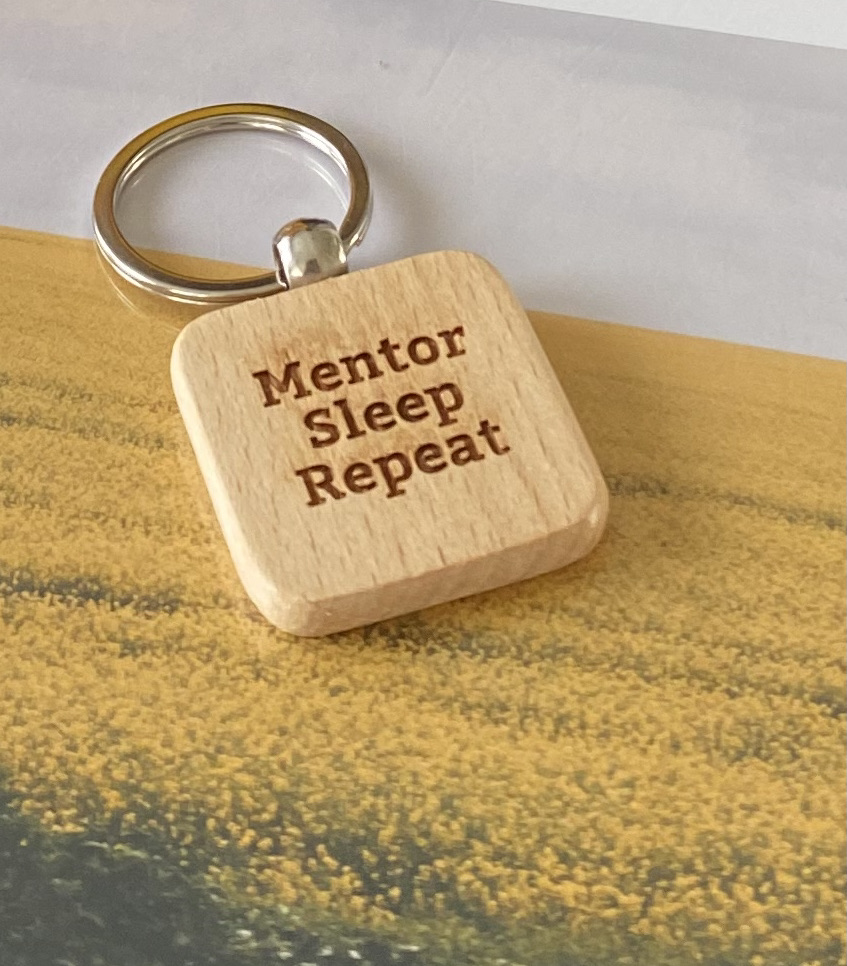
Recently I received a gift box from my friends Jennah and Joel, a couple that I have mentored. Heck, I even officiated at their wedding. When I opened it and saw this keychain it made me smile from ear to ear. They reminded me that this is what I do. I am a leadership mentor, and day after day, I am engaged in mentoring men and women about life and leadership.
Hmmm?
This past week a friend was curious and asked, “Carson, what do people want to talk to a mentor about?”
With my head cocked slightly to the right and my inside voice going, “Hmmm?” I pondered before answering. Sharing what had come up this week, my friend found the variety of topics interesting and suggested that I write about this. So, this begins a series of posts on what people ask me as a mentor. Here are my first five:
Time
It is not uncommon for me to engage in conversations about time. How does one give quality time to friends, spouse and family while juggling work, recreation and others’ expectations? Of course, the discussion goes deeper than just learning some time management hacks. We need to understand often the drivers beneath how we use our time.
Priorities and Goals
Very much related to how we use time, is the focus and discipline required for getting things done. I find most people function, some at a very high level, with no real priorities or goals. They can find themselves in job settings where deadlines and seasonal patterns create a false sense of focus or goal. I help people to understand their purpose, and then help them live on purpose.
Choosing between Good and Great
In his book Good to Great, Collins points out how we often settle for good instead of choosing great. After talking with mentees about the previous two areas, a mentor can be a helpful sounding board to identify what “great” would look like and how to pursue it.
Personal Development
Leaders, homemakers, business people, teachers, construction people, law enforcement, pastors, professors and entrepreneurs are among those who have approached me wanting help in growing and developing themselves. This development they seek is not about work (that will follow). They want to grow and develop. They feel like they are stagnant or, worse, stuck. Often a mentor asking the right kind of questions can draw them into seeing a plan for their development, bringing so much more pleasure in life.
Professional Development
Another form of development sought is the more specific work-related mentoring? Perhaps you have a new role or a particularly challenging situation. In either case, the listening ear of a mentor with experience can help leapfrog you ahead and provide more confidence and affirmation. The workplace has changed a great deal in the past ten years, and organizations are often willing to invest in mentoring for their people.
“Show me a successful individual and I’ll show you someone who had real positive influences in his or her life. I don’t care what you do for a living—if you do it well I’m sure there was someone cheering you on or showing the way. A mentor.”
Denzel Washington
How about you? What question would you like to ask a mentor at this moment in your life or career? Add a comment below, I would love to hear your thoughts.
Awhile back, I had a conversation with my therapist, Ahmad. I cannot stop thinking about it. Ok, so he is not really my therapist, he is my barber, but our conversations are always fascinating.
Ahmad and I talked about the summer holidays and a time when he drove his family pulling a trailer. As he was driving, he felt the trailer’s weight and momentum behind him as he held the wheel. On the other hand, his wife was chatting to him without any sense of the pressure and responsibility of towing a trailer.
The first time I drove a trailer that was not behind a tractor was towing a sailboat in downtown Vancouver. It was scary at first. Was it hitched properly? Would my brakes handle the extra weight? What about the extra height – would I make it under bridges?
There was a certain sway to the trailer as the sailboat seemed unbalanced. I knew I had to be careful, especially when backing up while having my brain wrestle with counter-intuitive steering in the opposite direction. No question, Ahmad was correct in identifying driving with a trailer as stressful.
In a survey by the Center for Creative Leadership, eighty-eight percent of leaders reported that work is the primary source of stress in their lives and that having a leadership role increases stress levels. No kidding!
..having a leadership role increases stress levels. No kidding!
Carson Pue
In all my years of mentoring leaders, I have never seen an intensity of stress faced by leaders, as during this COVID-19 season. Whether in business, non-profits, or churches, leaders are juggling many additional demands on their time, attention, and focus. This past month, even the most effective leaders I know are feeling emotionally and physically worn down because of the pandemic.
When we as leaders are under extreme stress, it affects us in many ways. Our decision-making is affected because we have trouble processing information, and COVID has caused extreme responses. Often leaders focus on the immediate and have been kept from thinking about the long-term implications of decisions.
Another stress response is to become very controlling. Leaders stop working with their teams and make unilateral decisions as they try to control the situation – a pandemic beyond our ability to control.
Leadership stress also drives men and women into isolation. They want to withdraw, to hide, to run. By shutting other people out of their lives, leaders are often left with only their own counsel causing people around them to lose trust while they lose perspective.
The most common question I ask leaders these days is, “How well are you sleeping?” Stress impacts the quality of sleep we are getting. Lack of sleep affects our behaviour, reduces confidence, and can damage relationships with those closest to us.
Do you know a normally calm and positive leader who is now showing signs of anger, irritability, and being overwhelmed? These are signs that your leader needs to be encouraged to take time to practice radical self-care.
A problem exists in that you and I can just be “along for the ride.” We are unaware of the stress involved in driving the leadership trailer. So let me urge you to reach out to a leader and encourage them. Let them know you understand the stress they must be feeling and encourage their practicing of self-care. Lower high expectations during this time, and recognize good things they have accomplished. Encourage them to recharge, recover, pray and practice restorative activities.
During the global pandemic, Dr. Carson Pue has been mentoring Christian leaders around the globe. In doing so, he has made some observations.
These are their stories.
Photo Credit: The Irish Times
Ministry organizations I am mentoring and coaching are now working with fewer people on staff. Staff members are absent due to sickness – either themselves or loved ones for whom they are caring. Others have left because they are caring for children home from school or due to furloughs or layoffs caused by the impact of closures and reduced revenue.
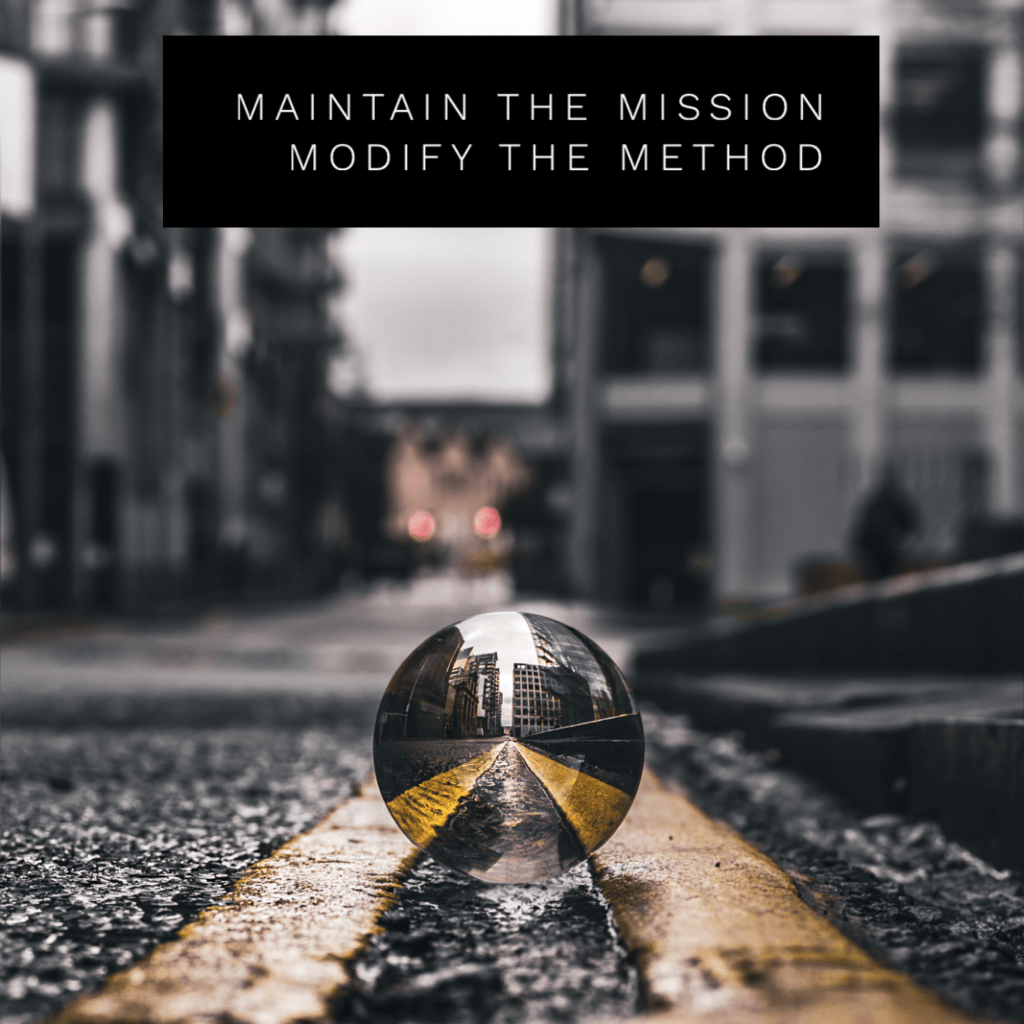
My friend Bob Kuhn, in conversation the other day, said the challenge ahead is discerning how to maintain the mission while modifying the methods. Not only a catchy phrase, but Bob also speaks wisely about the role of leaders in organizations and businesses today. In the book Essentialism – The Disciplined Pursuit of Less, LinkedIn CEO Jeff Weiner considers “fewer things done better” as the most powerful tool for effective leadership. Essentialism, written in 2014, is perhaps the exact theme needed in 2020.
When asked by leaders how they are supposed to cope with all the reductions they are experiencing, I propose some questions to help think through what is essential, and how to maintain the mission with fewer paid staff and reduced financial resources.
Questions Leaders Can Ask
What are the essential services we offer? Can we limit any other services or activities and put more resources into our essentials?
With fewer staff, you cannot expect to do all you have done before COVID-19. Can we reduce the number of service hours we are open?
Do you have any area of your organization where only one person knows how to do a critical part of your work or ministry? If a crucial member of the team became ill or indisposed, is anyone cross-trained to keep the organization going?
Do you have any former staff or volunteers whom you might call on to ask for help during the pandemic?
Is there some new service, resource or product that you might be able to retool with fewer workers and generate new revenue?
What about you? If you were to become ill, have you identified who could make critical decisions in your absence?
I have been very encouraged by leaders who are not trying to be heroes, and who are inviting team members into leadership roles during this time. I think in years to come we will look back and realize how this Covid-19 season re-calibrated teams and revealed previously unrecognized strengths within them.
New Years Day is when I open up a new journal for the coming year. As I do so I recognize that last’s years journal is not nearly full – quite blank actually with sporadic writings. Some years I overflow into two journals but not 2014. It is not that there wasn’t much happening – just the opposite. There was so much taking place that I barely had time to write. When I could find a moment here and there, I was lost for words.
One year ago today we received a phone call from our family doctor telling Brenda he had seen something in an x-ray that he wanted to have a closer look at. This led to her cancer diagnosis of stage-four lung cancer spreading to the brain and bone. At that moment, time stood still. From that moment on, time has been different for me.
We were told that Brenda might not see her birthday in August and that she would definitely not see another Christmas. However, doctors can’t know God’s time plan for Brenda. We are grateful to have celebrated the Christmas that was not to be. We are living with cancer as a reality in our lives now.
How Time Feels
The first year of living with cancer seems to last forever. I have lost count of how many medical appointments there have been. We seem to measure time by when the next appointment is. Then when waiting for blood work test results or the latest MRI or CT scan time seems to take forever. Each day feels like a week. Weeks feel like months, and months feel like years.
Lengthening Days
Time has become very precious to me this year. Every second does count and we rejoice at every day we have together. Here in the northern hemisphere, and at our latitude, we are in a season when daylight increases by one minute per day. Brenda and I were out walking together and she asked, “So what are you going to do with your minute today?” At first I did not understand what she was talking about. She then explained about the lengthening of the daylight hours. This led to a very enjoyable, fun, and reflective conversation about how we might each use our extra minute that day. Suddenly I found myself dreaming about how I could use that minute – and then the new minute tomorrow and the next day.
For most of us, time is something that we never seem to have enough of. We have so to do that we scarf down our meals to get meetings just in time to get a seat. Then it is off to the next thing, and the next thing – then we swiftly make our way home for dinner and just when you think that the day is finally over – there is another meeting at the church or a workout that is calling your name. When we finally get to sleep it can be near or after midnight and we need to get up at 6am the next day. With all the expectations on us plus adding family, friends, relationships, volunteer work etc. – who has time for anything else?
How often have you heard in the marketplace, “Time is money”? Well time is not money. Time is life and you and I get to choose how we spend it.
How We Spend Time
The way that we manage time can be one of the most challenging parts of our working life. But remember that Jesus had more day-to-day demands than can be imagined and yet he moved throughout his days with a peace that came from knowing that there was always enough time to accomplish His Father’s will for that day. All the time that God allows to us, is just enough for the work that He calls us to. Nothing more. Nothing less.
Each year Brenda and I take a day to do planning for how we are going to use our time and resources in the 12 months to follow. It is our family annual general meeting and we do this right around the change of the calendar year. We are about to have that meeting and dream about our intentional use of our time in 2015. I said “dream” because we have certainly been reminded this year that time is in the Lord’s hands. However, this year it is perhaps more important for us to meet and discuss our use of time. We now have to factor in our energy level and capacity for activity. We have to be selective about our relationships – spending time with those who are inspiring and hope carriers and not draining. We are discerning about how we spend our minutes.
So I am thinking a lot about time. In fact I am spending more time than ever before planning how to spend my time.
Time With God
Time is precious. It is our most precious commodity. That is why I wanted to write something about it and emphasize that the most important activity of our day is actually our time with God. I have never been perfect at having intentional time with God but I have a long enough history and experience to know that it is extremely important.
Scripture reminds us, “Make sure that you don’t get so absorbed and exhausted in taking care of all your day-to-day obligations that you lose track of the time and doze off, oblivious to God. The night is about over, dawn is about to break. Be up and awake to what God is doing!” ROMANS 13:11-12 MSG
If you spend days, weeks, months acting oblivious to God it is going to make a difference. What if you didn’t spend consistent time with your spouse, your family or friends? It would result in losing touch with one another – a lack of closeness making you feel “out of touch.” The same thing happens in your relationship with God if you do not spend consistent time with him.
So with all that you have to do during the day, make sure that your time with God does not go by the wayside. Make it a priority for the day. You can move around other appointments, but not your time with God. Figure out what works best for you. When is the best time? Just find a few minutes of private Bible reading, prayer, and close by thanking God for all He does for you and who He is. By doing so you will learn to love Him.
So that is how I am going to use my extra minute. Quiet time with God in my library and favorite chair.
Every day God thinks of you. – Psalm 68:19
Every hour God looks after you.- 2 Thessalonians 3:3
Every minute God cares for you. – 1 Peter 5:7
Because every second, He loves you. – Jeremiah 31:3
A highlight memory in my life was recently watching a pride of lions hunt in Kenya on the Serengeti plains. Here are some leadership points I took away from the experience.
Leaders are hard to find
The pride was carefully concealed in the grass. Although these lions are large creatures, they usually kept their heads beneath the level of the tall grass. You had to look very carefully and get up closer to really notice what was taking place.
Lion Insight: This is true of leaders. You need to get close enough to them to really see their leadership at work.
Identify the target
One of the pride raised her head high above the grass and spotted a single Hartebeest on the horizon more than a kilometer away. Once identified, she never took her eyes off the prey and somehow signaled to the entire pride to do the same.
Lion Insight: Leaders are the ones who can look out to the horizon and determine where the entire group should be headed. They also have a way of communicating this so all eyes are on the goal.
Spread out and gain perspective
With a military like precision, the pride began to spread out across the plain, each one staring intently at the goal. By doing so they were increasing their ability to judge the direction and potential action of the prey. It also positioned them in such a way that no matter what took place, some member of the pride may be in a place to have success. This was a team effort.
Lion Insight: Leaders are always helped by getting more perspective on a situation. Allowing your team to be among your feedback group gives an even greater potential of achieving your goals.
Be patient
The pride began to move toward their goal slowly, quietly with stealth. They were not in a rush, as they knew that would be futile when they have to cover so much territory to get close to achieving their goal.
Lion Insight: Leaders need to have the discipline to patiently work towards their goals. One step at a time will get you there. If you rush, you may loose entirely.
Ignore the distractions
We were in a four-wheel drive right amidst the pride, in fact they walked around us while hunting without even giving an acknowledgement of our presence.
Lion Insight: There are so many things that can capture a leaders attention, but if we are going to reach the goal we must learn to ignore distractions and keep moving forward.
Outside influences can affect the plan
As the pride were moving towards the Hartebeest another Land Cruiser came across the plain towards the lions so that their customers could catch a glimpse of one of the Big Five. In doing so, he attracted the attention of the Hartebeest who then quickly took off in the opposite direction foiling the hunt.
Lion Insight: There will always be the outside influences that can impact your plans. Leaders need to realize this and get over it quickly.
Be quick to regroup
As soon as the pride realized their dinner was now far from a reality they quickly moved back together and began the task of identifying a new target
Lion Insight: Leaders should be quick to call the team together again when there is a need to regroup and set a new goal.
We have an example
There is another lion from whom we can glean leadership principles. Revelation 5:5 refers the Lion of Judah, one of the names ascribed to Jesus.
Lion Insight: Following the Lion of Judah can be a guide for life providing leadership insight and life in all its fullness.
PS – I might add one more to this list and that is that it was the women doing all the work!
















 From My Chair