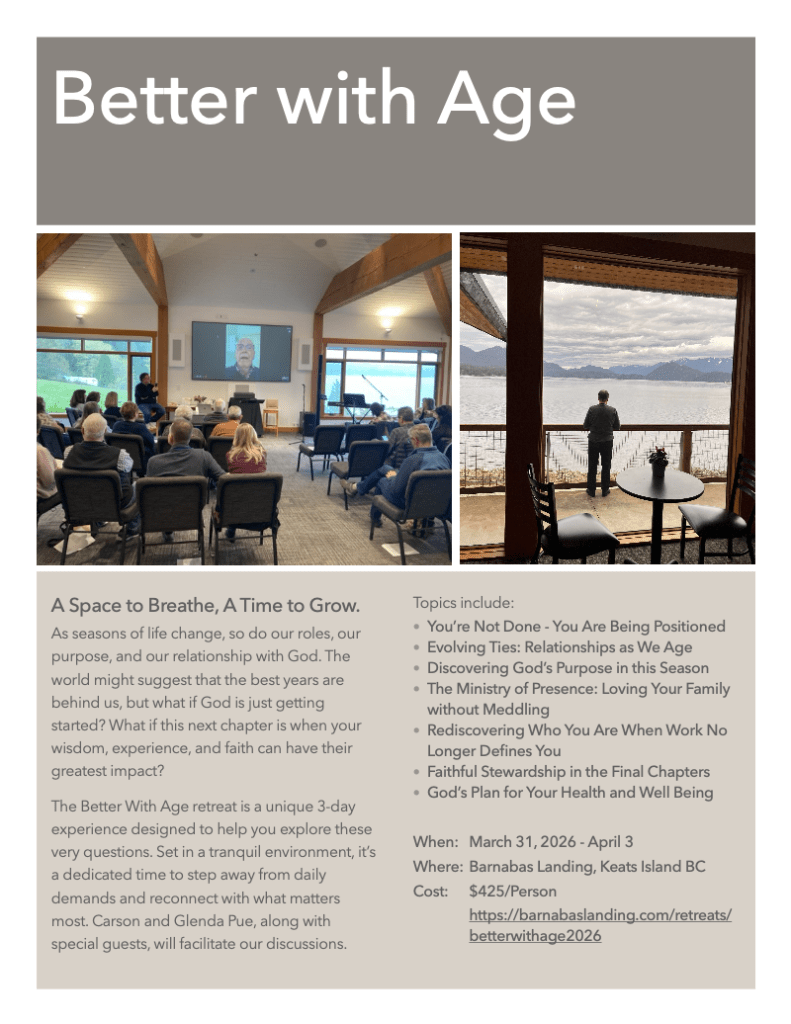
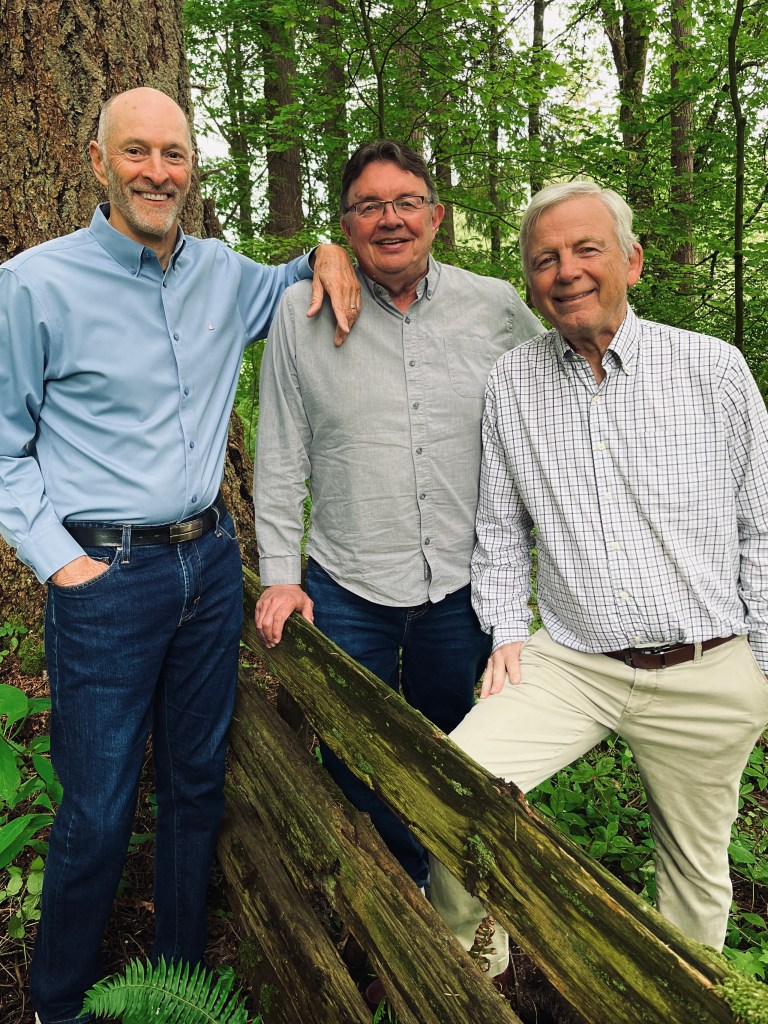
Glenda and I have been leading the Better with Age retreat for years now, and here’s what we know: the years between 50 and 70 bring transitions most of us aren’t prepared for. We excel at building careers and raising families, but finishing strong? That takes different wisdom.
This April, join us on Keats Island, where we’ll tackle the real questions— where purpose lives when the career ladder ends, how to navigate loss without losing yourself, how to shift from accumulating wealth to distributing it wisely, and discuss what legacy actually means beyond the legal paperwork. No sales pitches, no generic advice. Just honest conversations with people in the same season, practical scenarios you can actually use, and four days to think clearly about what matters most. The island setting, gourmet meals, and Barnabas Landing’s hospitality create the space you need to do this work well. If you’re sensing it’s time to get intentional about how you finish, this retreat is for you.
Frequently Asked Questions:
- When and where is the retreat?
March 31 – April 3rd, 2026, at Barnabas Landing on Keats Island, BC. - How do I get to Keats Island?
We depart from Horseshoe Bay by a Water Taxi boat that will take us right to Barnabas Landing. We return the same way, and the boat trip takes about 45 minutes. - What’s included in the registration fee?
Your beautiful accommodations, all meals, teaching sessions, and materials. Also transportation to and from the island. - Who else will be there?
Expect 30-40 people, typically ages 55-80, all navigating or entering retirement. Past attendees have come from across BC, other provinces, and the US. Most share a Christian faith background, which shapes the conversations but doesn’t dominate them—the focus stays on practical wisdom for this life stage. - What’s the daily schedule like?
The retreat runs Tuesday evening through Friday morning. Days blend structured teaching with generous free time—mornings feature 90-minute plenary sessions with coffee breaks between them, afternoons are mostly yours (with optional workshops available), and evenings include dinner followed by another 90-minute session. You’ll have stretches from 2-5 PM each day to explore the island, rest, or connect with others. The espresso bar opens early for those who want it, breakfast is rolling so you can eat at your own pace, and evenings wrap with coffee and conversation. The pace is intentional—enough structure to go deep, enough space to process. - Do I need to come with a spouse/partner?
No. The retreat works whether you come solo, as a couple, or with a friend. Sessions address topics relevant to everyone in this life stage, and the small group format ensures you’ll connect with others regardless of how you arrive. Many attendees come on their own and find the experience just as valuable—sometimes more so, since it allows focused reflection without needing to coordinate with someone else’s experience. - What if I can’t make all four days?
The retreat is designed as a complete experience—each session builds on the previous ones, and the rhythm of teaching, reflection, and community develops over the full arc. Missing portions means losing both content and the relational connections that form throughout. Also, since we are chartering a boat for the group departure from Horseshoe Bay on Tuesday and returning on Friday, partial attendance creates logistical complications. If scheduling is tight, it’s worth waiting for a year when you can commit to all four days rather than attending partially. - Is this faith-based?
Yes. The retreat operates from a Christian worldview, and most attendees share that background. Faith shows up naturally in the content—discussions about purpose, legacy, and navigating life transitions are grounded in biblical wisdom. That said, this isn’t a theology seminar. The focus stays practical: how your faith informs real decisions about money, relationships, loss, and purpose in this season. The setting at Barnabas Landing, a Christian retreat center, reflects this orientation. - What makes this different from other retirement seminars?
Great question! Most retirement events exist to sell you financial products, insurance, or estate planning services. This retreat is purely educational—you’ll leave with practical wisdom, not someone’s business card. We use real scenarios instead of generic advice, focus on the full range of transitions you’re actually facing (not just money), and create space for honest conversation with people in the same season. The island setting removes normal distractions, the teaching comes from experience rather than PowerPoint theory, and the four days give you time to actually think rather than just absorb information and leave. - Will there be homework or follow-up?
No homework—this isn’t school. The retreat itself gives you frameworks and questions worth returning to, but there’s no formal curriculum or assignments afterward. What you do take with you are the connections you make. Many attendees stay in touch with people they meet, and those relationships often become the ongoing resource. We’re exploring ways to continue the conversation beyond the retreat, but for now, the four days stand on their own. - What’s the cancellation policy?
Barnabas states: A non-refundable deposit is required at the time of booking. The remaining balance becomes non-refundable 30 days prior to the retreat. If a guest experiences a health emergency within those 30 days that prevents them from attending, we will refund the retreat fees with the exception of the non-refundable deposit.I will check with Barnabas and post the details here when I have them. - Can I bring questions about my specific situation?
Yes, but with the right expectations. The plenary sessions address common scenarios and principles that apply broadly. Optional workshops offer smaller settings where specific topics get more attention. You’ll have natural opportunities during breaks, meals, and free time to talk with speakers and other attendees about your particular circumstances. What we don’t offer is personal financial planning, legal consultation, or one-on-one counseling—this is group teaching designed to give you frameworks for thinking through your own decisions, not customized advice for your exact situation.

 From My Chair