Author, speaker, mentor, coach, strategist. One who loves his family, sailing, cities and all things Irish.
Carson lives between Murrayville in British Columbia, and Northern Ireland. His company, Quadrant Leadership Inc., is the platform from which he offers consultancy, executive mentoring, speaking and organizational coaching.
There’s something almost unfair about Barnabas Landing on Keats Island. The light off Howe Sound. The mountains doing their thing in the background. The kind of quiet that makes you wonder why you live anywhere else.
I was there this week with a cohort of Arrow Executive leaders — the kind of gathering where the conversations matter as much as the setting. We worked hard, thought well together, and somewhere between the ocean air and the long dinners, something clarified for each of us. That’s what good cohorts do. The place held us; God did the rest.
Creation has a way of doing that. Strip away the noise and you hear something truer — about your work, your people, your calling. The mountains and the water don’t preach, but they do bear witness.
I came back to Vancouver. And honestly? I exhaled.
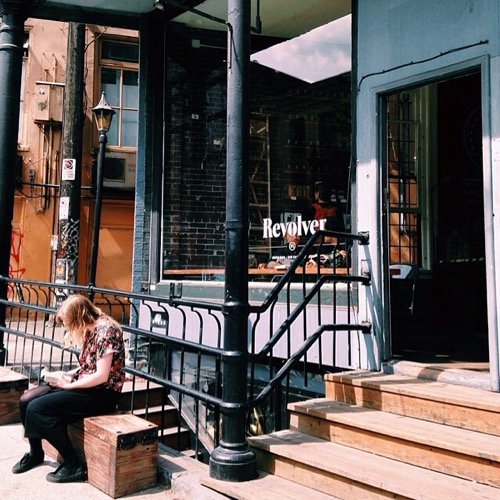
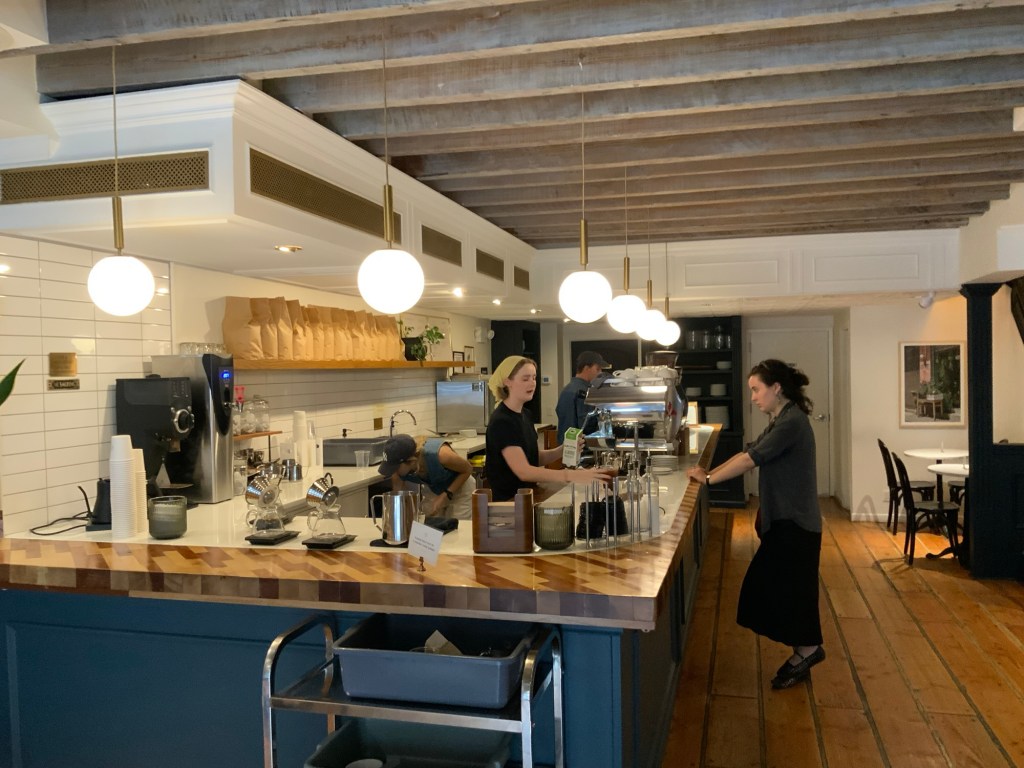
Within hours I was at Revolver on Hastings — espresso in hand, settled in at one of the long communal tables, shoulder to shoulder with maybe a dozen strangers who were all doing their own thing with complete focus and zero small talk. Laptops open, earbuds in, background music and the ambient hum of the city doing its thing outside.
It was, in its own way, just as alive as Barnabas.
Here’s what I’ve come to accept about myself: I’m a city guy. Always have been. I love the energy of a downtown core — the density, the diversity, the sense that a thousand interesting conversations are happening within a block of wherever you’re standing. Big cities pulse. That pulse does something for me.
I think of Jesus, who was as comfortable at a crowded table as he was alone on a hillside. He moved between both without apology. The wilderness sharpened him; the city is where he did his work. Barnabas reminded me that I can be still. Revolver reminded me of where I come alive.
Both are gifts. But perhaps that’s the point — the time at Barnabas does something inward so you can be more fully alive outward. The island equips you for the city. Solitude before service.
The best leaders I know have learned this. Not as a productivity hack but as a way of life. They protect time away not because they’re escaping responsibility but because they understand that depth requires replenishment. What you bring to the room, the boardroom, the hard conversations — that reservoir has to be filled somewhere. For me, it gets filled on Keats Island. Then I bring it back to the city.
I’ll be back at Barnabas. But right now, the city is calling.
Most people celebrating St. Patrick’s Day today couldn’t tell you much about the man behind the shamrock. They know the colour green. They know Ireland. They might know snakes.
Here’s what they don’t know: Patrick wasn’t Irish.
He was a teenager from Roman Britain when Irish raiders kidnapped him and sold him into slavery. He spent six years alone on a hillside in Ireland, tending sheep, cold and forgotten. Then he escaped, made it home — and went back.
That decision is the whole story.
Character Before Competence
Leadership literature loves a good framework. Five steps to this. Three habits of that. What it rarely talks about is what Patrick understood instinctively: who you are when no one is watching is who you will be when everyone is.
Six years of slavery didn’t produce a bitter man. They produced a formed one.
Patrick’s years of hardship weren’t a detour from his calling — they were the preparation. The loneliness deepened his prayer life. The powerlessness cultivated humility. The suffering stripped away every motive except the one that mattered.
Most leaders want the influence without the formation. Patrick got the formation first. The influence followed.
He Went Back
This is the move that separates Patrick from nearly every leader I’ve ever studied.
He escaped Ireland. He was free. He had every reason — and every right — to never think about that island again. Instead, he had a dream in which he heard the Irish people calling him to return. And he went.
Not because it was safe. Not because it was strategic. Because it was his.
Calling-driven leadership and career-driven leadership look similar on the outside. Both produce activity, results, even impact. But when the cost goes up — when the assignment gets hard, when the opposition stiffens, when it would be entirely reasonable to walk away — only one of them stays.
Patrick stayed because he wasn’t building a career. He was answering a call.
He Didn’t Lead Alone
Patrick didn’t build an institution. He built a community.
The Celtic model of leadership that Patrick embodied was relational at its core — small bands of people moving together, sharing life, extending the mission not through hierarchy but through belonging. He formed clann.
There’s something countercultural in that today. We measure leaders by their platform, their reach, their numbers. Patrick measured his work by whether people were genuinely changed — and whether they, in turn, changed others.
The leaders I most respect aren’t the ones with the biggest stages. They’re the ones with the deepest roots — people who know and are known, who lead from inside a web of real relationship rather than above it.
The Question Patrick Leaves You With
Here’s where I want to leave you — not with a technique, but with a mirror.
Patrick went back to the place of his suffering and made it the place of his greatest contribution. That is not a coincidence. That is a pattern.
What is the hard place you’ve been avoiding? The hard conversation you keep deferring? The assignment that feels too costly, too uncomfortable, too much like going back to something you’d rather leave behind?
It may be precisely the thing you’re meant to walk toward.
That’s what I wrote about in Lead Like a Saint. Not a hagiography of a historical figure, but an honest look at what it means to lead from character, from calling, and from the kind of courage that doesn’t make headlines but does change lives.
Patrick didn’t set out to become a saint. He set out to be faithful.
That’s still the best leadership model I know.
Lead Like a Saint is available now. And if you are interested in hearing about my upcoming leadership tours in Ireland — the actual places where Patrick walked — head to this link for a chat, or email me at tours+carson@carsonpue.com. Happy St. Patrick’s Day.
Murphy doesn’t understand my world. He just trusts me.
(There is a sermon in that.)
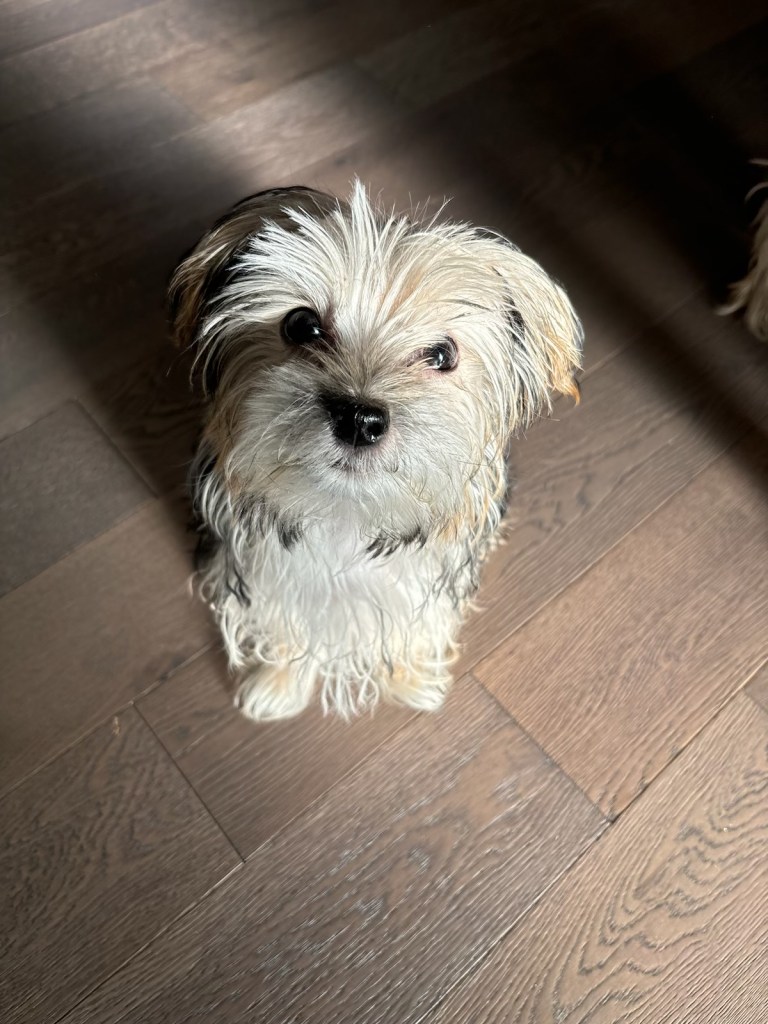
Every night, without fail, our wee Murphy, half Maltese and half Yorkshire Terrier, entirely convinced he owns the place, pads across the bedroom floor, climbs up onto the bed, and curls himself into the crook of my legs. He lets out a small sigh, tucks his nose under his tail, and that’s that. He’s home.
Last night I was thinking about what he doesn’t know when he does that.
He doesn’t know what I’m carrying. He has no idea whether the day was good or brutal, whether the conversation I’m replaying went well or sideways, whether the decision I’m sitting with is straightforward or costly. He doesn’t know my theology, my calendar, my concerns. He’s a small dog with a smart mind and an unshakeable confidence that the person he’s curling up with is safe.
That’s not ignorance. That’s trust.
It’s the kind of trust that doesn’t require complete information before it leans in. Murphy has enough. He knows who I am to him — and that’s sufficient. He doesn’t wait until he understands everything about my world before he closes the distance.
I wonder how different that is from the way many of us approach God.
We want resolution before we’ll fully lean in. We want the diagnosis explained, the relationship repaired, the finances stabilised, the path clarified — and then we’ll settle into trust. We treat understanding as the precondition for proximity. But Murphy doesn’t operate that way. He doesn’t need to understand me. He just needs to be near me.
Which brings me to the second thing Murphy teaches me, almost without trying.
He’s not there to ask for anything. He’s not negotiating a treat or positioning for a walk. He’s not presenting a list of needs. He just — comes. The closeness is the whole point. There’s no agenda tucked under those folded paws. Just presence, freely given and fully enjoyed.
I find this quietly convicting. If I’m honest, much of my prayer life is transactional. I come to God with a fairly well-organised list. Which is not wrong — he invites it. But somewhere in the busyness of bringing requests, I can miss the simpler thing: just drawing close.
Murphy never seems to feel he has to earn his place beside me. He doesn’t arrive tentatively, hoping he’ll be tolerated. He comes with a kind of quiet “I belong here” confidence, and settles in. That confidence isn’t arrogance. It’s just the fruit of a relationship that has been consistent.
That’s what I want my approach to God to look like. Not striving to get his attention. Not performing well enough to deserve the access. Just coming. Trusting that he’s good, that I’m known, that the closeness itself is something he welcomes.
There’s a reason the ancient writers kept returning to the image of shelter — of being held, covered, close. It’s not weakness. It’s wisdom. The creature finding its right place beside the one it belongs to.
So here’s my question for you: When did you last come to God with no list? When did you last just draw close? Not to get something resolved. Not to present your case. Just to be near.
Murphy figured this out without any theology at all. Maybe that’s the point.
“Draw near to God, and he will draw near to you.” — James 4:8
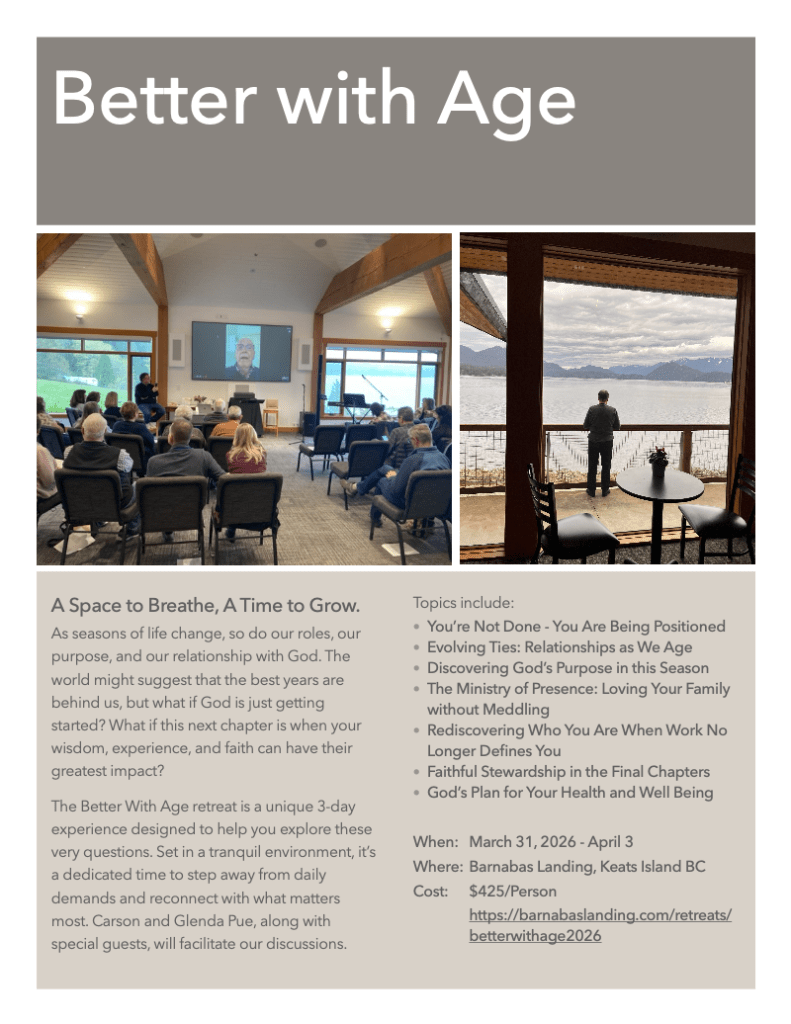
Glenda and I have been leading the Better with Age retreat for years now, and here’s what we know: the years between 50 and 70 bring transitions most of us aren’t prepared for. We excel at building careers and raising families, but finishing strong? That takes different wisdom.
This April, join us on Keats Island, where we’ll tackle the real questions— where purpose lives when the career ladder ends, how to navigate loss without losing yourself, how to shift from accumulating wealth to distributing it wisely, and discuss what legacy actually means beyond the legal paperwork. No sales pitches, no generic advice. Just honest conversations with people in the same season, practical scenarios you can actually use, and four days to think clearly about what matters most. The island setting, gourmet meals, and Barnabas Landing’s hospitality create the space you need to do this work well. If you’re sensing it’s time to get intentional about how you finish, this retreat is for you.
When and where is the retreat? March 31 – April 3rd, 2026, at Barnabas Landing on Keats Island, BC.
How do I get to Keats Island? We depart from Horseshoe Bay by a Water Taxi boat that will take us right to Barnabas Landing. We return the same way, and the boat trip takes about 45 minutes.
What’s included in the registration fee? Your beautiful accommodations, all meals, teaching sessions, and materials. Also transportation to and from the island.
Who else will be there? Expect 30-40 people, typically ages 55-80, all navigating or entering retirement. Past attendees have come from across BC, other provinces, and the US. Most share a Christian faith background, which shapes the conversations but doesn’t dominate them—the focus stays on practical wisdom for this life stage.
What’s the daily schedule like? The retreat runs Tuesday evening through Friday morning. Days blend structured teaching with generous free time—mornings feature 90-minute plenary sessions with coffee breaks between them, afternoons are mostly yours (with optional workshops available), and evenings include dinner followed by another 90-minute session. You’ll have stretches from 2-5 PM each day to explore the island, rest, or connect with others. The espresso bar opens early for those who want it, breakfast is rolling so you can eat at your own pace, and evenings wrap with coffee and conversation. The pace is intentional—enough structure to go deep, enough space to process.
Do I need to come with a spouse/partner? No. The retreat works whether you come solo, as a couple, or with a friend. Sessions address topics relevant to everyone in this life stage, and the small group format ensures you’ll connect with others regardless of how you arrive. Many attendees come on their own and find the experience just as valuable—sometimes more so, since it allows focused reflection without needing to coordinate with someone else’s experience.
What if I can’t make all four days? The retreat is designed as a complete experience—each session builds on the previous ones, and the rhythm of teaching, reflection, and community develops over the full arc. Missing portions means losing both content and the relational connections that form throughout. Also, since we are chartering a boat for the group departure from Horseshoe Bay on Tuesday and returning on Friday, partial attendance creates logistical complications. If scheduling is tight, it’s worth waiting for a year when you can commit to all four days rather than attending partially.
Is this faith-based? Yes. The retreat operates from a Christian worldview, and most attendees share that background. Faith shows up naturally in the content—discussions about purpose, legacy, and navigating life transitions are grounded in biblical wisdom. That said, this isn’t a theology seminar. The focus stays practical: how your faith informs real decisions about money, relationships, loss, and purpose in this season. The setting at Barnabas Landing, a Christian retreat center, reflects this orientation.
What makes this different from other retirement seminars? Great question! Most retirement events exist to sell you financial products, insurance, or estate planning services. This retreat is purely educational—you’ll leave with practical wisdom, not someone’s business card. We use real scenarios instead of generic advice, focus on the full range of transitions you’re actually facing (not just money), and create space for honest conversation with people in the same season. The island setting removes normal distractions, the teaching comes from experience rather than PowerPoint theory, and the four days give you time to actually think rather than just absorb information and leave.
Will there be homework or follow-up? No homework—this isn’t school. The retreat itself gives you frameworks and questions worth returning to, but there’s no formal curriculum or assignments afterward. What you do take with you are the connections you make. Many attendees stay in touch with people they meet, and those relationships often become the ongoing resource. We’re exploring ways to continue the conversation beyond the retreat, but for now, the four days stand on their own.
What’s the cancellation policy? Barnabas states: A non-refundable deposit is required at the time of booking. The remaining balance becomes non-refundable 30 days prior to the retreat. If a guest experiences a health emergency within those 30 days that prevents them from attending, we will refund the retreat fees with the exception of the non-refundable deposit.I will check with Barnabas and post the details here when I have them.
Can I bring questions about my specific situation? Yes, but with the right expectations. The plenary sessions address common scenarios and principles that apply broadly. Optional workshops offer smaller settings where specific topics get more attention. You’ll have natural opportunities during breaks, meals, and free time to talk with speakers and other attendees about your particular circumstances. What we don’t offer is personal financial planning, legal consultation, or one-on-one counseling—this is group teaching designed to give you frameworks for thinking through your own decisions, not customized advice for your exact situation.
Yesterday marked two years since my dear friend Martin Sanders went to be with the Lord. I’ll be honest—sitting down to write about him on the actual anniversary was too much. Instead, I spent the day thinking of him, carried by memories and that familiar ache of missing him. In some ways, it feels like a lifetime ago; in others, I still expect to see his name pop up on my phone, ready with a question, a laugh or a sharp insight.
Grief is a strange companion, isn’t it? It changes shape, but the love that fuels it remains constant.
Martin and I shared a lot of life together. We weren’t just colleagues or casual acquaintances; we were soul friends. We were part of the Point Group, Leighton Ford’s mentoring cohort, which was a crucible for deep connection and spiritual growth. In those rooms, we learned that leadership isn’t just about strategy—it’s about the state of your soul.
One of the profound threads that bound us together was the mutual loss of a spouse. When you walk through that specific valley, you speak a language that others, thankfully, haven’t had to learn yet. We understood the silence of an empty house. We understood the ache.
I will never forget when my wife, Brenda, died. Martin didn’t send a card. He didn’t just call. He changed his plans, got on a plane, and flew to be with me. He didn’t come to fix anything—he knew he couldn’t. He didn’t come with platitudes or theological explanations. He just came to be there.
That is the mark of a true friend and a great leader. He understood the ministry of presence. Do you have people in your life who will just sit in the ashes with you? If you do, treasure them.
Later, when God brought a new chapter of joy into my life and I remarried, Martin didn’t miss a beat. He welcomed Glenda into our friendship from the very beginning with open arms and that characteristic warmth of his. He made her feel like she had always been part of the circle. Because of that, she misses him deeply, too.
Our friendship wasn’t all solemn nods and shared grief. Far from it. We laughed—loudly and often. We shared a certain irreverence that might have surprised people who only knew us from a distance. We travelled together, finding humour in the chaos of airports and the nuances of different cultures. We believed the disciples of Jesus laughed a lot and that if you can’t laugh at the absurdity of life, you probably aren’t paying close enough attention.
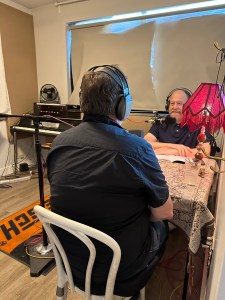
Out of our shared passion for developing leaders, we started the Mentored Podcast. We wanted to pass along wisdom, encourage other mentors, and frankly, just have the conversations we wished we’d heard when we were younger. Recording those episodes didn’t feel like work; it felt like an extension of our friendship. I re-listen to them sometimes, just to hear his voice and his wisdom.
Martin was a man who invested deeply in others. He challenged me, he encouraged me, and he loved me well. He also loved my sons and spent time with them even when they lived overseas. When they married, he embraced my daughters and loved them too.
As I reflect on these two years without him, I am reminded that the best way to honour those we’ve lost is to embody what they taught us. Martin taught me about showing up. He taught me about the power of laughter. He emphasized the importance of taking care of your own soul. He taught me that mentoring is, at its heart, about loving people into their potential.
So today, I’m thanking God for the gift of Martin Sanders. I miss him, but I am so grateful that our paths didn’t just cross—they merged for a season.
Here’s a question for you as you go about your week: Who needs you to just show up for them today? Not to fix, not to preach, but just to be?
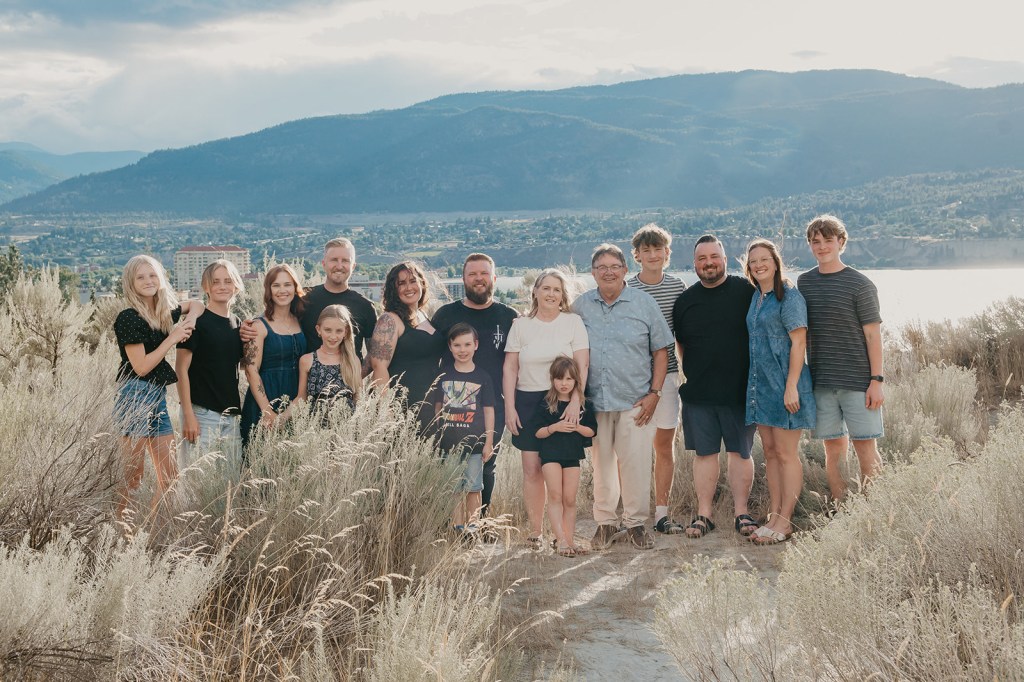
I’m often asked about our family. People comment on my sons, my relationship with my “daughters,” and how much they enjoy watching me as “Grandpa.” Many say, “The Pue family seem so close—what’s your secret?”
Before I go any further, let me say this: I truly believe we’re a great family—a clann, as we Irish like to call it. Not a perfect one, of course—we know that well, and we’re not afraid to admit it. But there’s something special about the way we come together, support one another, and carry forward the values that have shaped us. It’s a bond I cherish deeply and one that continues to inspire me every day.
As I look at other families I admire—and as I’ve watched generations grow—I’ve come to see that children don’t become healthy, whole adults by accident. They’re shaped day by day by the environment we create around them. The home is their first classroom in life and love. And though every child is wonderfully different, there are six essentials I believe each one needs to thrive: security, love, intimacy, affection, significance, and affirmation.
I approach this with a deep sense of humility, as it touches on my sons and the principles that have shaped their lives. It’s impossible to reflect on this without acknowledging their mother, Brenda, whose influence was profound. She modelled these principles so beautifully and consistently before her passing, leaving a legacy that continues to inspire us all.
At the time of writing, Jon, Kirstie, and their two children are living with us, giving us the privilege of witnessing these principles in action within their little family. I also see this same legacy reflected in the lives of Jason and Kristin, Jeremy and Shari, and their families. It’s a joy to watch how these values ripple outward, shaping the lives of all my grandchildren in unique and meaningful ways. As a mentor at heart, I feel drawn to reflect on and share some learnings from our family’s journey. I do so with deep respect and gratitude for the love and lessons that have shaped us. So, here are six principles to reflect on.
1. Security – Tells them “You are safe.“
A child’s world can feel uncertain and unpredictable. They need to know that home is a place where love doesn’t walk out the door.
How to nurture it:
Keep your word. If you promise to show up—do it. Reliability builds trust that will echo into adulthood.
Stay calm in conflict. When they make mistakes, respond with steadiness instead of anger. Your reaction teaches them whether love depends on behaviour or is rooted in grace.
2. Love – Let’s them know “You are wanted.“
Love is more than words; it’s attention and presence. Children feel loved not when we tell them, but when they experience it through our focus.
How to nurture it:
Be fully present. Put down the phone, make eye contact, and listen. It says, “You matter more than my distractions.”
Build small rituals. Bedtime chats, morning hugs, shared meals—simple rhythms that remind them daily of your affection.
3. Intimacy – Provides the promise “You can be known.“
True intimacy means being known and accepted as you are. Children need to experience that transparency is safe. When we allow ourselves as parents to be known it teaches that honesty, not perfection, is the pathway to relational connection.
How to nurture it:
Share your story. Let them see your humanity. Tell them about times you were afraid or failed and what you learned.
Listen before you fix. Often, children need empathy, not answers. When you sit with them in their feelings, they learn that emotions are not weaknesses but signals.
4. Affection –Let your son or daughter know, “You are cherished.”
A hug, a hand on the shoulder, a soft word—these small gestures tell a child, “You are loved and enjoyed.” I have mentored adults who have grown up in families without affection, and they are very guarded. However, children who experience affection tend to thrive!
How to nurture it:
Show warmth often. Affection shouldn’t only follow achievement; give it freely and often.
Use gentle tone. The way we speak can either open or close a child’s heart.
5. Significance – Let them know “They matter.”
Every child needs to know they have value and that their life contributes to something larger than themselves. When a son or daughter knows they matter, they develop a sense of purpose that can carry them through life.
How to nurture it:
Give real responsibility. Invite them to help with meaningful tasks, not just token chores. Contribution builds belonging.
Recognize character. Instead of only praising results, affirm traits like kindness, perseverance, and honesty.
6. Affirmation – “They have what it takes.”
Affirmation is the voice that says, “You can do this.” It shapes courage and resilience. With repetition, it builds confidence that will serve them long after they’ve left the home. For more on this, check out the Mentored Podcast Episode 04.
How to nurture it:
Be specific. Swap “Good job” for “I saw how patient you were with your sister.” Real encouragement is rooted in observation.
Catch them doing right. Don’t let correction dominate your communication. Children rise to the level of our belief in them.
Affirmation builds an inner voice of confidence that will serve them long after they’ve left your home.
Final Thought
Parenting is sacred work. We don’t get it perfect—but we can get it right over time. What matters most isn’t perfection; it’s presence, consistency, and grace.
When children grow up surrounded by security, love, intimacy, affection, significance, and affirmation, they carry a deep sense of wholeness into the world. They know who they are and Whose they are.
God, in His perfect fatherhood, models every one of these traits. He is our security when life shakes. His love never wavers. He knows us intimately, delights in us with affection, gives our lives significance, and speaks affirmation over us daily through His Word.
As we reflect His nature in our parenting, we give our children not only a picture of healthy humanity—but a glimpse of divine love.
So take heart, parents. The seeds you plant in love today will bear fruit for generations.
I’ve sat across from countless leaders over the years—some at the pinnacle of their careers, radiating confidence and success, and others in those quiet, dimly lit corners of defeat. While we love to celebrate the victories (and rightfully so!), the unspoken reality of leadership is that disappointment isn’t just possible; it’s inevitable.
When a leader sits before me, shoulders slumped under the weight of a vision that didn’t come to pass or a betrayal they never saw coming, my heart breaks a little. I know that weight intimately. I’ve carried it myself. But I also know that this moment, heavy as it is, holds a profound invitation for growth that success simply cannot offer.
In mentoring, our role isn’t just to cheerlead the wins. It’s to sit in the ashes with someone and help them find the embers that are still glowing—and trust me, they’re always there.
The Silent Weight of Leadership Disappointment
Disappointment in leadership is a unique kind of pain. It’s rarely just about a failed project or a missed quarter. For most leaders I know, our work is deeply woven into our sense of calling and identity. When things go sideways, it doesn’t just feel like a professional setback; it feels deeply personal. It can feel like a complete disorientation of the soul.
When I mentor leaders walking through this valley, I understand the temptation to hide it. We feel we need to keep that “brave face” on for our teams, our boards, and even our families. But here’s the thing—hiding disappointment only allows it to fester into bitterness or cynicism.
The Ministry of Validation
One of the most powerful things we can do as mentors is simply to validate the pain. Sounds simple, doesn’t it? Yet, leaders are so often told to “shake it off” or “pivot” that they rarely get permission to just say, “This hurts like hell.”
When a leader tells me about a key staff member leaving or a strategy that flopped spectacularly, I don’t rush to fix it. I don’t immediately quote Romans 8:28, even though I believe it with every fibre of my being. First, I say, “That must be incredibly hard. I’m so sorry.”
Validation is the first step toward healing. It acknowledges that the loss is real and raw. It tells the leader that their feelings aren’t a sign of weakness, but a beautifully human response to a broken situation. By validating their pain, we create a safe harbour where they can drop anchor, stop drifting, and just breathe.
Moving from Lament to Learning
However, we can’t stay in the harbour forever. There comes a time when we must help the leader lift their eyes from what was to what could be. This is the delicate pivot from lament to learning—and it requires both wisdom and impeccable timing.
Disappointment has a way of revealing our foundations. It strips away the superfluous and forces us to ask those hard questions:
Was my identity tied too tightly to this outcome?
What can I learn about my own leadership style through this mess?
Is there a character issue God is trying to refine in me?
I often tell the leaders I mentor that God is the great Recycler. He wastes absolutely nothing. The pain you’re feeling today? That’s the raw material for the wisdom you’ll share tomorrow.
This isn’t about toxic positivity or pretending the failure was “good.” It’s about stewardship. How will you steward this disappointment? Will you let it harden you, or will you let it soften you, making you more empathetic and resilient?
Reframing the Narrative
One of the most critical skills we can teach is reframing. When we’re in the thick of it, our perspective shrinks dramatically. We see only the immediate loss. As mentors, we have the privilege—and responsibility—of holding the long view.
I think of those great cathedral builders of centuries past. Many of them laid foundations for structures they knew they would never see completed. They lived for a vision bigger than their own lifespan. Now that’s what I call faith in action.
When I help a leader reframe their disappointment, we look for the long arc of God’s faithfulness. Maybe this “no” is protection from a danger we can’t see. Maybe this closed door is steering us toward a path where we’ll be far more effective for the Kingdom.
Reframing doesn’t change the past, but it drastically changes how we walk into the future. It shifts us from victims of circumstance to active participants in a larger, more beautiful story.
A Call to Honest Resilience
If you’re mentoring someone right now who’s ready to throw in the towel, or if you are that leader feeling the sting of a dream deferred, I want to offer you this hope: You are not finished. Not even close.
Your calling as a leader isn’t to be flawless; it’s to be faithful.
Resilience isn’t about never getting knocked down. It’s about how we get back up—with a limp, perhaps, but also with a new depth of character that only the struggle could produce. The most impactful mentors I know aren’t the ones with perfect track records. They’re the ones who can look you in the eye and say, “I’ve been where you are, and I know the way through.”
Let’s be leaders who don’t just survive disappointment but who allow it to transform us into people of greater depth, compassion, and wisdom. The world desperately needs that kind of leader.
Let’s Go Deeper
This topic is so close to my heart that Chuck, Ingrid, and I dedicated an entire conversation to it. In Episode 43 of the Mentored Podcast, titled “Dealing with Disappointment,” we open up about our own struggles and share practical ways to navigate these choppy waters.
We discuss:
How to manage the complex emotions of setbacks without suppressing them.
Practical steps for reframing your narrative.
How to apply faith when your reality doesn’t match your vision.
I invite you to listen. Whether you need encouragement for your own heart or wisdom to help someone else, I believe this episode will be a balm for your soul.
I’m sitting in Moshava café in Greenwich Village, sipping an iced coffee that somehow tastes like magic, and once again I find myself grinning like a fool. I love this city. There, I said it.
New York City has me—hook, line, and soul.
Moshava Café
You see, I’m a city guy through and through. I’ve travelled the world, seen stunning landscapes, climbed high places and dipped toes in distant oceans—but there’s something about the energy of a great city that grabs me. And no city does it quite like New York.
Every time I come, I try to explain it. The people. The architecture. The rhythm. The sheer, unapologetic bigness of it all. And yet, words always fall short. NYC is less a place you describe and more a place you feel. You inhale it.
It starts with the people. New Yorkers are a breed all their own—gritty, warm, direct, and full of character. One moment you’re being told to move along with a classic New York glare, and the next, a stranger’s helping you haul a suitcase up the stairs like you’re lifelong friends. It’s paradoxical and perfect. There’s a unique humanity here, raw and honest. Just like I like it.
Then there’s the architecture. Good grief. You can’t walk ten feet without bumping into something historic, iconic, or simply beautiful. From the brownstones in Harlem to the iron façades in SoHo, from the spires of Midtown to the quiet, cobbled lanes of the Village, it’s like the city is singing—its song built in brick and steel. I never stop looking up. Ever.
The culture? It’s as if the whole world has pulled up a chair to this table. Theatre, music, design, street art, cuisine—it’s all here, all the time. One day you’re sitting in a restaurant that feels like a Massachusetts fish place time forgot. At the corner is Ben’s Pizza where he proudly displays “best in the world” on the rather dirty green awning. Next, you’re at a wine bar with the most expensive sushi you have ever had. Of course the Broadway shows beckon and Times Square is truly electric with people and signage And let’s not even get started on the bagels. You haven’t had a bagel until you’ve had a New York bagel.
Do you think the yogurt might be good here?
I don’t come here to escape life. I come here to feel it pulsing in full force. There’s a sacredness to the chaos. A kind of order in the mess. It reminds me of ministry, to be honest—loud, alive, unpredictable, but beautiful in ways you only notice when you stop long enough to really look.
St. Patrick’s Cathedral
And here’s what I’m learning, or maybe re-learning: every time I walk these streets, I walk them differently. A little older. Hopefully a little wiser. Still as curious as ever. But what stays the same is that sense that I’m part of something bigger here. New York stretches me. Invites me. Inspires me.
So yes, I’m a city guy. I love the noise, the pace, the stories etched into the sidewalks. But more than that—I love this city because, somehow, every time I’m here, it makes me feel more alive.
And that’s a gift I don’t take lightly.
If you’ve never been to New York—go. If you’ve been before—go again. And if you’re there now—look up. The city’s still singing.
Today was one of those days with a lot of emotion that I didn’t see coming.
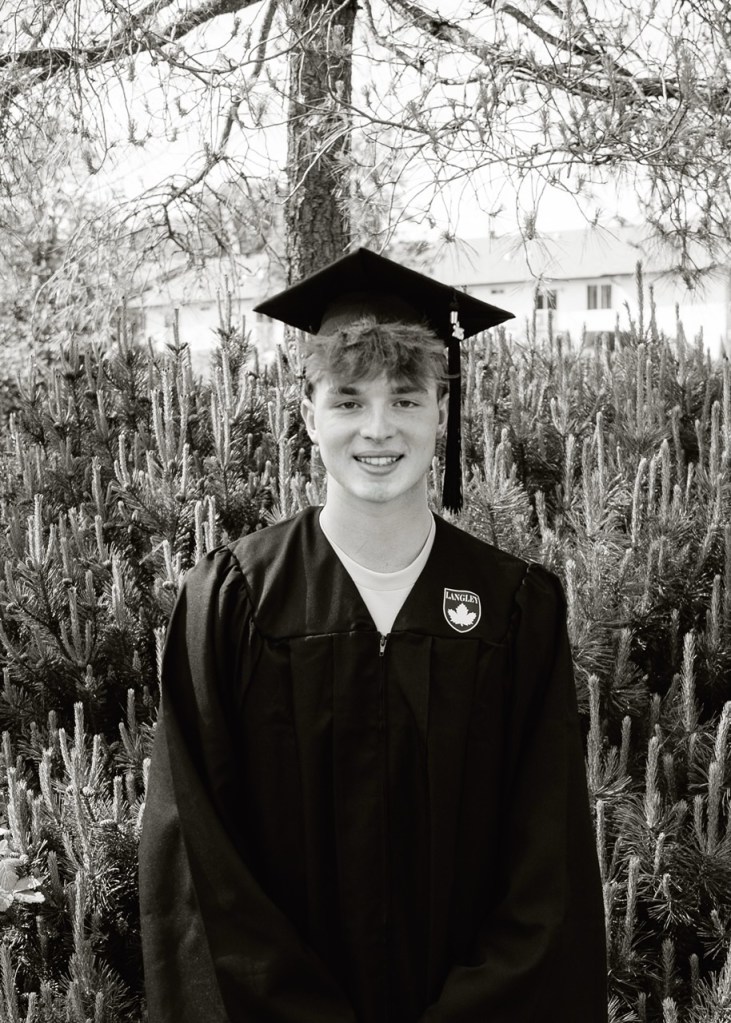
Landon graduated from high school and his ceremony was a highlight for me. Watching him walk across that stage, diploma in hand, confidence radiating from his steady steps, was heart-stirring. He has worked so hard to get here and carried a heavier course load than he needed. His determination, faith, and kind heart shone brightly. With awards in his hand and being selected Student of the Year and Valedictorian, pride doesn’t even begin to cover how I felt watching him take this big step forward. It was one of those moments where time seemed to freeze.
Sitting there watching Landon, I thought about how proud Brenda, Landon’s Grammy, would be. Landon’s not just graduating from high school; he’s stepping into all the potential she always saw in him. As I prayed for him Sunday morning, I almost heard her voice, “Keep cheering him on! This is just the beginning.”
Like all significant moments in life, today wasn’t simple. I felt a pang of nostalgia mixed with my joy today. It’s funny how, as parents or grandparents, we tend to see not just who they are in front of us but all they’ve been up until now. I remembered a toddler who used to tweak a door stopper spring and then laugh hysterically, now stepping into a new chapter of his own life. And as proud as I felt, my thoughts circled back to Brenda. Brenda would have been beaming – no question about it. She had this knack for showing pride so big it made others feel like they were in the spotlight too. She wasn’t just a cheerleader; she was the sort of person who made you feel capable of greatness.
His Grammy for sure would’ve been the loudest one at his grad ceremony. I know she would’ve risen out of her seat, hollering “Yay LANDY!” with complete abandon, the way only she could. I could almost hear her laugh and see that proud smile she reserved for moments like this.
Brenda would’ve adored who he’s becoming. She always had a way of spotting potential in others before it even had the chance to bloom, and there’s no doubt she saw that in Landon. I imagine her pulling him aside after the ceremony and saying something wise but laced with humour, just to remind him to stay grounded. And then she’d hug him, hug him tight, but he never minded that.
It’s no stretch to say Brenda played a big role in shaping our family’s legacy of love, persistence, and belief in one another. Her presence, even years after she passed, is still such a grounding force. She had a way of making the ordinary feel extraordinary, something I often see reflected in Landon. Watching him cross that stage, I thought about how proud she would’ve been—not just for the tassel turn or his speech but for what it represented. Graduations aren’t just academic milestones; they’re about persistence, growth, and stepping into the unknown with courage.
Going into church today, I tried to share my feelings with Jason and Kristin (Landon’s mom and dad). I thought I could describe the thankfulness and gratitude I’d been pouring out to God for their son, but as I started to speak, the words caught in my throat. The tears came suddenly. It was as though everything hit me at once. The pride, the missing piece, the tender reminder that grief and joy often exist together. You think you’re okay, that you’ve processed everything, and then a moment comes, a memory, and it’s like the Grief Committee decided to hold an unannounced meeting right as I walked into a church full of people.
My wife, Glenda, gently reminded me that this wasn’t just a graduation; it was another “first” on my grief journey. Landon is the first grandchild to graduate since Brenda, passed. Her absence, though not mentioned explicitly, was very much present.
Brenda would have loved all this. Oh, how she would have loved it. She was a woman who celebrated every milestone with gusto, whether it was as small as a child learning to tie their skates or as significant as a graduation moment like this. She had a way of making people feel deeply seen and wildly capable.
I see her in Landon today—not just in his accomplishments but in the way he carried himself. His focus, his kindness, his groundedness. These were all qualities she nurtured in him whenever they were together. She had this ability to look right into people’s hearts and remind them of God’s goodness already living there.
Glenda’s gentle words this morning stayed with me all day. This was a “first” without Grammy, yes, but it was also a moment to carry her legacy forward. And we did—we laughed and celebrated the way she would have, and, yes, cried just like she might’ve if she’d been with us.
The truth is, grief wears so many faces. Some days, it feels like a weight you can’t lift. Other days, it’s a quiet shadow, lingering at the edges of even your happiest moments. And some days, like today, it melts into the moments you hold dear, reminding you that the best way to honour the love you’ve lost is to allow it to continue shaping your life. At the graduation party, I was overwhelmed by a mixture of emotions I hadn’t entirely prepared for. There was the evident pride in Landon. There was gratitude for Glenda, who saw connections and truths I missed. And there were bittersweet and unrelenting tears that spoke to how deeply Brenda’s life continues to resonate with our family.
If there was a single takeaway from today, it’s the reminder that life’s significant “firsts” will always nudge us to reflect. They show us how far we’ve come, who we’ve loved, and how much we carry them forward. And sometimes, like on the way into church, those reflections come with raw emotion we can’t hold back.
For Landon, this event was monumental. For us, his family, it was, too, because it gave us a chance to remember, celebrate, and love in the ways Brenda would have championed. Landon’s future is bright—Glenda and I can see it just as clearly as Brenda would have. And as we cheer him on to the next step in his life, I can’t help but hope that we all find moments to celebrate the people we love. Whether you’re marking a milestone, supporting someone through their “first,” or just choosing to reach out, remember that these efforts shape the legacies we leave.
And for those of you who, like me, still find yourself caught off guard by the layers of grief, I’ll offer this piece of what I learned today. Give yourself grace when joy and sadness mingle. Feel it all, knowing that love doesn’t just disappear when someone is gone; it transforms and continues, carried forward in moments like these. Today was one of those moments—for Landon, for Brenda, and for all of us.
It’s been 25 years since my father passed, yet there are days when his laugh, warm and full of life, feels as if it’s just out of earshot. Dad was the sort of person who loved family, gardening and—perhaps most distinctly—orchids. Oh, and flying. And singing. And God. Actually, the list gets pretty long, now that I think about it. But that’s the kind of man he was—a life bursting at the seams with interests and passions, all wrapped in this Irish personality that you couldn’t help but admire—and occasionally eye-roll at.
Screenshot
Yes, my dad had what I often call a “Belfast look.” Big and sturdy, with massive fists and a serious air that could be downright intimidating until he opened his mouth. That’s when the funniest, most unexpected line would sail out and completely disarm you. He had a gift for wit and a knack for humour, as though it was his spiritual mission to keep those around him slightly off-balance but always entertained.
The Greenhouse Respite
Growing orchids in a freezing Manitoba winter requires a unique combination of patience and stubbornness, both of which my father had in spades. I can still picture him in his greenhouse, tending to his flower “babies” with meticulous care. It was his restorative haven. He’d often tell me, “You can rush a lot of things in life, but orchids aren’t one of them.” I didn’t tell him at the time, but I loved going into that greenhouse when he wasn’t around—the warmth, the smell of damp earth, the delicate beauty of those flowers—it all felt alive in a way I didn’t quite understand as a kid.
But of course, Dad’s nurturing hand in the greenhouse didn’t extend to all plants. One memory involves a wayward row of tomato plants that refused to cooperate and grow. “For heaven’s sake,” he bellowed one day, “if you don’t start showing growth, you’re going straight to the compost heap!” He was not entirely joking.
The Transformation
Dad was always religious, and his dedication to church, choir, and faith permeated our upbringing. But something remarkable happened when I was seventeen—a shift that turned his faith into something deeper, more profound. God became real to him in a way it hadn’t before, and it changed him.
Suddenly, the faith that had always seemed structured and dutiful transformed into something vibrant and alive. He became gentler, more reflective, and unshakeably at peace. It wasn’t that his humour or wit disappeared—thankfully, those stayed intact—but there was a different weight to his words, a new sense of purpose behind his actions. I would wake up early in the morning and find him sitting in his wing chair reading his Bible and making notes. There was something so peaceful about that.
Being the youngest, I witnessed this transformation up close. My two older brothers and I have since talked about how we each grew up in almost different homes, shaped by his and Mom’s evolving lives. By the time I was the only one left at home, I had the privilege of seeing this renewed version of him every day. It was as though his faith had moved from something he practiced to something he lived, and that left a lasting impression on me.
Voices in Harmony
Music wasn’t just a hobby for my dad; it was a language. Between church choir rehearsals and his time in a Barbershop Quartet, a good chunk of his week involved singing. If you’ve never heard a Barbershop Quartet practice, imagine four very determined men standing uncomfortably close, debating harmonies and occasionally striking a note so beautiful it would stop you in your step. My dad absolutely loved it.
Some of my earliest memories involve standing next to him at church, trying to keep up as he effortlessly filled the sanctuary with a deep bass, resonant voice that seemed to come straight from his soul. He joked that God gave the Irish their voices so we’d be forgiven for everything else.
The Aviator
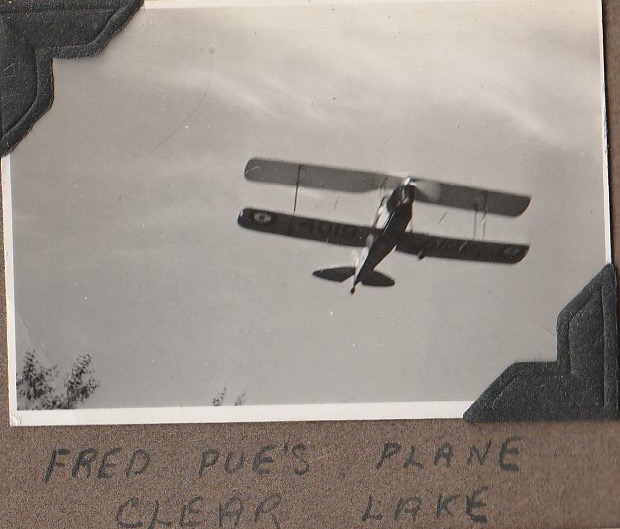
And then, there was the flying. Dad’s eyes sparkled most when he talked about his years as a flying instructor during World War II. He didn’t share many war stories, but when he did, they were less about the danger and more about the boys who came through his cockpit. He taught them how to handle planes with precision and respect—two things I imagine could describe how he handled life itself.
Even after the war, his love for the sky never faded. It’s one of the few places where I think he felt completely free. He let me take the controls when I was just ten and we would practice landing atop the clouds. Still today, when I hear the distant drone of a Cessna overhead, I can’t help but think of him.
Lessons That Last
Dad wasn’t perfect—none of us are. But he carried a strong sense of faith and a belief in bettering the world around him, even if it meant starting with a single stubborn orchid in the middle of winter. He opened our home to others and helped people get back on their feet. He taught me that laughter could diffuse tension, that dedication is a form of love, and that singing—regardless of how you sound—connects you to something eternal. More than that, though, witnessing his transformation taught me that it’s never too late for faith to deepen and for life to become richer.
Twenty-five years is a long time, but the memories of who he was and what he loved remain vivid. Flowers, the songs, the skies—they all tell his story. If there’s a choir in heaven or a greenhouse that needs tending, I have no doubt he’s making himself indispensable up there, and making everyone smile along the way.
It’s been a long time since we have shared a Guinness together, but here’s to you, Dad. Your DNA runs strong in my family and you would be so proud of your clann and your great grandkids would have you wrapped around their fingers. You’re greatly missed but remembered with a smile—and occasionally an eye-roll.








 From My Chair