This is my third time in Ethiopia.
I had wanted to visit here for years because of my friend Aklilu Mulat, my former colleague at Arrow Leadership. Aklilu is Ethiopian and had introduced our family to Ethiopian food and cultural tid bits. However, none of this prepared me for my first visit here.
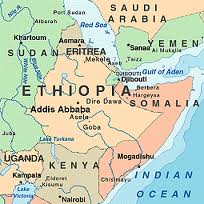 Often referenced as the “cradle of civilization” Ethiopia is a landlocked country situated in the Horn of Africa. It is bound by its bordering neighbors Djibouti, Somalia, Kenya, Sudan and Eritrea. For outsiders, famine, war, poverty and drought are the things most synonymous with the Ethiopia. Even now, it’s still one of the least developed countries in the world, so those preconceptions would not be entirely baseless.
It is a country of over eighty-three million people – and believe me getting accurate census data is extremely hard in these environments. Addis in 2007 had just under four million people (last census). Today they estimate between six and seven million.
Based on Human Development Indicators ( a standard used globally to measure life standards) Ethiopia is eighth from the bottom of one hundred and seventy-seven countries. Life expectancy is 51 years of age – younger than both Bob and I now, and one in six children die before their fifth birthday.
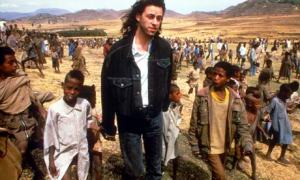
Many of us remember Ethiopia from the early 80’s when television brought home the impact of severe drought and the resulting famine that left more than eight million people facing starvation. Well if that broke my heart, the situation today, while different, sure wants me to do more to help here. I am looking forward to meeting the leadership of World Vision‘s national office here in Addis and visiting one of their Area Development Projects on Wednesday and Thursday this week north of here. WV has been working here on the ground since 1971 – a decade prior to the famine crisis of the 80’s. I look forward to hearing about what it is like on the ground here today.
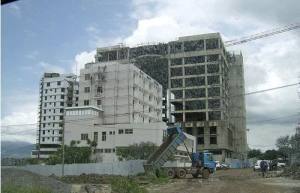 Some of the changes I notice here are:
- the indicators of economic growth like many new buildings in the last three years – although I do smile at some of the construction techniques still being antiquated.
- there are no street signs or house numbers here in Addis. People refer to locations by landmarks. With all the new building taking place, landmarks are being replaced and they are talking about having to one day name streets and even create a map of the city.
- walking downtown today I noticed many more women wearing what I might describe as western or european clothing styles. Not all, but my first trip here I saw nothing like this.
- There are some new churches that have begun in the downtown area – protestant evangelical charismatic tribes
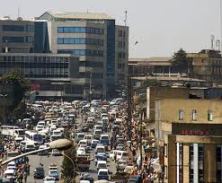 There are still no stop signs anywhere making driving here very exciting
- Construction has been very good for employment and for retailers selling building supplies
- Much of the money coming into Ethiopia is from China and India
China and India possess the weight and dynamism to transform the 21st-century global economy. I think it is easy for us in North America to put our head in the sand over this. But come to the global south and you will see it more clearly. In the coming decades, China and India will continue to disrupt North American workforces, industries, companies, and markets in ways that we can barely begin to imagine. We are looking forward to being in India in the
My first visit to Addis 7 years ago left me in shock by the poverty and the chaos that surrounds this city.

Today, on my third visit I am grateful to see all the change – in a positive direction with the economy but am still left with questions about the overall impact on children. There are estimated to be over 100,000 abandoned children living on the streets of Addis. We have met some who have gotten off the street through the work of Youth Impact but the numbers are overwhelming.
Tomorrow, we head north of the city to a place no one here in Addis has heard of. It is an area development project of World Vision.
I knew it was a little off the road when I read that we are travelling there by vehicle and horseback.
This is not the first, or the last, time that World Vision will be in a place few have heard of. I do know that they are there because of the children and the ability to transform a community.