Ethiopia: Who is rocking this cradle?

This is my third time in Ethiopia.

I had wanted to visit here for years because of my friend Aklilu Mulat, my former colleague at Arrow Leadership. Aklilu is Ethiopian and had introduced our family to Ethiopian food and cultural tid bits. However, none of this prepared me for my first visit here.

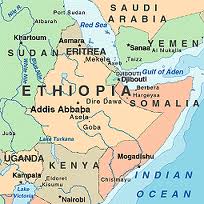
Often referenced as the “cradle of civilization” Ethiopia is a landlocked country situated in the Horn of Africa. It is bound by its bordering neighbors Djibouti, Somalia, Kenya, Sudan and Eritrea. For outsiders, famine, war, poverty and drought are the things most synonymous with the Ethiopia. Even now, it’s still one of the least developed countries in the world, so those preconceptions would not be entirely baseless.

It is a country of over eighty-three million people – and believe me getting accurate census data is extremely hard in these environments. Addis in 2007 had just under four million people (last census). Today they estimate between six and seven million.

Based on Human Development Indicators ( a standard used globally to measure life standards) Ethiopia is eighth from the bottom of one hundred and seventy-seven countries. Life expectancy is 51 years of age – younger than both Bob and I now, and one in six children die before their fifth birthday.

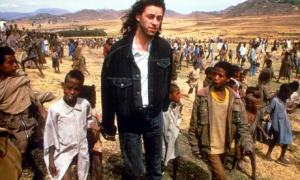
Dubliner, Bob Geldof organized Band Aid and Live Aid benefits for famine relief in Ethiopia.

Many of us remember Ethiopia from the early 80’s when television brought home the impact of severe drought and the resulting famine that left more than eight million people facing starvation. Well if that broke my heart, the situation today, while different, sure wants me to do more to help here. I am looking forward to meeting the leadership of World Vision‘s national office here in Addis and visiting one of their Area Development Projects on Wednesday and Thursday this week north of here. WV has been working here on the ground since 1971 – a decade prior to the famine crisis of the 80’s. I look forward to hearing about what it is like on the ground here today.

Some of the changes I notice here are:

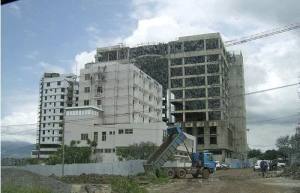
  • the indicators of economic growth like many new buildings in the last three years – although I do smile at some of the construction techniques still being antiquated.
  • there are no street signs or house numbers here in Addis. People refer to locations by landmarks. With all the new building taking place, landmarks are being replaced and they are talking about having to one day name streets and even create a map of the city.
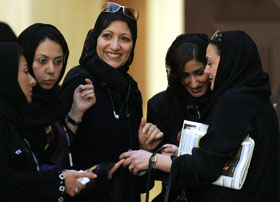
  • walking downtown today I noticed many more women wearing what I might describe as western or european clothing styles. Not all, but my first trip here I saw nothing like this.
  • There are some new churches that have begun in the downtown area – protestant evangelical charismatic tribes
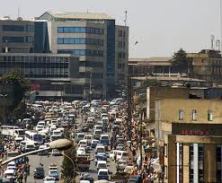
  • There are still no stop signs anywhere making driving here very exciting
  • Construction has been very good for employment and for retailers selling building supplies
  • Much of the money coming into Ethiopia is from China and India

China and India possess the weight and dynamism to transform the 21st-century global economy. I think it is easy for us in North America to put our head in the sand over this. But come to the global south and you will see it more clearly. In the coming decades, China and India will continue to disrupt North American workforces, industries, companies, and markets in ways that we can barely begin to imagine. We are looking forward to being in India in the

My first visit to Addis 7 years ago left me in shock by the poverty and the chaos that surrounds this city.

Over 100,000 boys and girls abandoned on the streets of Addis Ababa

Today, on my third visit I am grateful to see all the change – in a positive direction with the economy but am still left with questions about the overall impact on children. There are estimated to be over 100,000 abandoned children living on the streets of Addis. We have met some who have gotten off the street through the work of Youth Impact but the numbers are overwhelming.

Tomorrow, we head north of the city to a place no one here in Addis has heard of. It is an area development project of World Vision.

I knew it was a little off the road when I read that we are travelling there by vehicle and horseback.

This is not the first, or the last, time that World Vision will be in a place few have heard of. I do know that they are there because of the children and the ability to transform a community.

Okay, but do I really want a rabbit business?

We passed through Macedonia on our way to a village area about 30 minutes north of Kisumu in Kenya. Well okay it wasn’t ‘that’ Macedonia, but it was an inn by that name where above the registration desk hung this passage:

I will visit you after passing through Macedonia, for I intend to pass through Macedonia and perhaps I will stay with you or even stay the winter, so that you may help me on my journey, wherever I go. (1 Cor 16:5,6)

We flew into Kisumu International Airport, a beautiful new airport about the size of Abbotsford’s airport. To our observation there are no international flights landing here yet but they hope to attract these soon.

Kisumu is a different city from Nairobi. It is beautifully located on Lake Victoria and when you look out onto the water it might well have been an ocean. It is the third largest fresh water lake in the world – just after Lake Superior and Lakes Huron/Michigan in size. This gives Kisumu an ocean side feel to it in an African kind of way. In population, Kisumu at between 350 and 500 thousand is much smaller than Nairobi where they cannot really tell you how many people live there. It is somewhere between four and seven million.

In January of this year I was in Uganda and landed at the airport in Entebbe, also located right on the shores of this great lake. It too had a similar feel to it as a city.

We drove the next morning to Muhanda in a rural village area of this very pretty part of western Kenya. The drive there began to give signs of the poverty among the people and community. Petra and Ruth Anaya from Langley started a small NGO to help address needs in this specific community. It is the community where Petra grew up and it was actually his twin brother Andrew who drove us to see their work. The ministry is called HODI (Hands On Development Initiatives) and they take special effort to ensure that the community is involved with decisions about development in their area.

Everyone we met in the community were also excited about a group of students from Trinity Western University that were about to arrive the following week. So they were feeling blessed by Canadians!

HODI has a stellar example of community based ministry projects in a creative water distribution system where clean water is pumped from an underground stream source to a holding container on the highest point around. From there, gravity takes its course and water flows to schools and houses or near houses throughout an eight square kilometer area.

The water is pumped using electricity so there are some costs to this. The community formed a cooperative where members pay a monthly fee to cover costs and to help build a fund for repairs to the infrastructure.

I had a chance to look over the books and noticed two things. First, there are many people who cannot afford to pay anything, however their water is not cut off – it is simply recorded that they have an unpaid amount. Secondly, even with unpaid balances on the books the water distribution center made money each month. It is a very good example of a sustainable project HODI has undertaken.

We also visited the Mawazo Child Care Centre where HODI have 150 children attending. It is a facility that helps to prepare children for further public schooling. The commitment of the staff and the level of competency was impressive. I personally struggle with children performing for visitors but at the same time realize that it is something for them to have visitors from Canada come to their little centre. The children themselves were great and the singing beautiful.

Then came a little ‘African side trip’ when we drove twenty minutes to attend a meeting of the members of a newly forming business. It was in the village next to Muhanda in a different county or region. We found out that this was only the third time that these folks had met, but they were prepared for us. There was an awkwardness in the air as I felt we were in essence being pitched on the idea of investing in their rabbit business idea.

The chair of the cooperative read to us from the briefing they had put together describing how it was going to work. He placed special emphasis on the fact that rabbit is a white meat and that people are moving away from red meat. Their projections were enthusiastic and so were they.

It is always difficult for people in the developed world visiting in the developing world to understand how important it is not to ‘promise’ anything in meetings. The people here have so much need they cling to words from you long after you will have forgotten. So Bob and I were very careful in choosing my words. I didn’t want to say anything without my lawyer present. Heh, wait a minute! He was present J

Now back at the childcare centre. We were shown new construction taking place of a farming building that was to have a rabbit hutch built into the top of it. Hmmm rabbits coming up twice but I certainly am not able to connect the dots. The rabbit meeting had thrown me off track.

While at the Centre we heard, and saw, children who had not eaten that day. Sometimes the children go two days without anything to eat from home and the Centre is their source of nourishment. Now I didn’t hear anything from the community rabbit group about giving some of the rabbits away to help families feed their children – but maybe that is for later.

So how did it end?

Well we rolled with it and politely took their copy of a  printed rabbit business proposal.

Lion Like Leadership

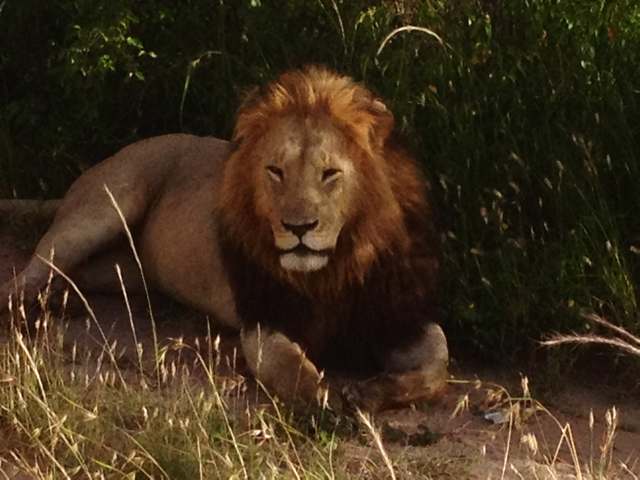
A highlight memory in my life was recently watching a pride of lions hunt in Kenya on the Serengeti plains. Here are some leadership points I took away from the experience.

Leaders are hard to find

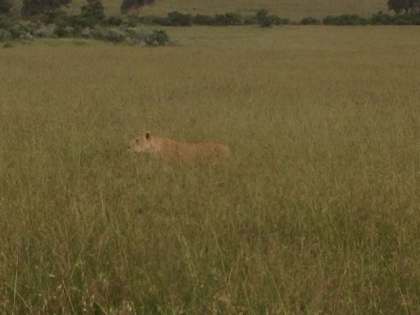
The pride was carefully concealed in the grass. Although these lions are large creatures, they usually kept their heads beneath the level of the tall grass. You had to look very carefully and get up closer to really notice what was taking place.

Lion Insight: This is true of leaders. You need to get close enough to them to really see their leadership at work.

Identify the target

One of the pride raised her head high above the grass and spotted a single Hartebeest on the horizon more than a kilometer away. Once identified, she never took her eyes off the prey and somehow signaled to the entire pride to do the same.

Lion Insight: Leaders are the ones who can look out to the horizon and determine where the entire group should be headed. They also have a way of communicating this so all eyes are on the goal.

Spread out and gain perspective

With a military like precision, the pride began to spread out across the plain, each one staring intently at the goal. By doing so they were increasing their ability to judge the direction and potential action of the prey. It also positioned them in such a way that no matter what took place, some member of the pride may be in a place to have success. This was a team effort.

Lion Insight: Leaders are always helped by getting more perspective on a situation. Allowing your team to be among your feedback group gives an even greater potential of achieving your goals.

Be patient

The pride began to move toward their goal slowly, quietly with stealth. They were not in a rush, as they knew that would be futile when they have to cover so much territory to get close to achieving their goal.

Lion Insight: Leaders need to have the discipline to patiently work towards their goals. One step at a time will get you there. If you rush, you may loose entirely.

Ignore the distractions

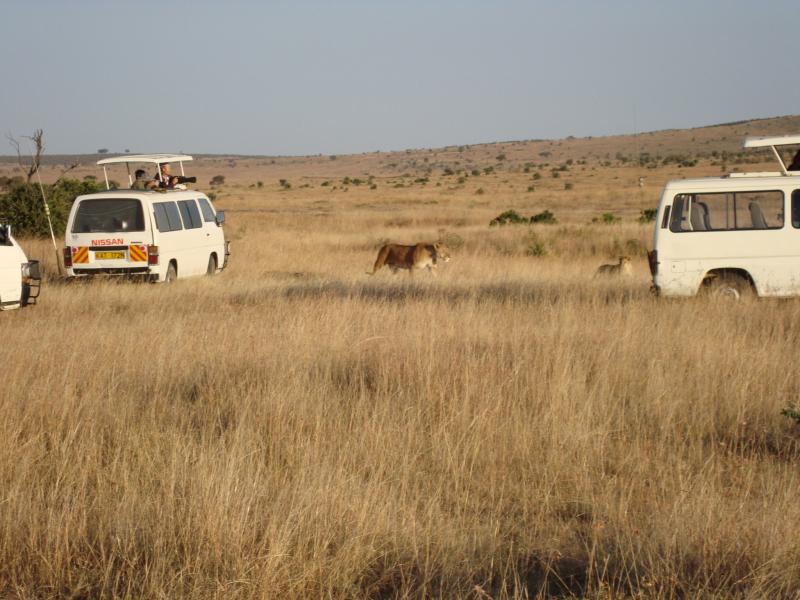
We were in a four-wheel drive right amidst the pride, in fact they walked around us while hunting without even giving an acknowledgement of our presence.

Lion Insight: There are so many things that can capture a leaders attention, but if we are going to reach the goal we must learn to ignore distractions and keep moving forward.

Outside influences can affect the plan

As the pride were moving towards the Hartebeest another Land Cruiser came across the plain towards the lions so that their customers could catch a glimpse of one of the Big Five. In doing so, he attracted the attention of the Hartebeest who then quickly took off in the opposite direction foiling the hunt.

Lion Insight: There will always be the outside influences that can impact your plans. Leaders need to realize this and get over it quickly.

Be quick to regroup

As soon as the pride realized their dinner was now far from a reality they quickly moved back together and began the task of identifying a new target

Lion Insight: Leaders should be quick to call the team together again when there is a need to regroup and set a new goal.

We have an example

There is another lion from whom we can glean leadership principles. Revelation 5:5 refers the Lion of Judah, one of the names ascribed to Jesus.

Lion Insight: Following the Lion of Judah can be a guide for life providing leadership insight and life in all its fullness.

PS – I might add one more to this list and that is that it was the women doing all the work!

You talk like a woman… Cross Cultural Training

The leadership team at Wellspring in Kigali, Rwanda asked me if I would give a day to do professional leadership development for them as a team. I am always happy to teach, especially developing leaders, however I was not travelling with my regular toolbox of training content.

So resorting to a topic I think is relevant and I’m confident with, I focused on the topic of mentoring and how it models how Jesus interacts with his disciples.

The Rwandan “style” of top-down management and leadership practices are largely influenced by tribal and feudalism paradigms, which describe leaders at the top of the hierarchy where they direct and control all activities of the people working below for them. This is an organization that is trying to function in a different manner – one completely led by Christ like principles.

Teaching cross culturally is not new to me, but each time it is an experience. As the teacher you are constantly scanning your audience trying to read if you are being understood or if a particular point really causes a connection. This training was done in English removing the additional challenge of translation – and getting a proper translation of what you are trying to convey.

Language or phrases are often a foul-up in training cross culturally. When General Motors introduced the Chevy Nova in South America, it was apparently unaware that “no va” means “it won’t go.”  After the      company figured out why it wasn’t selling any cars, it renamed the car      in its Spanish markets to the Caribe.

When Parker Pen marketed a ball-point pen in Mexico, its ads were      supposed to say “It won’t leak in your pocket and embarrass you.”       However, the company mistakenly thought the Spanish word “embarazar” meant embarrass.  Instead the ads said “It won’t leak in your pocket and make you pregnant.”

So, when teaching cross culturally, you want to check phrases to see how they translate.

Now this group of leaders spoke English, but that does not mean that our expressions or colloquialisms are going to be understood. My friend Bob has been having this experience with his sense of humor. I often have to hold up a sign that says, “He is trying to be funny.”

This crowd was very reserved. Even attempts at stimulating interaction were met with polite silence. I did find when I asked them to share with the person next to them it was hard getting them to stop.

The six hours of teaching went well and in asking questions for some feedback I learned some new things. One that was shared was, “You talk like a woman.”

He went on to explain that in Rwandan culture men are raised to learn to handle ‘their stuff’ and not talk about it. They are to be brave and strong at all times. So the concept of being open and authentic, as we had been sharing was not something that they practiced in their culture. He liked it, that I would share from both strength and weakness but it was unusual for them.

Bob while sharing that day quoted James Houston’s “friendship is based on the mutual sharing of weakness.” Many do not practice this in a Rwandan culture.

My response was that we are not trying to emulate or be part of Rwandan culture, we are to model a Jesus culture and teach a new way. He smiled, said an emphatic “yes” and thanked me again.

Bob and I are experiencing a different culture every few days on this round the world trip. South African, Rwandan, Kenyan and on it goes with us learning new things every day – like I talk like a woman.

Genocide and Generations

Today we made the rather obligatory visit to a Rwandan genocide memorial. We wanted to go. I believe  it is absolutely necessary in order to provide context and the backdrop to realities of life in Rwanda today.

It was a Polish lawyer who first coined the word genocide in 1943 from the Greek ‘geno’ (family, tribe or race) and the Latin ‘cide’ (killing).

If you have been to Auschwitz or one of the several concentration camps in Europe you would know what to expect. What I was not prepared for was realizing how similar the pattern of genocide was between Germany and Rwanda. There is no question that in Rwanda it was not a riot gone bad but rather a highly planned an orchestrated intent to destroy a group of people by killing, causing serious bodily or mental harm, and deliberately imposing conditions where life was impossible.

In 1994, twenty percent of Rwanda’s population were murdered leaving tens of thousands of children as orphans, between 250,000 and 500,000 women raped, and many men and women maimed for life with missing limbs, eyes and fingers.

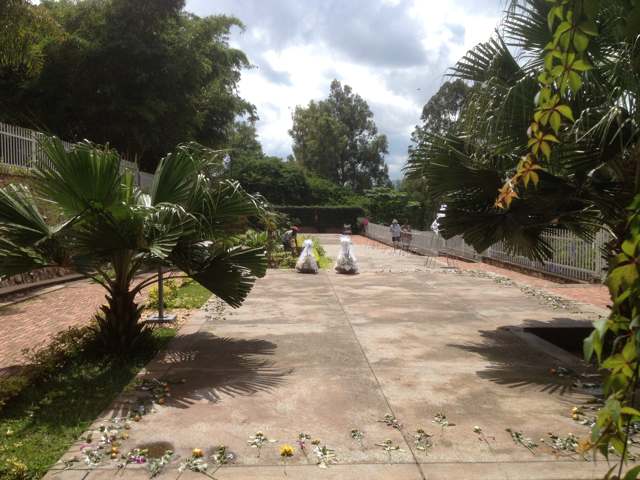
Genocide Mass Grave Kigali

As I looked over a mass grave where 259,000 Rwandan’s are buried I was caught up in my mind with the theological doctrine that derives from the Augustinian concept of original sin. Simply stated it is a doctrine that asserts we as people are by our very nature hard wired to reject the love and rule of God in our lives. It is illustrated by a glass a wine with a few drops of poison in it. Even though it could be a glass of very good wine, the few drops poison all of it. So while not all of our nature as a human is depraved; our nature is totally affected by depravity.

There were good people, neighbors, and friends who suddenly over a very short period of time became killers and it has left behind a generation of damaged people in a nation trying to rebuild itself.

The Next Generation

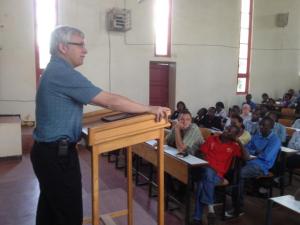
Just two hours after reflecting on the Memorial I was escorted to the Kigali Institute of Science and Technology to speak to a classroom of students – mostly engineering students. It is a significant university here that was started with the determination to encourage the zeal for modern technology and science among the Rwandan youth so that they would be able to compete with students from other parts of the world.

Most students in the room would have been between one and five years of age when the genocide of 1994 took place here. Some of these young adults were raised by others – their own family dead. Everyone in the room knew of family or friends who lost their lives in 1994 under the planning of the group called Akazu.

Yet what I experienced with the students was a hope for the future of Rwanda. They desire to be educated and a part of the future in this aesthetically beautiful land. They are Rwandans and no reference is made in this country now of tribal differences. Do they still exist? I suspect so, but the people are trying to focus on the future more than the past.

I am now back on the campus of the Wellspring Academy feeling convinced of their focus on improving education. They are not only developing top-notch schools and using these as models for the government, but they are also building up the caliber and capacity of teachers who are the heart and soul of an education system. Their laser like focus is a key to their success, and evidenced by the sense of God’s favor they have here in Kigali.

Bob and I are doing a day of leader development tomorrow, pouring into the team here at the campus to encourage and equip. Wellspring was birthed right in our neighbourhood back home, so I guess we are just trying to be good neighbors.

Learning from today:

  1. You and I are capable of doing unimaginable things given circumstances that nurture that. There were men and women who claimed to be Christians who participated in, or did nothing to prevent the bloodshed.
  2. I think about the children – those who were massacred and those who have had to live with the consequences of what they saw during that 100 day killing spree. It inspires me to continue giving time to the work of protecting and caring for children as a board member of World Vision Canada.
  3. There is hope, and it is just one generation away. This inspires me to continue mentoring and building into the next generation of leaders.

Rwandan Work Prayer

While in Butare we visited the National Museum of Rwandan in order to get a pre 1994 historical background view of the culture in this beautiful country. Imagine my surprise when I found this prayer in the lobby there – very appropriate for all of us as we go into our workplace. – Carson

Work Prayer

My Heavenly God,

As I enter this workplace I bring Your presence with me.

I speak Your peace, grace, mercy and perfect order into this place.

I acknowledge Your power over all that will be spoken, thought, decided and done within this place God.

I thank You for the gifts you have blessed me with.

I commit to using them responsibly in Your honor.

Give me a fresh supply of strength and knowledge to my job today.

Anoint my works, ideas and energy so that all my accomplishments may bring You glory, and my works bring faith, joy and smiles to those I come in contact with.

God, I pray that when I leave this place give me traveling mercy.

Bless my family and home.

In Jesus name, Amen

Rwanda: One thousand hills, a thousand stories.

It is very hard not to like Rwanda.

Rwanda is a thriving, safe country with one of the lowest crime rates in Africa. It is also a small country – in area the size of Vancouver Island, or Belgium. So from Kigali, the capital, you can drive in any direction in a day to see other parts of this beautiful land.

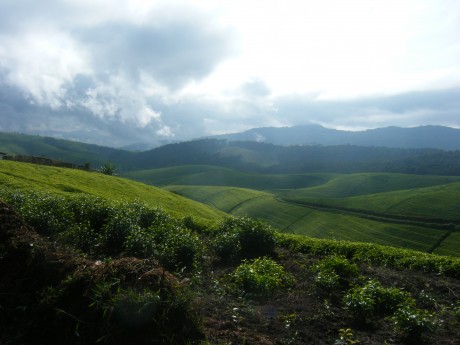
When I held up my iPhone using FaceTime to talk with Brenda she commented on how green it was. So true, on our drive today I was impressed by the green undulating landscape of hills, gardens and plantations.

It is also a remarkable country from the standpoint of how the people are overcoming Rwanda’s genocide, three months of brutality in which an estimated 1,000,000 people were killed.

This country’s comeback has exceeded what even the most optimistic observers would have predicted. Jeff from the Wellspring Foundation has lived here since immediately following this tragic part of Rwandan history. He commented that the government has remained focused on the delivery of basic services like access to electricity and running water to all of it’s people equally. This has brought a stability and economic growth to the nation and mitigates genocide ideology.

We drove today to speak with a group of students at the national university. It was a special acknowledgement and prayer time for  ‘finishers’ – those students about to graduate the end of June.

As I looked into their eyes from the podium, they looked just like students you would see at any university. The lecture theatre looked different from what you might be used to – but it works.

Bob and I spoke to them about our trip around the world and what we are learning about the places and leaders through who God is at work. We encouraged them to finish well and then to plant themselves where God leads and serve him there.

As we were leaving, our host thanked us. He was a third year student himself and he shared how he has always wanted to visit Canada.

“Why?” I asked.

“Because you see, I have no parents, and some Canadians – people I have never met or seen, are paying so that I can attend university. That is why I want to visit your country.”

This young leader probably lost both parents during the genocide, I did not want to ask. But his response made me feel sad for him, and thrilled to know that some Canadian family are making it possible for his life to be different – very different.

Now, as I finish with the Internet, and get my other net set up – I’ll be thinking about him for quite a while.

Tweeter and the Monkey Man

Elvis – The Hotel Monkey Man

Bob Dylan

All day long I have been hearing Bob Dylan’s voice from the Travelling Wilburys singing, “. .

“To an undercover cop who had a sister named jan
For reasons unexplained she loved the monkey man”

Now let me try to explain.

Breakfast with Elvis

Bob and I were having breakfast at the Protea Hotel right at the entrance gate to Kruger national park. The gate itself reminds me of Jurrasic Park – because once you pass through it, you are the minority. We are in animal territory and Bob and Carson seem more like “Kibbles and Bits” once you enter the park.

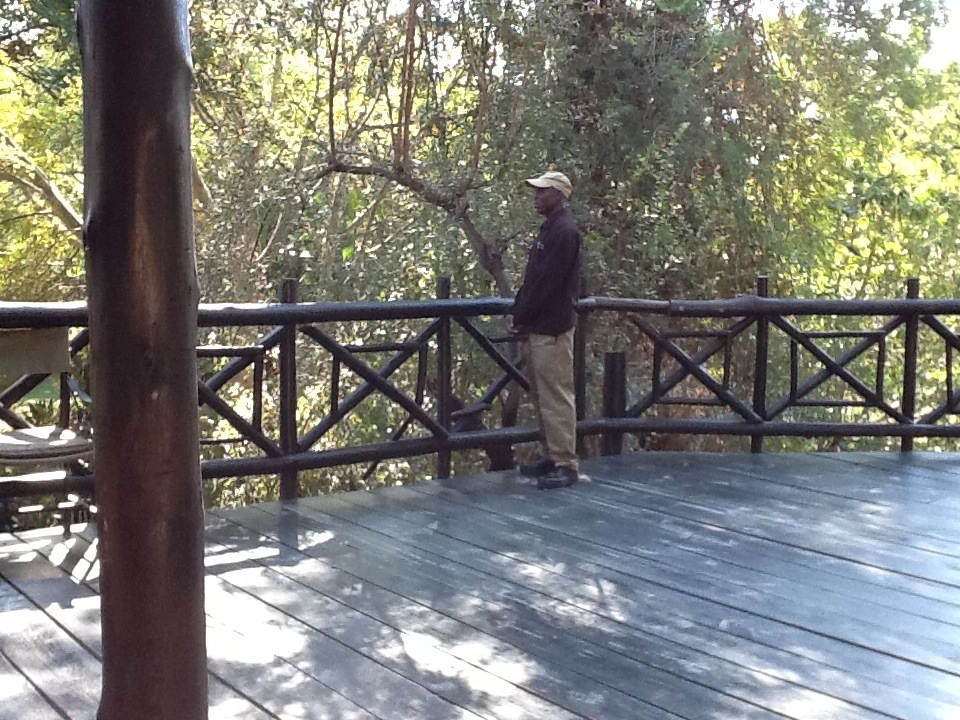
Back to breakfast. So from where I am sitting I am watching one of the staff at the hotel positioned on the outside deck standing very alert yet sublte. The entire breakfast time he did not move but was holding something in his hands.

Curiosity has taught me a lot and occasionally gotten me into trouble. So I approached him and found out his name was Elvis. I also saw that what was in his hand was a homemade sling shot with 18 inches bands of red surgical tubing coming back to the leather patch for holding the round stones he had in a pouch.

“What are you doing?” I asked politely.

Elvis replied, “Watching for monkeys.” He then showed me how he fits the stones into the sling shot.

“So you are the Monkey Man here at the hotel?”

“Yes, yes . . the Monkey Man” he laughed with his beautiful white teeth showing from ear to ear. “The Monkey Man”  he repeated with laughter.

“I haven’t seen any monkey’s this morning.”

“No,” Elvis said seriously, “it is because I am here. No monkeys today,”

Now Bob and I have seen these masked robbers on the property, but I still got the giggles as I thought about a hotel that has a monkey man on staff.

The leadership developer in me then started imagining the interview process for the job. I was now laughing out loud at just the prospect. Bob kept asking, “What are you laughing about?”

“The monkey man interview process.”

I was barely able to get that out without crying I was laughing so hard. My friend smiled with me, and my bizarre, warped sense of humour.

The Interview

Inside my head I picture the manager of the hotel coming out of his office with papers in his hand calling out, “Elvis?”

Elvis stands and walks towards the manager with his slingshot in his hand. Shakes hands with the manager and then enters his office.

Elvis has no papers with him and is dressed in a very casual manner as the manager asks him to sit down.

“So Mr. Elvis, you are here to apply for the Monkey Man position?”

“Yes sir,” he says shyly.

“Let me ask you a few questions, Do you like monkeys?”

“No sir.”

“Do you like eating Monkey glands?”

“Yes sir.”

“What do you think is the most effective way for our hotel to get rid of monkeys?”

“Sir I would go into the park and follow some lions and collect big bags of lion manure and spread it around the hotel.”

“Wouldn’t that smell and bother our guests?”

“Yes but it would get rid of the monkeys.”

“Would you be opposed to using a..” the manager gets up and closes the office door and looks into Elvis’ eyes, “. . a more lethal method?”

Elvis smiled, and holds up his slingshot.

“You any good with that?”

Elvis stares at him and with pride and repeats, “I never miss.”

“Even in a crowded dining room with dozens of guest in it?”

“I never miss” Elvis said more seriously.

The manager then stands up and walks towards Elvis, extends his hand saying, “You’re hired. You are hotel’s monkey man. Can you start tomorrow?”

Well I am going to sleep tonight still smiling about the Monkey Man. Hope to say goodbye to Elvis before we leave tomorrow.

What questions would you ask if you were interviewing someone for the monkey man position?

Buenos Aires: Driving, Arsenic and Electricians

Driving in Buenos Aires

The ninety-minute drive from where we were staying to Máximo Paz (Maximum Peace) was made on of a variety of roads. Modern freeways, toll roads, beautiful boulevards, cobblestones and finally dirt roads. Driving in Buenos Aires is very good for your prayer life and that is not in any way a comment on Catherine – our most excellent driver.

It has to do with how they drive here in BA. Here is what I have learned:

  • Lanes – merely suggestions.
  • Horns are to be used liberally (although not near to the extent of Lima).
  • Right of way? Not so much – Most smaller intersections here, do not have lights or stop signs.  So, when you have two cars approaching from opposite directions, the general rule is that the car to the right has the right-of-way.  However, what is actually the case is that whatever way traffic is flowing has the right of way, and the other person has to wait for their chance to dart across.
  • Stop signs are really just yield signs.
  • Red lights usually mean stop. Late at night, people tend to run red lights. Catherine explained that this is a security precaution as people do not want to be held-up while stopped alone at a dark intersection.
  • Pedestrians DO NOT have the right of way.
  • To drive downtown you are certain to encounter traffic and protests. They love to protest down here and a favorite tactic of the protestors is to block lanes of traffic to make their point.  The police will never disperse them either. They simply wait for them to leave on their own.

Máximo Paz

Máximo Paz has a population of 3500 and is located in a largely agricultural area. It is a city that has struggled with poverty as well as  high arsenic levels in the water supply. Cancer is one of the risks associated with chronic consumption of high arsenic contained drinking water.

Christian Church of the Family

We travelled here to see another community center initiative by Fortelecer. It has been started with a church and the pastor explained to us, “There are two doors. One to the church, the other to the community center and they are joined by a passage. They are joined so those in the church can go to the community center and those in the community center can go to the church.”

Pastor talking to Bob about the community center.

As you enter the town, the church greets you at the corner in a prominent location. Their pastor shared with Bob how their greatest job as a church is to show God’s love to those who are frustrated and not doing very well. They opened a community center to focus on the actually needs of those in the community utilizing professionals in different fields to do training and family work.

The night we visited there was a class training young adults to become electricians. The center offers dozens of classes and programs for children to adults on vocational training, health and physical education. Everyone knows it is associated with the church.

Getting out of the Office

One of my observations from Máximo Paz was caught in a short interchange with the pastor in his office.

His office was very sparse. A desk and chair, an old desktop computer still using 3 ¼ inch discs, and a few books on a shelf three of which were Bibles. As he saw me looking around the office he said, “I don’t spend much time in here. My office is out there,” motioning outside the window at the community.

As he looked out the window he was smiling with a smile that said, “These are my people and I love them.”

When we look out our office window, what do we see? Does it make us smile?

Maybe we need to get out more.

Electrical Class

Buenos Aires: Trusting the GPS

Have you ever been to an area where your GPS warns you that you are in a BAD part of town?

Catherine our host, driver, and translator, was driving us to meet the leaders at a community work that started as a church and now works directly with families in the community through centers that they have developed.

The pastor who started the work from the church was Gerardo Kopf who now serves as the General Director of Fortalecer: Recursos Para Familias Y Comunidades. Lucio Andrés from his board of directors also agreed to meet us at one of their centers. Gerardo explained that although they started as a church, they realized the people needed more. They needed more professional help – beyond what pastors are trained to do.

As Catherine drove us to the neighborhood in Buenos Aires she announced that her GPS issued a warning that we were entering into a dangerous neighborhood.

I have seen worse actually, but it did have all the traditional signs of a bad neighborhood. Graffiti, burned out cars left out on the streets, heavy bars on all the windows in sight. This is where the church has placed it’s self.

The issues for families in this community are very challenging and there is a great deal of abusive violence. The community center itself is heavily barred because the husbands of abused wives want to get back at those who help their wives.

Fortelecer’s principles are clear:

  1. All people are created in the image of God and are to be valued and respected.
  2. The gospel of Jesus offers hope.
  3. Hope that produces change is possible.

With these principles they provide resources to help families become healthy and create safety, love, equity, peace and solidarity. Wow.

I notice that whenever I ask South American leaders about ministry, they respond talking about people – fruit of their work. Most pastors here are engaged in active counter cultural activity within their community as part of their regular work week.

Volunteers power Fortalecer. I met Aldo, a psychologist, who gives one day a week to do counseling at the center. He sees eighteen people a day from 7:30am – 9:30pm. It is his volunteer service for the Lord and he is just one of forty “permanent’ volunteers. There are also over 100 additional volunteers for special programs The counselors here see 1500 people per year in this manner and in addition hold five workshops per week.

I was deeply touched by three things today. The commitment of lay people from the church to working in the community. The philosophy that if we bring people together with a common problem, they can become a community helping one another.

When we left the center, I was stuck for words. Not because of my lack of Spanish, but because of the love of their neighbors and their volunteer commitment to this calling.